5 Load Optimization Tips for Forklift Energy Savings
Want to save energy and extend your forklift's battery life? Proper load management is the key. Poor loading practices can waste energy, overheat components, and shorten equipment lifespan. Here's a quick guide to smarter forklift operations:
- Centre Loads Evenly: Balance weight to avoid tipping and reduce strain on the battery.
- Avoid Overloading: Stick to the forklift's capacity limits to prevent damage and energy waste.
- Plan Load Weights and Sizes: Group items efficiently to cut down on trips and energy use.
- Lift Only When Needed: Keep loads low during transport to conserve power.
- Position Forks Correctly: Align forks to maintain stability and reduce mechanical wear.
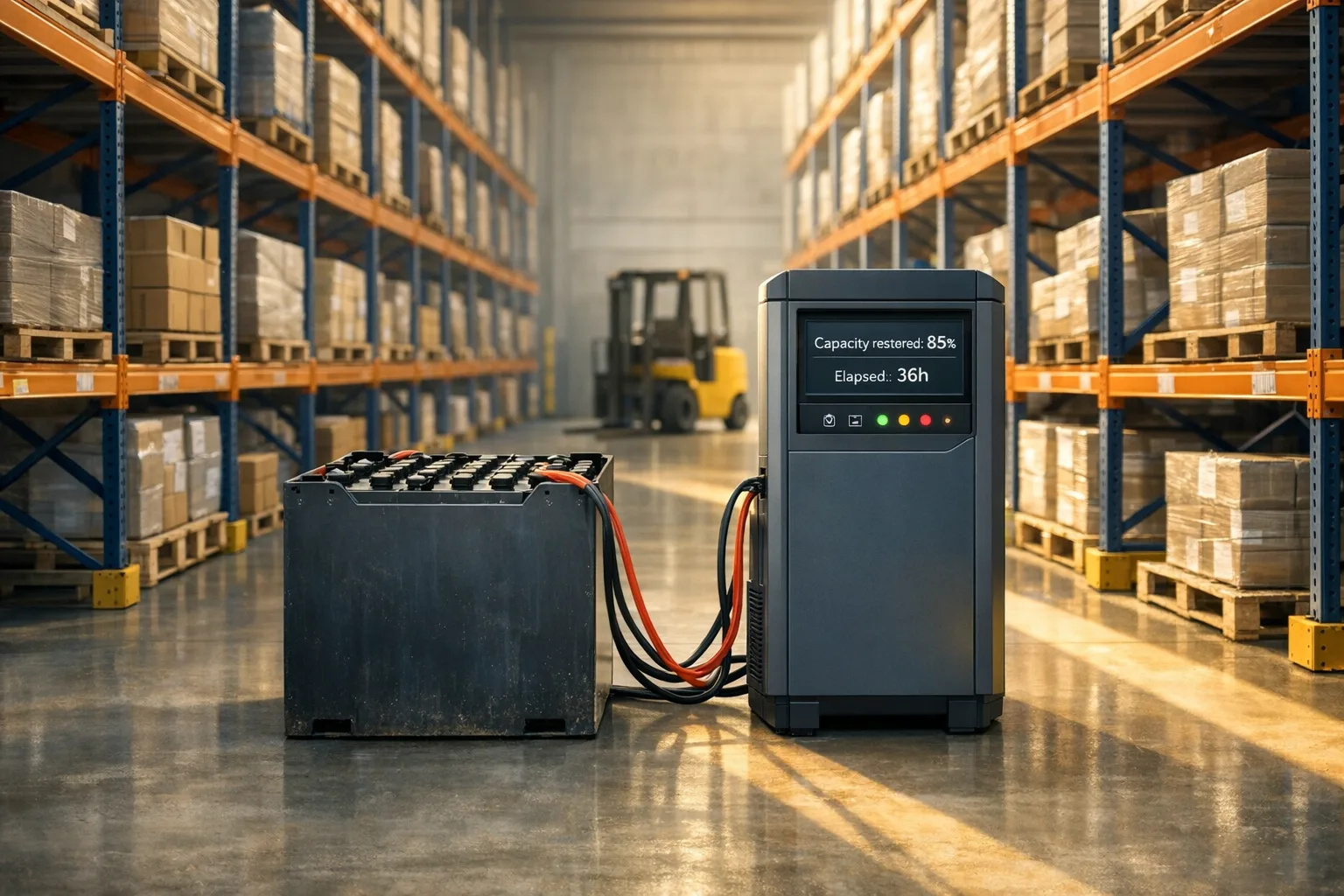
These simple practices not only cut costs but also improve safety and extend equipment life. For added efficiency, consider battery maintenance services like those offered by Fazlerasheed And Company in Pakistan. Their solutions can restore up to 80% of battery capacity, ensuring forklifts run longer and more efficiently.
1. Centre Loads Evenly for Balanced Weight Distribution
When using a forklift, think of it like a seesaw. The front axle acts as the fulcrum, and balanced loading is essential to keep everything stable. If the load is uneven or shifts too far forward, the centre of gravity moves outside the "stability triangle" formed by the front wheels and the rear axle pivot. This imbalance makes the forklift work harder, draining the battery faster and increasing the risk of tipping over. Stability isn't just about safety - it also affects energy efficiency.
Here's an example: A forklift rated to lift 1,814 kg at a 61 cm load centre can only safely handle 1,209 kg when the load centre extends to 91 cm. That’s a 25% drop in capacity. OSHA breaks it down:
"As the centre of gravity for the load moves forward, the lifting capacity for the forklift decreases."
Off-centre loads also increase the load moment, forcing the hydraulic system to work overtime. This not only drains the battery quicker but also puts extra strain on mechanical parts, speeding up wear and tear.
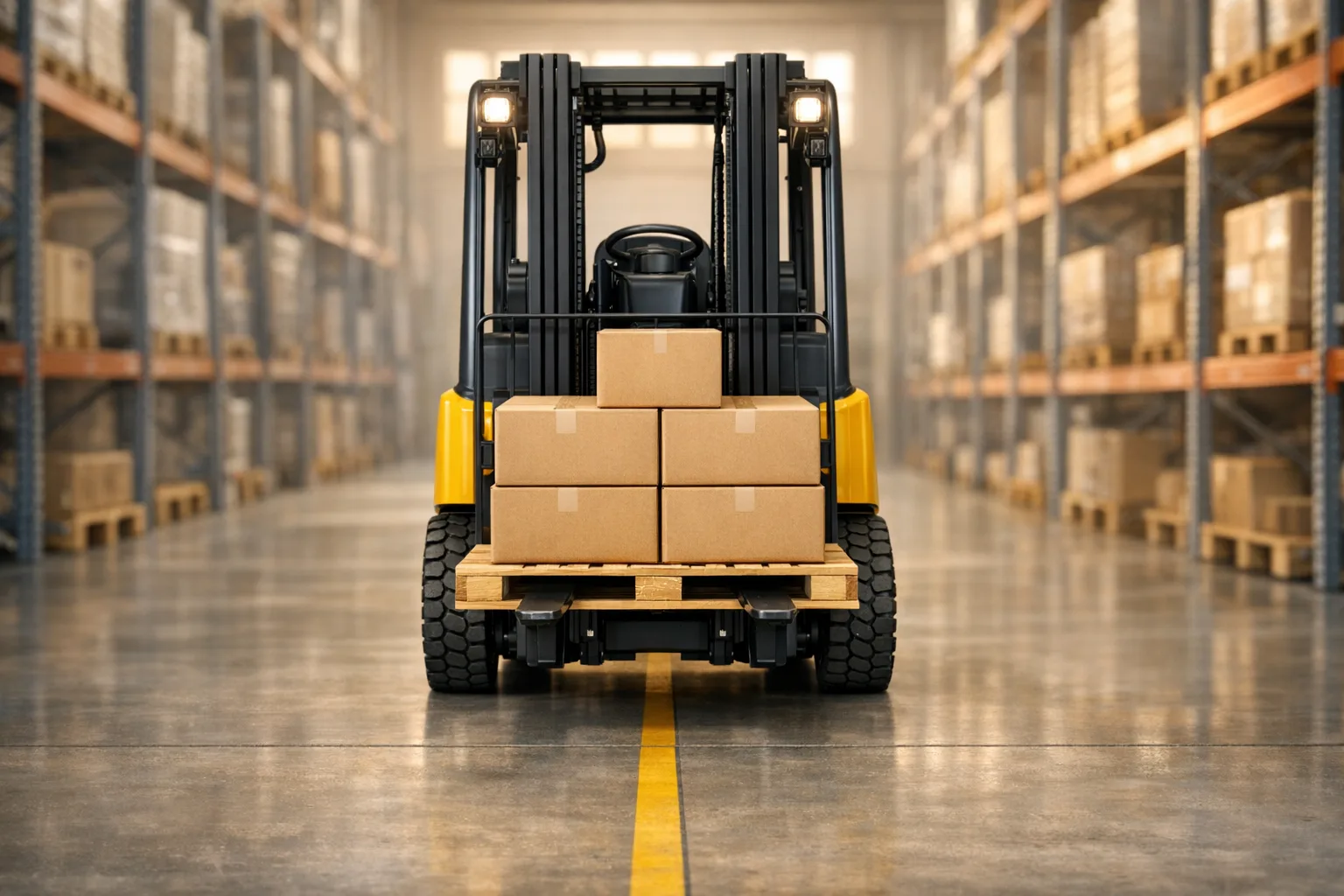
To keep things balanced, always position the heaviest part of the load against the forklift's carriage. Ensure the load is level across both forks, and for rectangular items, place them width-wise to keep the centre of gravity closer to the front wheels. During transit, carry the load 10–15 cm above the ground and tilt the mast slightly back to stabilise it further.
Properly centred loads prevent the rear wheels from lifting, which would result in a total loss of steering control - a situation no operator wants to face. Considering that tip-overs account for 42% of all forklift fatalities, balancing the weight isn’t just about efficiency. It’s a vital safety step that protects lives and equipment.
2. Avoid Overloading Beyond Capacity Limits
Maintaining a forklift's capacity limits is essential for ensuring both energy efficiency and the safety of operators.
Pushing a forklift beyond its rated capacity can lead to serious risks. Overloading increases energy consumption, puts undue strain on the equipment, and can damage key components like tyres, rims, forks, and the hydraulic system. It also accelerates battery discharge, reducing operational efficiency.
One of the most dangerous consequences of overloading is the increased risk of tip-overs. For example, overloading by just 10% with the mast fully raised can boost the chance of tipping by 37%. This not only endangers the operator but also compromises control. If the load is too heavy, the rear wheels may lift off the ground, resulting in a total loss of both steering and braking.
To avoid these hazards, always refer to the forklift's data plate before lifting. This plate provides critical information, including the rated capacity, load centre, and lift height limits. The standard capacity is calculated based on a 61 cm load centre, and exceeding this distance increases the risk of overloading significantly. Additionally, attachments like side shifters or clamps can reduce the forklift's capacity by anywhere from 10% to 50%, depending on their design.
| Load Centre | Capacity Reduction |
|---|---|
| 61 cm (Standard) | 0% |
| 76 cm | 12% |
| 91 cm | 25% |
If you're unsure about the weight of a load, use scales to verify it. When faced with oversized loads, break them into smaller, manageable parts to stay within safe lifting limits. Also, never operate a forklift if the data plate is missing or illegible. Violations in this area can lead to hefty OSHA fines, averaging Rs 4,400,000 per incident and climbing as high as Rs 44,000,000 for repeat offences.
3. Optimise Load Weights and Sizes
After ensuring proper load balance and avoiding overloading, the next step is to fine-tune load weights and sizes to improve energy efficiency.
Start by planning load grouping based on weight and size. This approach minimises wasted trips and maximises energy savings. Instead of loading items randomly, organise cargo in a way that optimises each journey.
A useful technique is the density optimisation pattern: place heavy, compact items at the bottom and stack lighter, bulkier materials on top. This method not only makes the best use of vertical space (known as cube utilisation) but also ensures forklift stability. Without such planning, forklifts may operate at just 57% of their capacity, wasting nearly half of their potential payload. By grouping loads strategically, businesses can cut transportation costs by 25–40% through better space utilisation.
Another effective approach is zone grouping. Arrange cargo by delivery zones and load it in reverse delivery order. This reduces both handling time and travel distances. Digital load planning systems are particularly useful here, achieving 85–95% space utilisation compared to the 60–70% efficiency seen with manual methods.
Load orientation is another critical factor. For rectangular items, position them widthwise across the forks rather than lengthwise. This keeps the centre of gravity close to the mast, enhancing stability and preventing capacity loss.
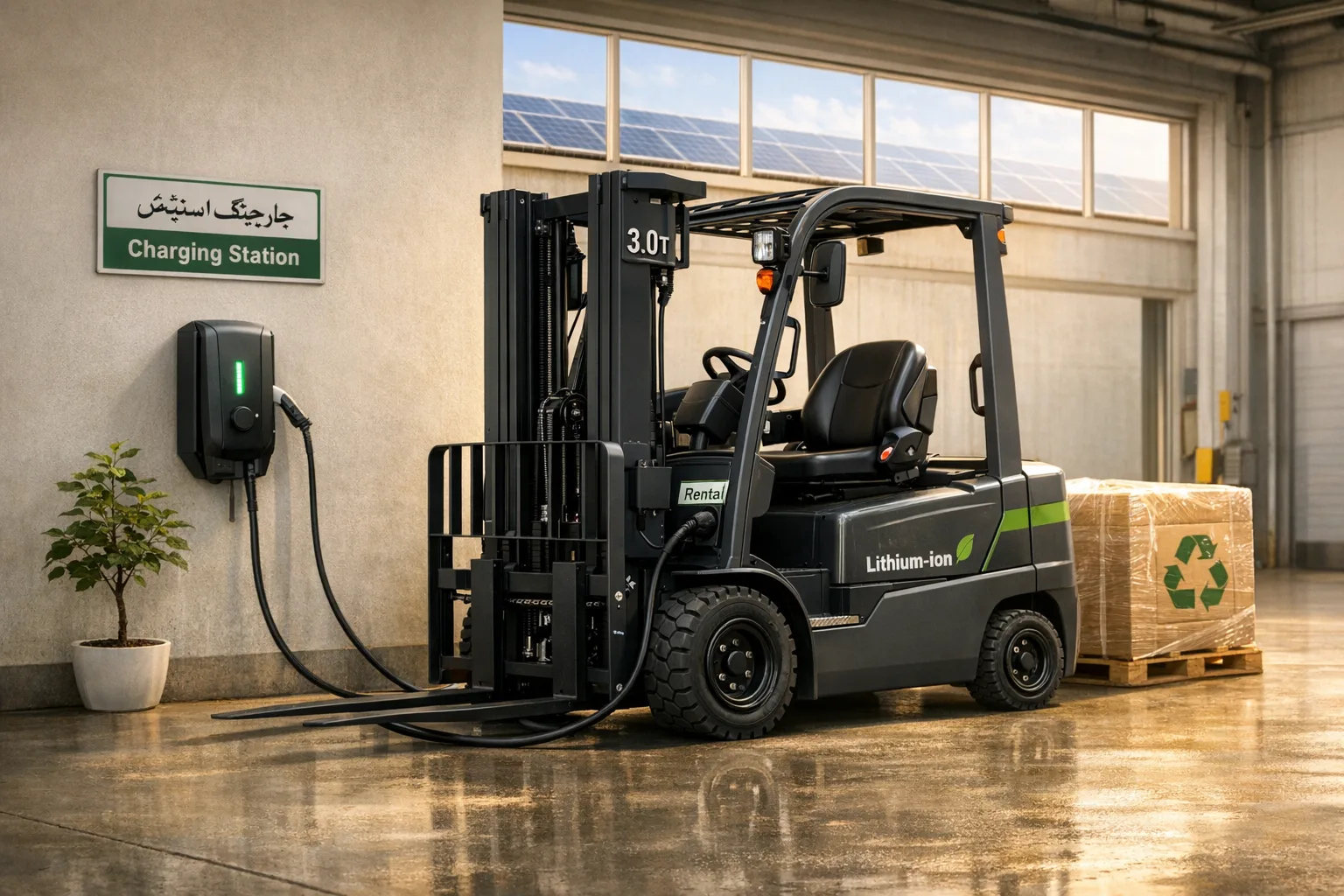
For facilities using battery-powered forklifts, switching from lead-acid to lithium-ion batteries can make a big difference. Lithium-ion batteries are lighter, freeing up around 180–360 kg of payload capacity for Class I forklifts. This extra capacity allows operators to consolidate more goods per trip, reducing the number of journeys and saving energy in the long run. In Pakistan, advanced battery systems and digital planning solutions from Fazlerasheed And Company can help operators achieve these efficiency gains.
4. Lift Loads Only to Required Heights
Lifting tasks consume a lot of energy, and every extra centimetre of lift adds to the power demand. This not only reduces the forklift's runtime but also increases the frequency of charge cycles. The hydraulic system works harder at higher lifts, drawing more amps and generating excess heat, which wastes energy and accelerates battery wear over time. Even though advanced regenerative lowering systems can recover about 10% of the energy used during lifting, this advantage disappears if operators lift loads higher than necessary. While lithium-ion batteries hold up to 95% of their energy compared to around 80% for lead-acid batteries, unnecessary high lifts still put additional strain on them.
The solution? Only lift loads to the height you need. When transporting, keep the forks just 10–15 centimetres (4–6 inches) above the floor to conserve energy and maintain stability. Raise the load to the required storage height only when the forklift is directly in front of the rack or shelf. As OSHA points out:
Never travel with the load elevated. Elevating the load increases the load centre distance by shifting the centre of gravity upward and forward, making the forklift and the load less stable.
Another important tip is to always check for overhead clearance, which helps avoid unnecessary energy usage. Operators should also use battery monitoring systems to track inefficiencies, such as amp-hour usage and temperature spikes, to keep operations smooth and energy-efficient. For businesses in Pakistan using battery-powered forklifts, Fazlerasheed And Company offers traction batteries and monitoring solutions designed to optimise energy consumption.
5. Balance Loads with Proper Fork Positioning
Getting the fork positioning right is key to maintaining load balance and cutting down on energy use. When forks are misaligned, the load's centre of gravity shifts, creating what's called a load moment. This is essentially the product of the load's weight and its distance from the front axle. As OSHA puts it:
"The overturning force depends on both the weight of the load and the load's distance from the pivot point."
When the load moment increases, the forklift has to work harder, draining its battery and straining the hydraulics. The fix? Spread the forks wide enough to support the load and make sure they’re positioned equidistant from the centre stringer of the pallet. This ensures the weight is distributed evenly across both forks, reducing the need for constant adjustments that waste energy.
The math behind this is pretty revealing. A forklift rated for 4,000 pounds at a standard 24-inch load centre has a safe load moment of 96,000 inch-pounds. But if the load centre shifts to 30 inches, the safe capacity drops to 3,200 pounds - a 12% decrease. At 36 inches, it falls further to 2,666 pounds, a 25% loss. These numbers highlight why accurate fork positioning is so crucial for maintaining efficiency and safety.
To minimise the load centre distance, insert the forks at least two-thirds the length of the load and push it snugly against the backrest. For oddly shaped loads, align the heaviest part with the mast for better balance. Once the load is secured, tilt the mast back slightly for transport, but keep it vertical when lifting or lowering. For companies in Pakistan using battery-powered forklifts, Fazlerasheed And Company provides traction batteries and maintenance services to support smooth and efficient operations.
Correct fork positioning doesn’t just improve safety - it also reduces wear and tear on the machine, saving battery power. When the load’s centre of gravity stays within the forklift's stability triangle, the machine runs more efficiently, requiring less effort for acceleration, braking, and turning. This not only extends battery runtimes but also lowers operational costs, keeping your forklift performing at its best for longer stretches.
Conclusion
Improving forklift load management not only boosts workplace safety by keeping the centre of gravity within the stability triangle but also helps cut energy costs and extend the lifespan of your equipment. By evenly centring loads, avoiding overloading, adjusting weights and sizes, lifting only to necessary heights, and ensuring proper fork positioning, you can reduce the load moment and strain on the forklift's battery. These steps lower energy usage and protect electrical components from overheating, ensuring smoother operations.
The numbers speak for themselves. A forklift rated for a standard 24-inch load centre loses 12% of its lifting capacity when the load centre shifts to 30 inches and a staggering 25% at 36 inches. Additionally, improper load handling - often leading to tip-overs - accounts for 42% of all forklift-related fatalities. Proper load management doesn’t just save energy - it saves lives and prevents expensive downtime.
Battery care is just as important. Keeping battery levels above 20% is critical to avoid overheating and motor damage, which ensures consistent forklift performance. Routine maintenance, like monitoring water levels and avoiding frequent short charges, helps batteries deliver peak performance and reach their full service life of around 6,000 hours. Businesses in Pakistan can also take advantage of Fazlerasheed And Company's battery regeneration services, which restore up to 80% of battery capacity by removing sulphuric acid crystals. They also offer regular maintenance and equipment rentals, providing businesses with reliable machinery without the need for upfront investments.
FAQs
How do I find my forklift’s real safe capacity for a specific load?
To figure out your forklift's safe capacity for a particular load, refer to the load capacity chart on its data plate. Make sure the load is properly centred and stays within the specified load centre distance. If the weight is unevenly distributed or goes beyond the recommended load centre, the forklift's capacity decreases. Always focus on correct load positioning to ensure safety and smooth operations.
What are quick signs my load is off-centre or the forks are mispositioned?
Unexpected forward or backward tilting, instability, or even tipping of the forklift can point to an off-centre load or misaligned forks. You might also notice the load appearing visibly uneven or unbalanced. These signs are often easy to spot during a quick visual check or while operating the forklift.
Which battery habits improve runtime during heavy-load shifts?
Maintaining your battery charge between 20-80% can significantly improve runtime during heavy-load shifts. This range helps to avoid unnecessary strain on the battery, which could lead to a shorter lifespan. Additionally, avoiding deep discharges is crucial. These steps not only extend the battery's life but also ensure it performs efficiently, even during demanding tasks.
Looking for Forklifts or Parts?
Fazlerasheed & Co. supplies reconditioned forklifts, genuine spare parts, and traction batteries across Pakistan. Get a free quote today.