How to Choose Eco-Friendly Forklift Rentals
Renting an eco-friendly forklift can cut costs by up to 75% and reduce CO₂ emissions by 7 metric tonnes annually. Whether you're managing a warehouse in Karachi or a textile mill in Faisalabad, opting for battery-powered forklifts offers cleaner air, quieter operations, and lower maintenance costs. Here's a quick guide to help you make the right choice:
- Assess Your Needs: Identify load capacity, forklift type (e.g., reach truck, counterbalance), and workspace conditions (indoor vs. outdoor).
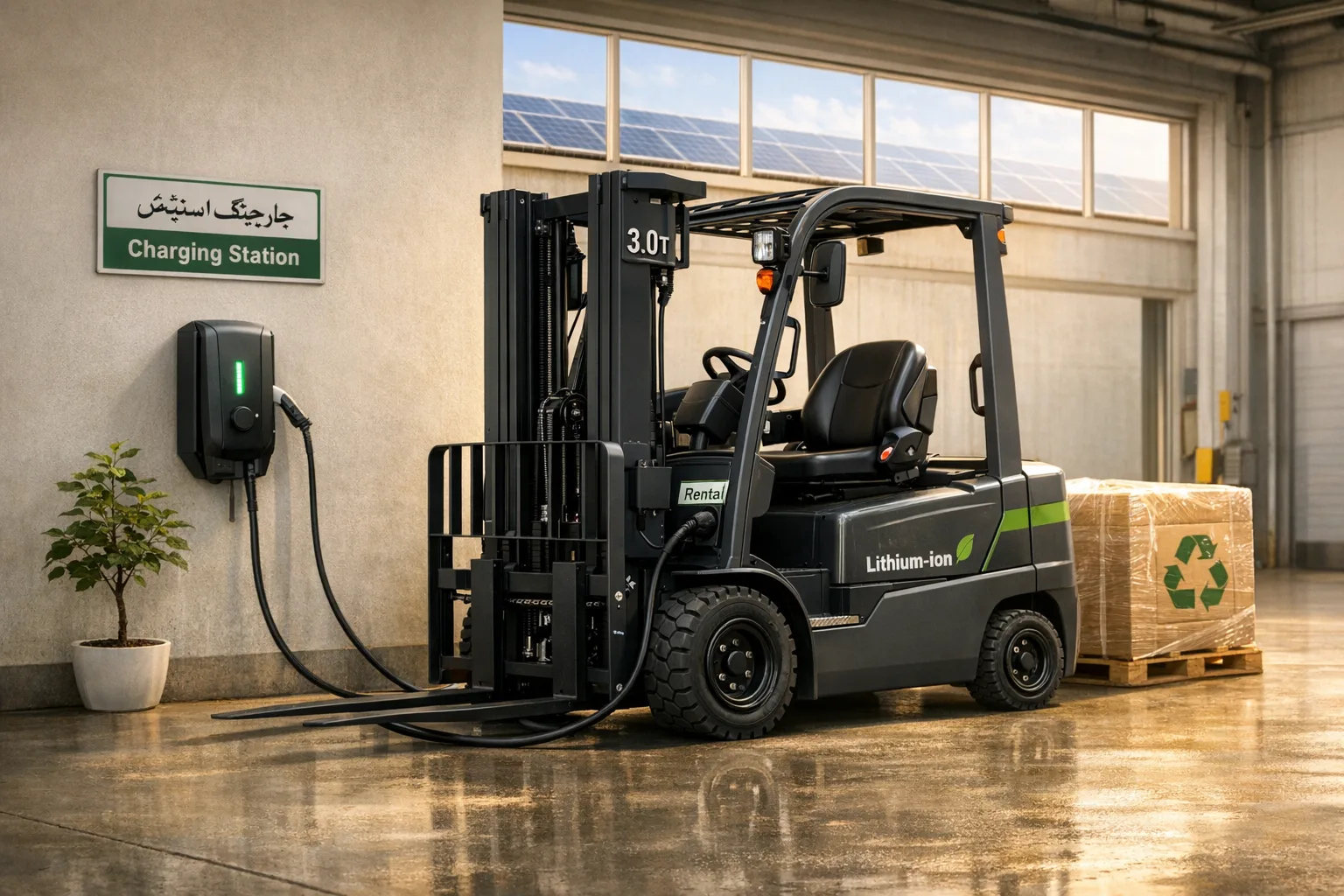
- Choose Electric Models: Electric forklifts with lithium-ion batteries are efficient, emission-free, and cost-effective.
- Plan for Charging: Ensure your facility has the right electrical setup for charging, especially for multi-shift operations.
- Review Rental Terms: Look for flexible plans, maintenance services, and options like Battery-as-a-Service (BaaS).
- Select a Trusted Provider: Choose local experts like Fazlerasheed And Company for reliable support and services.
Switching to battery-operated forklifts not only improves indoor air quality but also aligns with global efforts to cut carbon emissions. Let's dive into how you can make the best choice for your business.
Assess Your Operational Requirements
Matching rental equipment to your facility's needs starts with a clear operational assessment. This step helps you avoid safety issues, prevent damage, and control costs while aligning with operational goals.
Determine Load Capacity and Forklift Type
Start by identifying the heaviest load your operation handles and factor in a safety margin. For instance, a forklift rated for 3,600 kg might only manage 2,950 kg safely when lifting to higher elevations due to changes in its centre of gravity. Always check the manufacturer's rating plate to confirm the specific load and lift capacity of the equipment.
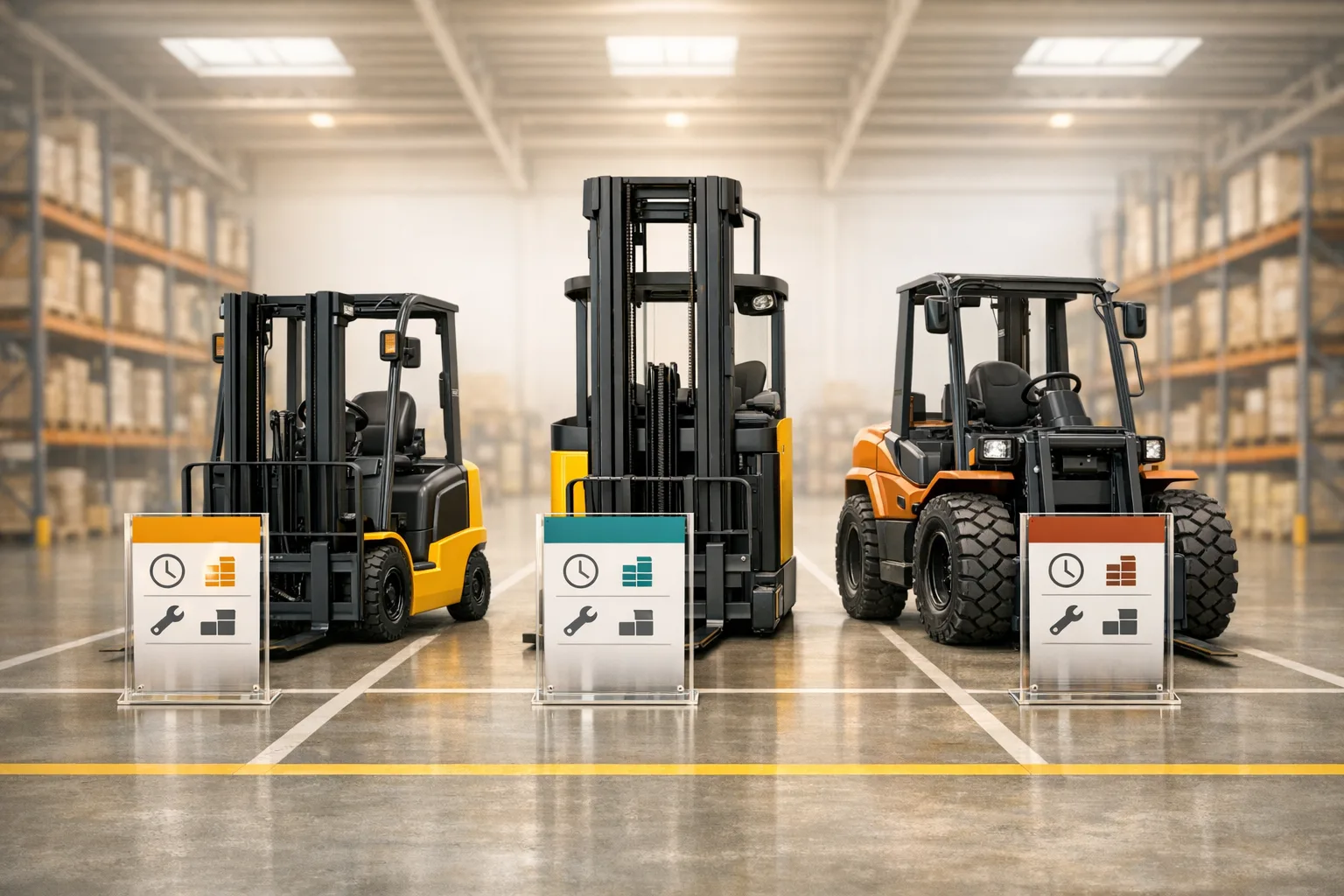
The shape and size of your loads are just as important as their weight. Irregularly shaped items, like timber planks or steel beams, may require specialised attachments, which can reduce the forklift's effective capacity. For specific tasks, different forklift types excel:
- Reach trucks are ideal for high-rack storage in narrow aisles.
- Counterbalance forklifts handle general warehouse tasks efficiently.
Here’s a quick comparison of forklift types and their best applications:
| Forklift Type | Best Use Case | Key Advantage |
|---|---|---|
| Counterbalance | General warehouse tasks | Standard front-loading, versatile |
| Reach Truck | High-rack storage | Excellent for narrow aisles and high lifts |
| Side-loader | Timber, steel, long loads | Moves long items sideways in tight spaces |
| Pallet Jack | Short-distance floor movement | Compact and economical for small loads |
After determining the load and forklift type, consider the workspace environment to find the best fit.
Consider Indoor vs. Outdoor Use
The surface you operate on plays a big role in choosing the right forklift. For smooth warehouse floors, electric forklifts with cushion tyres are a great choice. They protect flooring and offer stability. On the other hand, outdoor environments like construction sites or gravel yards demand forklifts with pneumatic tyres and sturdy suspensions to handle uneven terrain.
Indoor operations have additional considerations. Electric forklifts are emission-free, making them ideal for enclosed spaces to avoid carbon monoxide or nitrogen oxide build-up. They also operate at lower noise levels - about 65 dB compared to 85 dB for diesel models - creating a quieter, more comfortable workspace. In industries like food processing, pharmaceuticals, or cold storage, electric forklifts are often the only option to maintain hygiene and prevent contamination.
Once you've considered the workspace, think about how often you'll use the equipment to optimise your rental plan.
Calculate Usage Frequency
How often and how long you use the forklift will directly impact rental costs. Standard rental agreements usually cover 8 hours per day, 40 hours per week, or 160 hours per month. Exceeding these limits can lead to overtime charges ranging from Rs 1,250 to Rs 3,750 or more per hour.
For operations running 24/7, planning for battery management is critical. Lead-acid batteries need to be swapped every 4 to 8 hours, which can result in at least 20 minutes of downtime per swap. Alternatively, lithium-ion batteries allow for "opportunity charging" during breaks, minimising productivity loss.
Sarah Kline, VP of Redway Logistics, highlights how new technology is reshaping rentals:
"Telematics is transforming rentals. GPS-enabled forklifts provide real-time utilisation data - 30% of our clients reduced rental periods by spotting underuse."
Track your usage patterns carefully before committing to a rental term. Speak with providers to understand when switching from a daily to a weekly or monthly rate makes sense, as longer rental periods often provide better value.
Select Battery-Operated and Electric Models
Once you've outlined your operational needs, the next step is selecting the right battery and energy-efficient systems to ensure smooth and cost-effective performance. Battery-operated forklifts stand out as they emit no harmful pollutants and offer considerable energy savings compared to diesel or propane models.
Opt for Zero-Emission Battery Models
Electric forklifts are a game-changer when it comes to maintaining indoor air quality. Unlike diesel and propane models, which release carbon monoxide and nitrogen oxides, battery-powered forklifts keep your workspace free from harmful emissions. This makes them especially suitable for enclosed facilities like food processing plants, pharmaceutical warehouses, or cold storage units, where air quality can directly impact product quality and worker health.
Beyond the health benefits, these forklifts also offer financial advantages. Marketing Director at OneCharge Inc., Maxim Khabur, highlights their cost-saving potential:
"Zero-emission forklifts can reduce a company's operational costs by up to 75 per cent."
When it comes to battery technology, lithium-ion batteries outperform traditional lead-acid options in almost every aspect. Lithium-ion batteries convert 90–95% of energy into usable power, compared to the 63% efficiency of lead-acid batteries. This means they consume about 30% less electricity for the same workload. Plus, they last three to five times longer, reducing the need for frequent replacements and lowering overall costs. Many modern forklifts also come with advanced energy management systems, further boosting efficiency.
Look for Energy-Efficient Motors and Regenerative Braking
It's not just about emissions - modern motor technologies significantly improve energy efficiency. For instance, forklifts equipped with regenerative braking systems capture energy during deceleration and feed it back into the battery, extending its lifespan and reducing energy consumption. This allows each charge to last longer, which is a big win for productivity.
Electric motors also require less maintenance than internal combustion engines. With fewer moving parts, you can skip expenses like oil changes, fuel system repairs, or exhaust cleaning. On top of that, electric forklifts operate much more quietly than diesel models, creating a more pleasant work environment.
In terms of total cost of ownership (TCO), zero-emission forklifts are typically 20–40% cheaper over two to four years compared to internal combustion models. While the initial purchase or rental cost may be higher, savings on fuel, maintenance, and improved operator health make up for the upfront investment.
Check Charging Infrastructure Compatibility
Before renting or purchasing, ensure your facility's electrical setup can support the forklift's battery requirements. The voltage must match the battery's specifications - whether it's 24V, 36V, or 48V - and the charger's amp-hour capacity should align with the battery rating to prevent any damage.
Some chargers can plug into standard wall sockets, while heavy-duty chargers may require dedicated wiring and higher amperage. It's crucial to confirm that your electrical system can handle the load to avoid operational delays and ensure safety.
Lead-acid batteries need special charging rooms with proper ventilation to disperse flammable hydrogen gas. On the other hand, lithium-ion batteries are sealed and don't require such ventilation, allowing you to charge them conveniently near workstations. These batteries also support opportunity charging - short bursts of charging during breaks (5–15 minutes) - which is ideal for multi-shift operations without needing to swap batteries.
Maxim Khabur elaborates on this advantage:
"The efficiency of forklift battery charging has reached a point where a lithium-battery-powered forklift can be opportunity-charged for five to 15 minutes to keep working through multiple shifts."
For businesses in Pakistan, local providers like Fazlerasheed And Company (https://fazlerasheed.com) offer a range of battery-operated forklifts and reach trucks. They also provide comprehensive maintenance services, including battery regeneration and spare parts. This local expertise ensures seamless integration of charging infrastructure with your equipment, helping you minimise downtime and maximise productivity. By understanding these technical considerations, you can make better decisions about rental terms and support services.
Review Rental Terms and Eco-Services
Once you've decided on a battery-operated forklift, it's crucial to take a close look at the rental agreement. Make sure the contract clearly specifies zero-emission models, such as electric or hydrogen fuel cell forklifts. These models are essential for maintaining indoor air quality and meeting environmental standards. Reviewing the terms also helps you understand the cost structure and support services included, ensuring they align with your operational needs.
Compare Flexible Rental Plans and Custom Pricing
Most rental agreements are based on standard usage limits - 8 hours per day, 40 hours per week, or 160 hours per month. If you exceed these limits, overtime charges ranging from Rs 1,400 to Rs 4,200+ per hour may apply. For businesses with multiple shifts or seasonal demand spikes, it's worth choosing a provider that offers flexible plans to avoid extra fees.
Some providers also offer Battery-as-a-Service (BaaS) options, allowing you to pay about Rs 42 per kWh (around $0.15) for swappable batteries instead of purchasing lithium-ion batteries outright. This setup is ideal for businesses needing extended runtime without the upfront investment in additional batteries.
Telematics is another feature to consider. It provides real-time data on equipment usage, which can help lower CO₂ emissions by up to 13% per machine hour. By monitoring usage, you can avoid paying for idle equipment, making your rental both cost-effective and environmentally conscious.
Check for Maintenance and Battery Regeneration Services
Smooth operations depend on reliable maintenance and battery services. Make sure routine maintenance - like oil changes, lubrication, and wear-and-tear fixes - is included in the base rental rate. Clarify daily upkeep responsibilities, including battery charging and basic inspections. For electric models, ask if the provider handles battery watering for lead-acid batteries or offers fast-charging solutions for lithium-ion batteries.
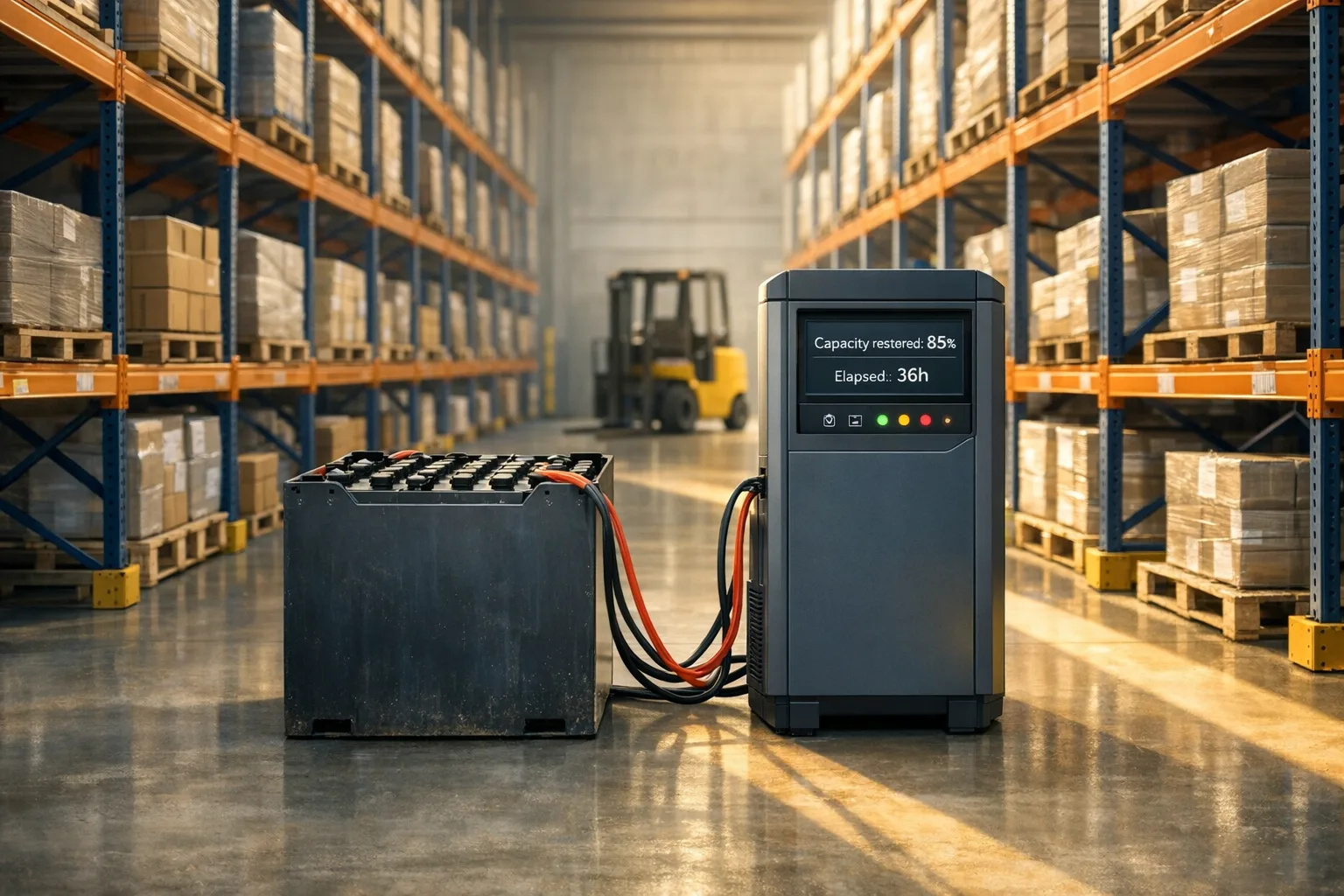
Battery regeneration can also make a big difference. Using high-frequency pulsation, this process restores up to 80% of a battery's capacity, extending its lifespan significantly. This not only reduces waste but also cuts long-term costs. Providers like Fazlerasheed And Company include battery regeneration in their services, ensuring your equipment stays energy-efficient throughout the rental period.
Additionally, check for AI-driven predictive maintenance. Sensors can alert providers to replace parts before they fail, potentially reducing downtime by 60%. This proactive approach keeps your operations running smoothly while minimising emergency repair costs.
Verify Retreading and Spare Parts Availability
Tyre wear is inevitable, especially in mixed-yard operations. Retreading services for wheels, castors, and rollers can reduce tyre replacement costs by up to 40% while keeping waste out of landfills. Ensure your rental provider includes retreading in their service package.
Access to high-quality, manufacturer-approved spare parts is equally important. This ensures your forklift maintains its energy efficiency during the rental period. Before signing the agreement, take photos of the forklift upon delivery to document any pre-existing damage. This step protects you from being held responsible for issues that weren’t your fault. Also, confirm the provider's response time for service calls and check if 24/7 emergency support is available.
In Pakistan, companies like Fazlerasheed And Company offer customised rental solutions with flexible durations, thorough maintenance plans, and reliable spare parts support. Their expertise in battery-operated forklifts and eco-friendly services - such as battery regeneration and retreading - helps you maintain efficient and sustainable operations. By carefully evaluating these terms, you can secure a rental agreement that meets both your operational goals and environmental priorities.
Choose a Reliable Provider in Pakistan
Selecting the right provider for your material handling needs in Pakistan is crucial. You need a partner with the technical know-how and local support to keep your operations running seamlessly. In Pakistan's industrial environment, where even a short downtime can disrupt productivity, having a reliable partner is key. This partnership also ensures that your operations align with the eco-friendly strategies we’ve discussed earlier.
Look for Expertise in Battery-Operated Forklifts
When evaluating providers, it's important to focus on their expertise in zero-emission, battery-operated forklifts. This includes knowledge of lithium-ion versus lead-acid batteries, regenerative braking systems, and energy-efficient motors. A provider who understands these advanced systems can ensure your equipment performs efficiently.
Additionally, ensure the provider offers full lifecycle support. For instance, Fazlerasheed And Company stands out by not only offering forklift rentals but also providing services like battery regeneration, wheel retreading, and expert maintenance. These services are essential to sustaining eco-friendly and efficient operations.
Find Local Solutions and Support
Having a provider with a strong local presence in Pakistan is a game-changer. It ensures quick response times for maintenance, repairs, and even 24/7 emergency support. Local providers are also better equipped to tailor their solutions to Pakistan’s unique infrastructure and operational demands. This kind of support is critical for managing downtime and maintaining the performance of your battery-operated forklifts.
For example, Fazlerasheed And Company operates across Lahore in areas like DHA, Raiwind Road, and Badami Bagh, ensuring rapid support and easy access to spare parts. With their nationwide reach, you’re never far from technical assistance, whether it’s for routine maintenance or urgent repairs. Plus, their understanding of Pakistan’s environmental regulations helps ensure your fleet stays compliant.
Evaluate Product and Service Range
Beyond technical expertise and local support, it’s important to consider the range of products and services a provider offers. A broad offering reflects their ability to support you in the long term.
Fazlerasheed And Company offers a comprehensive portfolio, including battery-operated forklifts, reach trucks, traction batteries, spare parts, battery regeneration, and wheel retreading services. They also supply materials like warehouse floor crack fillers and provide maintenance for golf carts. Their diverse offerings underline their commitment to providing complete material handling solutions tailored to your needs.
Conclusion
Selecting eco-friendly forklift rentals in Pakistan involves careful planning to balance environmental care with operational needs. Begin by evaluating your specific requirements, such as load capacity, whether you'll be working indoors or outdoors, and how frequently the equipment will be used. This initial step not only ensures you choose the right forklift but also helps avoid unnecessary energy use, reducing your overall carbon footprint.
Prioritise battery-operated or electric forklifts. These models, as highlighted earlier, can cut CO₂ emissions by around 7 metric tonnes annually compared to diesel alternatives. Lithium-ion battery systems, in particular, boast an impressive energy conversion efficiency of 90–95%. Features like regenerative braking and energy-efficient motors can further lower operational costs by as much as 75%. However, make sure your facility is equipped with the necessary charging infrastructure to support these models.
Once you've addressed energy efficiency, take a close look at the rental terms. Opt for agreements that include maintenance, battery regeneration, and access to spare parts. Transparent pricing and flexible options help you avoid hidden costs and maintain smooth operations. Given the fast-paced industrial environment in Pakistan, even minor downtime can disrupt productivity, making reliable service agreements a must.
Finally, choose a local rental partner with proven expertise in battery-operated forklifts. A knowledgeable provider can help ensure your fleet operates efficiently and sustainably. For instance, Fazlerasheed And Company offers a comprehensive range of services, including forklift rentals, battery regeneration, wheel retreading, and expert maintenance. With their nationwide presence and technical know-how, they are a dependable choice for businesses aiming to adopt sustainable material handling practices.
FAQs
What are the advantages of using battery-operated forklifts indoors?
Battery-powered forklifts are a smart pick for indoor environments because they produce no emissions, helping to keep the air clean in closed spaces. Plus, they run with much less noise, making the workplace quieter and more pleasant for everyone. On top of that, they’re cost-efficient to operate, saving money while being kinder to the environment.
Thanks to their compact build and easy manoeuvrability, these forklifts are perfect for warehouses and factories, especially where space is tight. Opting for battery-powered forklifts means creating a cleaner, safer, and more efficient workspace indoors.
What steps should I take to prepare my facility for charging electric forklifts?
To get your facility ready for charging electric forklifts, start by evaluating your electrical system's capacity. Make sure it can handle the voltage needs of your forklift chargers, which usually range between 240V and 480V. This step helps avoid any compatibility problems and ensures the chargers work efficiently.
Next, designate a dedicated charging area. This space should be safe, well-ventilated, and large enough to fit multiple forklifts comfortably. Maintain at least 1.2 metres of space between each charging station to prevent overheating. If you're using lead-acid batteries, ensure there’s proper ventilation to manage any fumes. For lithium-ion batteries, consider temperature-controlled zones to maintain safety.
Finally, confirm that your charging setup meets all safety standards. This includes fire protection measures, spill containment systems, and easily accessible emergency shut-off switches. A well-thought-out charging area not only keeps your operations running smoothly but also prioritises safety at your facility.
What factors should I consider when renting eco-friendly forklifts?
When renting forklifts with a focus on eco-friendly options, it’s important to weigh a few key factors to ensure the rental aligns with both your operational needs and environmental goals. Start by clarifying the rental period and verifying whether maintenance and support services are part of the package - these can significantly influence overall costs and performance reliability.
Determine whether the forklift is electric or battery-powered, and check if the rental agreement covers essentials like battery maintenance, charging setups, or any necessary upgrades to your existing infrastructure.
Make sure the forklift meets energy efficiency standards and complies with local environmental regulations to stay aligned with your sustainability objectives. Also, look into the flexibility of the rental terms - can you renew the contract, end it early, or exchange the forklift for a newer model if needed? By addressing these points, you can keep costs manageable while integrating eco-conscious practices into your operations.
Looking for Forklifts or Parts?
Fazlerasheed & Co. supplies reconditioned forklifts, genuine spare parts, and traction batteries across Pakistan. Get a free quote today.