How to Cut Costs with Forklift Battery Regeneration
Want to save up to 75% on forklift battery costs? Instead of replacing expensive lead-acid batteries, regeneration restores 80–90% of their original capacity at just 25–35% of the cost. This process reverses sulfation, a common issue that reduces battery performance, and gets your batteries back to work in just 24–48 hours.
Key Takeaways:
- Cost Savings: Regeneration costs Rs. 2,00,000–3,20,000 per battery, compared to Rs. 8,00,000–12,00,000 for a new one.
- Quick Turnaround: Batteries are ready in 24–48 hours, avoiding weeks of downtime caused by importing new batteries.
- Energy Efficiency: Regenerated batteries charge 18–22% faster, saving up to Rs. 55,000 per forklift annually.
- Lifespan Extension: Adds 1–2 years of use per treatment, reducing long-term expenses.
For businesses in Pakistan, companies like Fazlerasheed And Company provide professional regeneration services, helping you cut costs and keep operations running smoothly. Start by assessing your battery fleet and identifying candidates for regeneration today.
sbb-itb-a884676
The Cost Benefits of Battery Regeneration
What is Battery Regeneration?
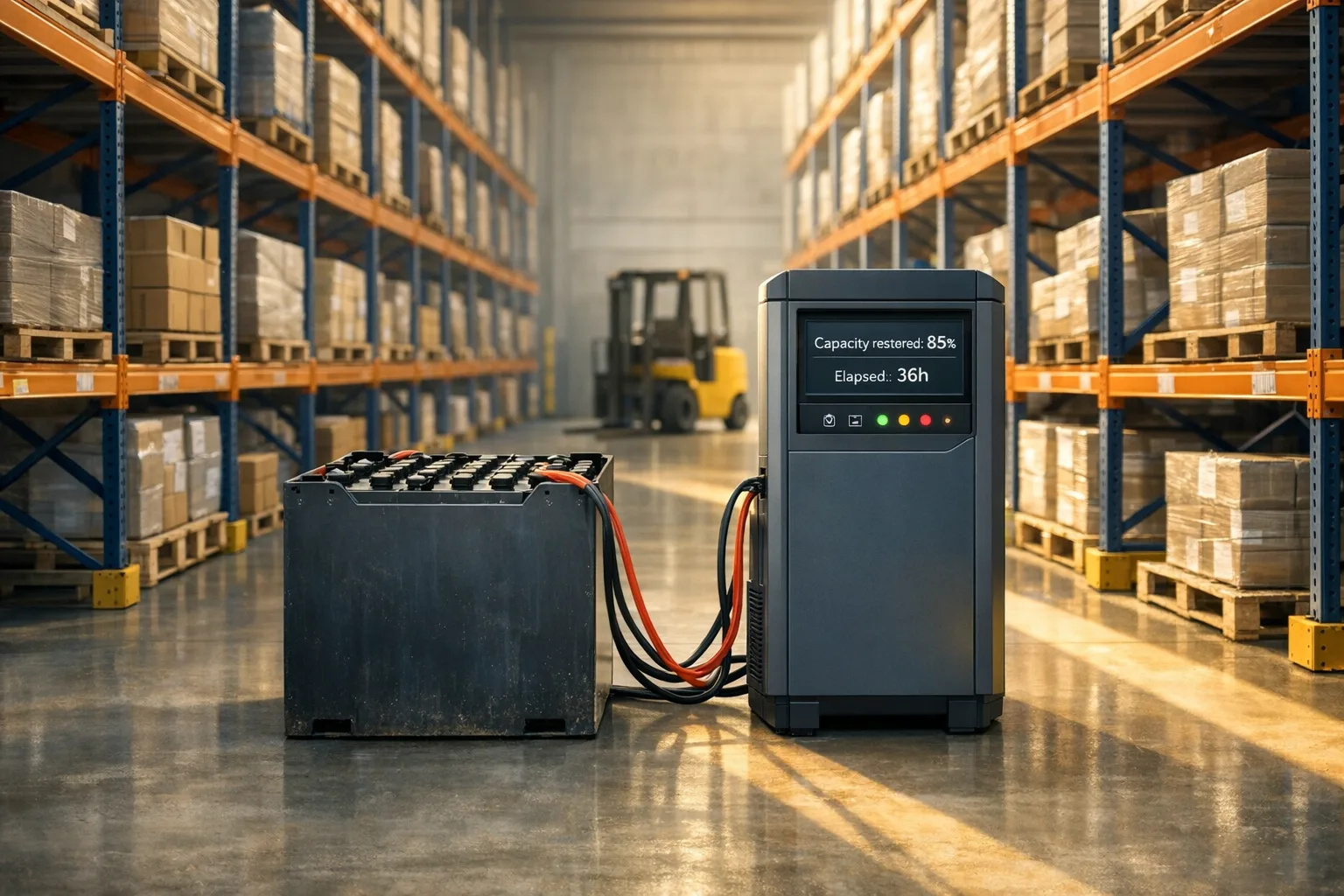
Battery regeneration is a process that restores the performance of lead-acid batteries by addressing sulphation. This involves using high-frequency electrical pulses to dissolve lead sulphate crystals back into the electrolyte, effectively recovering lost capacity. The outcome? A battery that operates much closer to its original efficiency - without the expense of buying a new one.
Cost Comparison: Regeneration vs. New Batteries
In Pakistan, replacing an industrial forklift's traction battery can cost anywhere between Rs. 8,00,000 and Rs. 12,00,000, depending on its voltage and capacity. On the other hand, regeneration costs are significantly lower - just 25% to 40% of that price, which translates to approximately Rs. 2,00,000 to Rs. 3,20,000 per unit. Even at this reduced cost, the process can restore 80–90% of the battery's original capacity.
"Battery regeneration typically costs 25–35% of new battery price while restoring 80–90% of original capacity, making it highly cost-effective." - HMI Parts
When implemented as part of a structured programme, battery regeneration can cut the Total Cost of Ownership (TCO) by 40% to 60% compared to replacing batteries outright. This makes it a compelling option for businesses operating in Pakistan, where cost efficiency is often a top priority.
Here’s a quick comparison to highlight the cost differences:
| Metric | Regeneration | New Battery |
|---|---|---|
| Upfront Cost | Rs. 2,00,000–3,20,000 (est.) | Rs. 8,00,000–12,00,000 |
| Capacity Restored | 80–90% of original | 100% |
| Turnaround Time | 24–48 hours | 3–6 weeks (import dependent) |
| TCO Reduction | 40–60% lower | Baseline |
Key Savings for Pakistani Businesses
The benefits of regeneration go beyond just upfront savings. For Pakistani businesses, it also addresses challenges tied to importing new batteries. Since most traction batteries are imported, businesses face customs duties, exchange rate risks, and long wait times - often 3 to 6 weeks. This delay can result in extended downtime, directly impacting productivity and revenue in industries like warehousing and logistics.
Regeneration also brings energy savings into the equation. By reducing internal resistance, restored batteries charge 18% to 22% faster than sulphated ones. This efficiency can lower annual energy costs by roughly Rs. 33,000 to Rs. 55,000 per forklift. Multiply that by a fleet of five or ten forklifts, and the savings become substantial.
Additionally, local service providers like Fazlerasheed And Company offer battery regeneration services within Pakistan, eliminating import-related delays. With a turnaround time of just 48 hours, businesses can get their equipment back to work quickly, keeping operations running smoothly.
Assessing Your Forklift Battery Fleet for Regeneration
Getting a clear understanding of your forklift battery fleet is the first step toward saving costs and improving efficiency through regeneration. A detailed assessment helps you figure out which batteries are worth regenerating, which need ongoing maintenance, and which are ready for replacement.
Creating a Battery Inventory
Start by compiling a detailed inventory of every battery in your fleet. Record important details like the model, voltage, age, usage hours, and charging habits for each battery. Keep an eye out for frequent watering needs, as this could point to overcharging or an ageing battery.
Once you've documented the basics, move on to physical and electrical inspections. Begin by cleaning the terminals to ensure accurate testing. Then, check for voltage and measure electrolyte density to spot any failing cells. Make sure to label each cell during this process so you can easily track weak ones later.
"Regular maintenance isn't just a good idea - it's a must for safety and efficiency." - John Thompson, Industrial Battery Expert
Did you know that poorly maintained batteries can lose up to 30% of their capacity? Even worse, about 50% of battery failures are linked to improper watering alone. A thorough inventory often reveals these hidden issues, helping you tackle inefficiencies before they escalate.
Once your inventory is complete, focus on identifying batteries that are showing early signs of wear.
Signs Your Batteries Need Regeneration
If a battery struggles to complete a full shift, it’s a clear sign of capacity loss. Other warning signs include longer charging times, incomplete charging cycles, and noticeable drops in performance.
On the physical side, watch for charging temperatures climbing above 45–50°C - this often signals internal resistance caused by sulfation. Uneven specific gravity across cells, a sulphur smell, or unusual gassing are also red flags.
Once these issues are identified, categorise your batteries by condition to prioritise actions effectively.
Grouping Batteries by Condition
After pinpointing weakened batteries, organise them into groups based on their condition. This helps you focus your resources where they’re needed most. Here’s a simple way to categorise them:
| Battery Condition | Key Indicators | Recommended Action |
|---|---|---|
| Healthy | Voltage per cell 2.1V+; specific gravity 1.265+; no visible damage | Routine maintenance |
| Degraded (Repairable) | 30–40% capacity loss; under load, voltage below 1.8V; reduced runtime; moderate sulfation | Regeneration candidate |
| Damaged (Beyond Repair) | Cracked or swollen casing; cells at 0V; over 8 years old; severe plate corrosion | Replace and recycle responsibly |
For batteries in the degraded category, perform a load test to confirm if they’re suitable for regeneration. Use a 50% C20 discharge rate for 30 minutes - if a 36V pack drops below 36V during this test, it’s a candidate for attention. However, batteries in the damaged group should not undergo regeneration. Physical damage or shorted cells cannot be fixed through this process.
How to Set Up a Forklift Battery Regeneration Programme
Once you've assessed your battery inventory and categorised their condition, the next step is to turn that information into a structured regeneration plan. With clear goals and a proper budget, you can create a programme that not only keeps operations smooth but also steadily lowers battery costs.
Setting Goals and Priorities
Start by setting clear and measurable targets, like cutting down replacement costs and extending battery life. For instance, aim to reduce battery expenses over the next 12 months - a realistic goal with a steady regeneration schedule.
Plan to regenerate heavily used batteries every 6–9 months, while standard-use batteries can follow a 12–18-month schedule. With these priorities in place, you can allocate resources more effectively and avoid unnecessary downtime.
Budgeting and Planning
Regeneration is a cost-effective alternative, typically priced at 25–35% of a new battery's cost. This can lead to substantial savings for your fleet.
"Regenerating a battery saves 30 to 70% compared to the price of a new one, while extending its life by 3 to 6 years on average." - ADEME
Expect a 24–48 hour turnaround per battery. To minimise disruptions, plan to stagger regeneration during periods of low demand or rotate batteries in small batches.
Working with Fazlerasheed And Company
!Fazlerasheed And Company
Fazlerasheed And Company brings over a decade of expertise in battery regeneration, offering a professional and reliable service tailored to the material handling industry. Their process is designed to restore batteries to peak performance, using a series of precise steps:
| Regeneration Step | Action Taken |
|---|---|
| Initial Assessment | Testing the battery to determine its suitability for regeneration |
| Controlled Discharge | A monitored discharge to prepare the battery cells for treatment |
| Desulfation | Using high-frequency pulse technology to break down sulphate crystals |
| Cell Balancing | Ensuring consistent performance across all cells in the battery |
| Recharge & Test | Carefully recharging the battery and verifying its capacity |
Their team can restore up to 80–90% of a battery's original capacity, making it suitable for most warehouse and logistics needs. With custom pricing based on fleet size and battery condition, businesses can easily compare the cost of regeneration with the price of new batteries. This transparency allows for informed decisions and better cost management.
Maintaining Regenerated Batteries to Keep Costs Down
Regenerating a battery is just the start; keeping it in good condition afterward is what ensures long-term savings. Consistent care is the difference between a battery that lasts years and one that fails in months.
Daily and Weekly Care Routines
Taking care of your battery between charges is key to maintaining its performance. Here are some essential habits to adopt:
- Daily: Check for physical damage, ensure the battery is charged to the correct levels, and make sure all connectors are securely attached.
- Weekly: Monitor electrolyte levels, aiming for a specific gravity of 1.285 in each cell. If there’s a significant difference between cells, perform an equalisation charge.
Equalisation helps balance cell voltages and prevents acid stratification. Since the process takes about 11 hours plus cooling time, it’s best done over the weekend when the forklift isn’t in use. Additionally, clean the battery tops regularly with a neutralising agent to remove acidic residue that can lead to self-discharge and terminal corrosion. Businesses that follow these routines have reported a 20% drop in battery-related interruptions within six months. These small steps also pave the way for timely professional diagnostics and potential re-regeneration.
Periodic Inspections and Re-Regeneration
While daily and weekly care is essential, periodic diagnostics ensure your battery stays in top shape. Schedule professional inspections at regular intervals. A 6–12 month diagnostic capacity test will give you a clear picture of the battery’s health and help you plan for re-regeneration or replacement.
Keep an eye out for warning signs between inspections: shorter run times, longer charging times, overheating, or losing charge overnight. Re-regeneration becomes necessary when capacity drops significantly. For batteries used heavily, this might mean service every 6–9 months, while standard-use batteries can typically go 12–18 months between re-regenerations. Addressing these issues early can save up to 25% annually on battery replacements and energy costs.
"If you service your battery once a year with our battery regenerator, battery sulphation will never stand a chance!" - United Forklifts
Training Staff on Battery Care
Routine maintenance is only part of the equation; well-trained staff are equally important. Proper training not only extends battery life but also improves workplace safety. Nearly 70% of forklift accidents are preventable with the right training and safety measures.
Training should include the use of acid-resistant gloves, goggles, and aprons, along with enforcing a strict no-smoking rule within 50 centimetres of batteries due to hydrogen gas emissions. Operators should also be taught to spot early warning signs, such as reduced run time, slower charging, or excessive heat, so issues can be addressed quickly.
Place clear checklists and warning signs in charging areas to reinforce these practices. A digital maintenance log that tracks charge cycles, water refills, and equalisation dates can further improve care. This log not only identifies performance trends but also supports warranty claims and helps the team shift from reactive to proactive maintenance. Combining regular upkeep with informed staff practices ensures your batteries perform better and save money over the long haul.
Conclusion: Cutting Costs Through Battery Regeneration
Adopting battery regeneration is a smart way to cut costs while extending the life of your batteries. It offers nearly the same performance as new batteries but at a fraction of the price, making it an effective and economical option for businesses in Pakistan that rely on battery-operated fleets.
With proper maintenance and regular regeneration, you can add 1–2 years to a battery's lifespan per treatment. This not only ensures reliable performance but also helps minimise unexpected downtime. Plus, these operational benefits come with the added advantage of reducing costs and supporting environmental responsibility.
Every regenerated battery means fewer units being discarded, helping businesses in Pakistan manage industrial waste more effectively. This approach not only saves money but also aligns with sustainability goals that are increasingly important in today’s business environment.
Fazlerasheed And Company, with over a decade of experience, offers advanced battery regeneration services tailored to your needs. They recommend regeneration every 12–18 months for standard use or every 6–9 months for heavy-duty applications. Assess your battery fleet today, identify units for regeneration, and start cutting costs right away.
FAQs
Which forklift batteries can’t be regenerated?
Battery regeneration can be effective for many lead-acid and Ni-Cd batteries, but it's not a one-size-fits-all solution. If a battery has severe physical damage - such as heavy corrosion or material loss from the positive plates - it’s unlikely to be restored. Similarly, older batteries (over 8 years) or those with extreme sulfation may not respond well to regeneration.
To avoid such problems and get the most out of your battery, Fazlerasheed And Company suggests scheduling annual maintenance. Their professional regeneration services can help extend battery life and maintain optimal performance.
How many times can a battery be regenerated safely?
When it comes to battery regeneration, there's no strict cap on the number of times it can be done. The outcome largely hinges on the battery's condition - particularly if it's lost around 30%–40% of its capacity due to sulphation. That said, regeneration has its limits. It can't reverse physical damage like corrosion or warped plates. If repeated attempts fail to revive the cells, it's a clear sign that the battery has likely reached the end of its lifespan.
Will regeneration affect my charger or forklift warranty?
Battery regeneration is a safe and effective way to bring back a battery's performance and prolong its lifespan without affecting the warranty of your forklift or charger. It works by tackling sulphation - a common issue that leads to early battery failure - using controlled high-frequency pulsation. Since this process is a maintenance technique rather than a change to the electrical system, it offers a dependable method to safeguard your investment in battery-powered forklifts and material handling equipment.
Looking for Forklifts or Parts?
Fazlerasheed & Co. supplies reconditioned forklifts, genuine spare parts, and traction batteries across Pakistan. Get a free quote today.