How to Choose a Forklift Rental Plan
Renting a forklift? Here's what you need to know: Choosing the right plan can save money, avoid delays, and ensure safety. Start by assessing your workload, worksite conditions, and rental duration. Whether you're in Karachi or Lahore, aligning the forklift type with your needs is essential. Here's a quick breakdown:
- Workload Requirements: Determine load capacity, lift height, and usage frequency.
- Worksite Conditions: Indoor spaces suit electric forklifts; outdoor terrains need diesel or LPG models.
- Rental Duration: Short-term rentals are ideal for temporary needs, while long-term rentals reduce costs for ongoing operations.
- Cost Factors: Beyond base rates, account for delivery fees, overtime charges, and maintenance responsibilities.
- Reliable Provider: Opt for experienced companies like Fazlerasheed And Company, offering a wide range of equipment and dependable support.
Quick Tip: Electric forklifts are cost-efficient indoors, while LPG or diesel forklifts excel outdoors. Always measure aisle widths and rack heights to avoid mismatches. For extended shifts, consider lithium-ion batteries for faster charging and longer runtime.
Keep reading for an in-depth guide to selecting the perfect rental plan for your business.
sbb-itb-a884676
Assessing Your Operational Needs
Before diving into rental prices or signing contracts, take a step back and define what your operation truly demands. Skipping this step often leads to renting equipment that either falls short of your requirements or exceeds what’s necessary, wasting resources.
Understand Your Workload Requirements
Start by figuring out the load capacity, lift height, and how often you’ll use the forklift. These three factors are key to finding the right equipment for your daily tasks.
For instance, if your warehouse racks reach up to 12 metres (40 feet), a standard reach truck can handle the job perfectly. But if your needs are more modest - around 4.5 metres (15 feet) - an order picker might be a better fit. For racks that fall somewhere in the middle, a mid-range electric stacker could save you money while still meeting your needs. Usage frequency is another critical consideration. A forklift used occasionally for a few lifts an hour faces far less wear and tear than one running continuously for a 10-hour shift.
Once you’ve nailed down your workload, it’s time to look at the physical conditions of your worksite.
Evaluate Your Worksite Conditions
Your forklift’s operating environment plays a big role in determining the right type of equipment.
"The operating environment will dictate the type of forklift and tires that are suitable." - Conger Industries Inc.
For indoor spaces with smooth concrete floors, electric forklifts with cushion tyres are ideal. But if your operations involve outdoor yards, construction sites, or uneven terrain, you’ll need forklifts equipped with pneumatic tyres and more durable suspension. Aisle width is another critical factor. Standard aisles are about 2.4 metres (8 feet) wide, but tighter layouts may require narrow-aisle forklifts. On the other hand, sit-down counterbalance forklifts need at least 3.6 metres (12 feet) of aisle space to manoeuvre.
To avoid costly mistakes, measure your narrowest aisle and the height of your tallest rack before committing to a rental. This simple check can save you from mismatches that disrupt operations.
Identify Specific Equipment Requirements
Finally, think about any specific attachments or setup needs your forklift might require.
If your materials demand special attachments like side shifters or clamps, keep in mind that these can reduce the forklift’s lifting capacity. For electric forklifts, check whether your facility’s power supply is compatible - most setups require either 240V single-phase or 480V three-phase power. Also, ensure the power source is within 7.5 metres (25 feet) of the forklift’s parking area. Overlooking these details could lead to unexpected costs for electrical upgrades or delays in operations.
Matching the Forklift Type to Your Work Environment
Once you've evaluated your workload and worksite conditions, the next step is choosing the right forklift type for your environment. Picking the wrong one can lead to inefficiencies and unexpected costs. This decision should directly reflect your operational needs.
Electric Forklifts for Indoor Use
Electric forklifts are perfect for indoor settings. They run quietly, produce no emissions, and have fewer moving parts, which translates to lower maintenance costs. Additionally, their non-marking cushion tyres are gentle on epoxy-coated or polished floors, making them ideal for food production facilities, retail warehouses, or any location with delicate flooring.
"Electric forklift models dominate indoor operations because they produce zero tailpipe emissions, run quietly, and have fewer moving parts than internal combustion equivalents." - Robert Martinez, Skilled Trades Exam Specialist
Compared to gas-powered models, electric forklifts have about 90% fewer moving parts. Their operating costs range between PKR 700 and PKR 975 per hour, significantly lower than the PKR 1,525 to PKR 1,950 per hour typical for LPG forklifts.
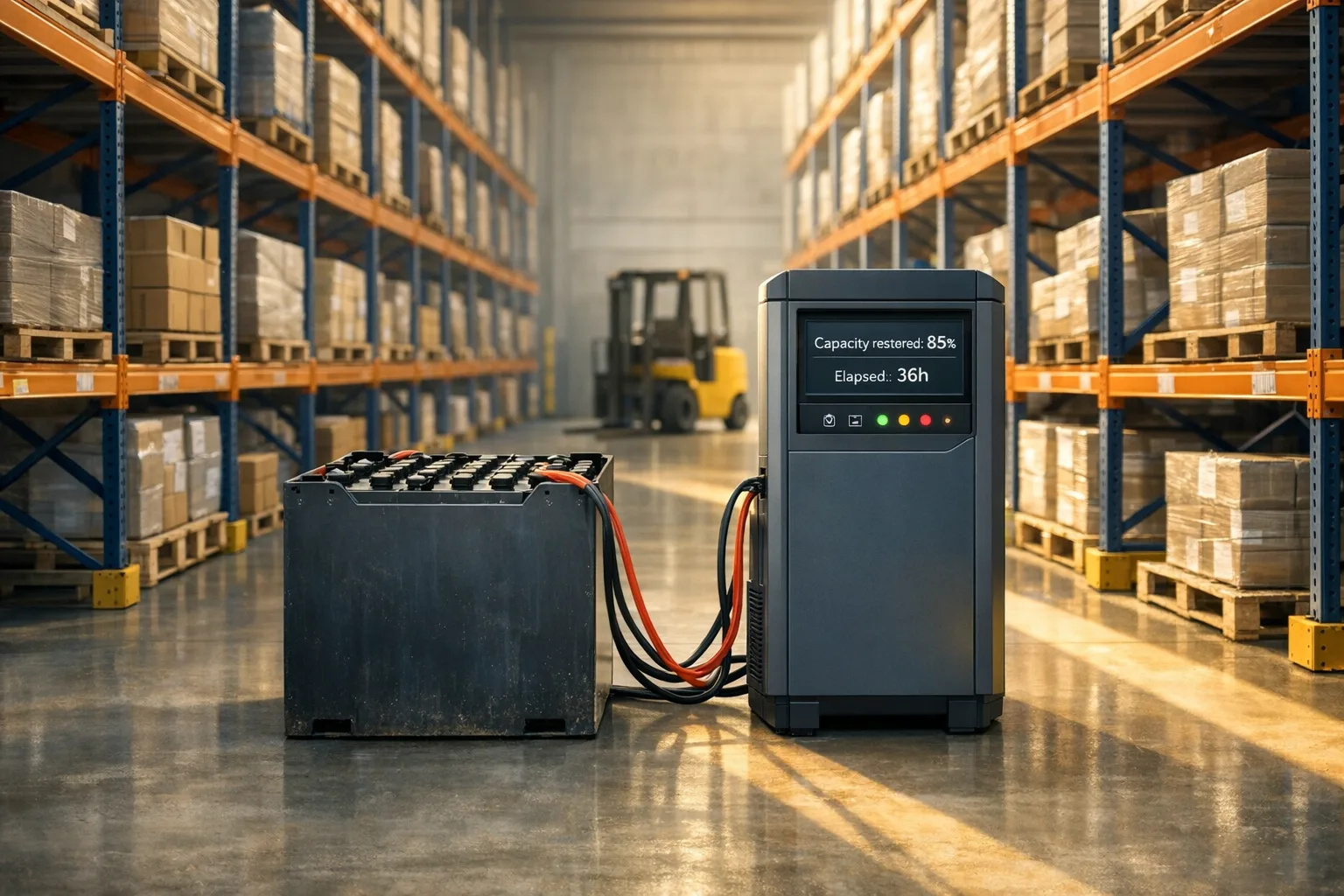
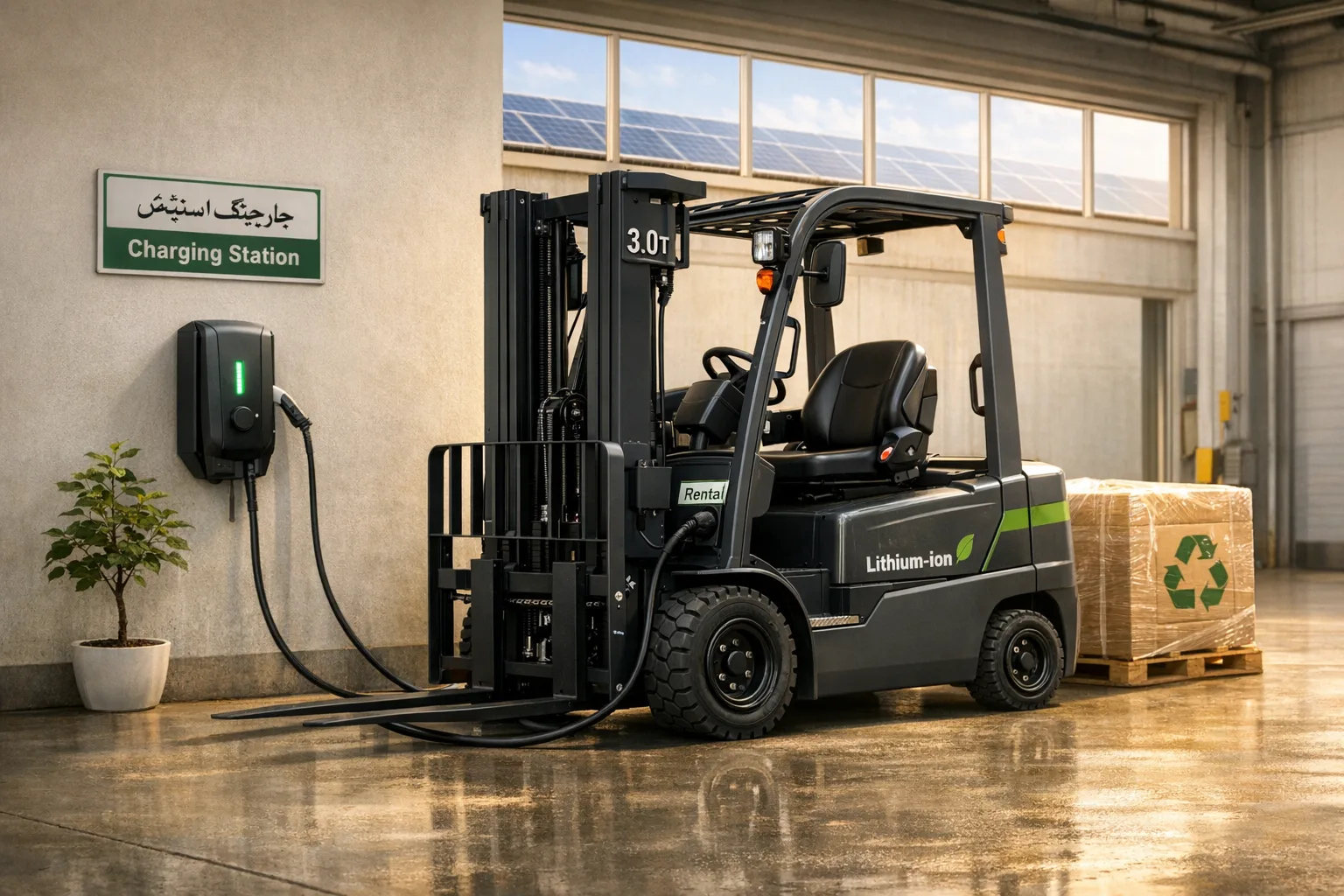
However, charging times can be a challenge. Traditional lead-acid batteries require 8–10 hours to recharge, which might disrupt multi-shift operations. Fortunately, advances in lithium-ion (LiFePO4) technology have addressed this issue. Fazlerasheed And Company, the authorised distributor for BYD and EP Green in Pakistan, offers forklifts equipped with batteries that charge in just 90 minutes and provide over 15 hours of runtime per charge. Their RoyPow LiFePO4 batteries promise a service life of up to 10 years and can handle 3,500+ charge cycles, making them a game-changer for businesses with extended shifts.
While electric forklifts shine indoors, outdoor or uneven work environments require a different solution.
Diesel and LPG Forklifts for Outdoor Use
Diesel and LPG forklifts are better suited for outdoor locations like construction sites, loading docks, or yards with uneven surfaces. These forklifts come with pneumatic tyres that can handle gravel, grass, and other rough terrains. Unlike electric forklifts, their engines perform reliably in cold weather, with no loss of capacity even in temperatures below 4°C.
One of LPG's standout features is its quick refuelling process. Swapping an LPG tank takes less than five minutes, making it an excellent option for continuous, multi-shift operations where downtime for charging isn't feasible. For indoor use, though, it's crucial to have high-volume ventilation to avoid carbon monoxide build-up.
| Factor | Electric Forklift | Diesel / LPG Forklift |
|---|---|---|
| Best Environment | Indoor, enclosed, temperature-controlled | Outdoor, rough terrain, mixed |
| Emissions | Zero | Exhaust fumes |
| Tyre Type | Non-marking cushion | Pneumatic |
| Maintenance Interval | Every 500–1,000 hours | Every 250 hours |
| Refuelling / Charging | 1.5–10 hours | 5-minute tank swap |
| Cold Weather Performance | Reduced (20–30% capacity drop below 4°C) | Unaffected |
If your worksite is indoors or has controlled conditions, electric forklifts are the way to go. For outdoor or mixed terrains, diesel or LPG forklifts are more reliable. Ultimately, your worksite conditions should guide your choice - not just the upfront cost.
Choosing the Right Rental Duration
Once you've chosen the right forklift, the next step is deciding how long you'll need it. This decision plays a big role in your overall costs and how easily you can adjust to changing needs. Picking the wrong duration could mean paying extra - whether it's from high daily rates or penalties for late returns.
Short-Term Rentals for Temporary Needs
Short-term rentals, usually available on a daily or weekly basis, are ideal for situations where your requirements are clearly short-lived. These might include seasonal demand spikes, a one-time reorganisation, or a brief construction project. While daily rates may seem higher, they make sense when you're renting for a limited period.
For example, a standard 5,000 lb forklift typically rents for USD 150–400 per day (about PKR 41,500–1,11,000) or USD 400–1,200 per week. Specialty models, like rough-terrain forklifts, often cost more. Here's a tip: take 20–30 time-stamped photos of the forklift at delivery and return to avoid disputes over damage charges.
Short-term contracts often include a usage limit of 8 hours per day or 40 hours per week, while monthly agreements allow up to 176 hours (based on an 8-hour workday over 22 days). If your team works longer hours, you might face overtime fees, so it's crucial to estimate your actual operating hours upfront.
Long-Term Rentals for Ongoing Operations
For businesses with consistent, year-round needs, long-term rentals are the smarter choice. Logistics centres, manufacturing plants, and large warehouses often benefit from monthly or annual rental plans, which reduce the daily cost significantly. Monthly rates for a standard forklift range from USD 900–3,500 (around PKR 2,49,000–9,70,000).
If your operation involves double shifts, negotiate a higher usage cap to avoid overtime charges. Long-term contracts often include perks like regular maintenance and tyre replacements, simplifying your operational expenses. In Pakistan, electric and lithium-ion forklifts - like those using BYD LiFePO4 technology - are becoming popular for their lower running costs and zero emissions.
Just as your worksite conditions determine the type of forklift you need, the rental duration you choose affects both cost and maintenance planning.
| Factor | Short-Term Rental | Long-Term Rental |
|---|---|---|
| Typical Duration | 1 day to 4 weeks | 1 month to several years |
| Best For | Seasonal peaks, one-off tasks | Steady warehouse or logistics work |
| Cost Structure | Higher daily/weekly rates | Lower monthly/annual rates |
| Maintenance | Included (routine) | Included (routine) |
| Flexibility | High | Lower; fixed contract term |
If you anticipate needing the equipment for longer than planned, inform your provider right away. Many contracts automatically renew at higher daily rates if the forklift isn’t returned on time.
Reviewing the Total Rental Cost
When renting a forklift, the total cost involves more than just the base rate. While the headline price might grab your attention, there are other factors that can significantly impact what you end up paying.
Understanding the Base Rental Price
The base rental price is a critical piece of the puzzle when planning your budget. This price is largely influenced by the forklift's lift capacity and type. For example, a standard 5,000 lb capacity forklift typically costs between USD 200–300 per day (approximately PKR 55,000–83,000) or USD 900–1,400 per month (around PKR 2,49,000–3,88,000). If you need a more robust machine, such as one with an 8,000 lb capacity, the daily rate jumps to USD 350–550.
Keep in mind, the base price usually covers minor wear and tear but excludes significant damage, like bent forks or broken lights. It’s also important to check whether delivery and pickup charges are included in the base price or billed separately.
Factoring in Additional Costs
Once you’ve got the base cost nailed down, it’s time to consider the extra charges that might come into play:
- Delivery and pickup fees: These can range from USD 75–400 per trip, depending on the distance.
- Overtime usage: If you exceed your contracted hours, expect to pay USD 4–12 per extra hour.
- Damage waivers: These add 10–15% to your base rate.
- Insurance and taxes: These are not included in the quoted price and will need to be accounted for.
For long-term rentals, you might be able to negotiate some of these charges, such as delivery fees or damage waivers.
Using a Cost Comparison Table
To make a well-informed choice, it helps to compare the costs of different forklift types. Here’s a breakdown to guide your decision:
| Forklift Type | Avg. Daily Rate (USD) | Avg. Daily Rate (PKR approx.) | Fuel/Energy Cost per Shift | Best Use Case |
|---|---|---|---|---|
| Electric Sit-Down (5,000 lb) | USD 200–290 | PKR 55,000–80,000 | PKR 1,100–2,200 (electricity) | Indoor warehouses, zero emissions |
| LPG/Propane (5,000 lb) | USD 175–325 | PKR 48,000–90,000 | PKR 5,500–9,700 (per cylinder) | Mixed indoor/outdoor use |
| Diesel Heavy-Duty | USD 375–700+ | PKR 1,04,000–1,94,000+ | PKR 1,100+ per gallon | Outdoor, heavy loads |
| Cushion Tyre (Indoor) | USD 149–448 | PKR 41,000–1,24,000 | Varies by fuel type | Smooth concrete floors |
| Rough Terrain | USD 450–800 | PKR 1,25,000–2,22,000 | Varies by fuel type | Uneven construction sites |
For extended projects, it’s often more economical to opt for weekly or monthly rates. For instance, a 5,000 lb forklift might cost USD 197 for an 8-hour day, but renting it for a full 40-hour week could cost USD 592, offering better value.
Checking Contract and Support Terms
Once you've outlined your equipment and budget requirements, it's time to dive into the contract details. This step is essential to avoid hidden costs and ensure smooth operations. Even a contract that seems simple at first glance can include clauses that lead to unexpected expenses. Reviewing these terms carefully ties into your earlier planning, safeguarding your investment over the long run.
Confirming Maintenance and Support Services
Most rental agreements include routine maintenance like oil changes, lubrication, and replacing worn parts in the base fee. However, tasks like battery charging, fluid checks, and refuelling typically fall on the renter. It's important to clarify which responsibilities are yours and which are covered by the provider.
Ask about service response times and equipment replacement policies before signing the agreement. For instance, how quickly can they send a technician if your forklift breaks down during a shift? Do they provide 24/7 emergency support? Providers with larger fleets - think over 200 machines - are usually better equipped to offer same-day replacements, minimising downtime and keeping your operations running smoothly.
Another good practice: take photos of the forklift from all angles upon delivery. Documenting any pre-existing damage, including dents or scratches on parts like the mast or overhead guard, helps protect you from being held responsible for issues that were already there.
Flexibility and Customisation Options
A flexible rental contract is just as important as maintenance coverage, especially since operational needs can change unexpectedly. Projects might extend, or increased demand could require additional equipment. A contract that accommodates these shifts without heavy penalties can save you a lot of trouble.
Check whether the agreement allows for extensions, upgrades, or adding attachments like side-shifters or fork positioners. These extras can cost anywhere from PKR 4,000 to PKR 22,000 per day. If you're running multiple shifts, negotiate a higher usage cap - most monthly contracts include 176 hours, with overtime fees ranging from PKR 2,200 to PKR 5,000 per hour. Buying extra hours in advance can cut these overage costs by 30–50%, making it a smart move.
"Rental providers typically offer better prices for longer term rentals." - Conger Industries
If there's a chance your project timeline might change, let your provider know early. Arranging an extension ahead of time ensures the equipment remains available and pricing stays consistent.
Fazlerasheed And Company: A Reliable Forklift Rental Partner in Pakistan
!Fazlerasheed And Company
When it comes to material handling equipment, experience matters. Fazlerasheed And Company stands out as one of Pakistan's leading names in this field, with over a decade of expertise and a fleet of more than 200 machines. Partnering with such an established provider can make all the difference for your operations.
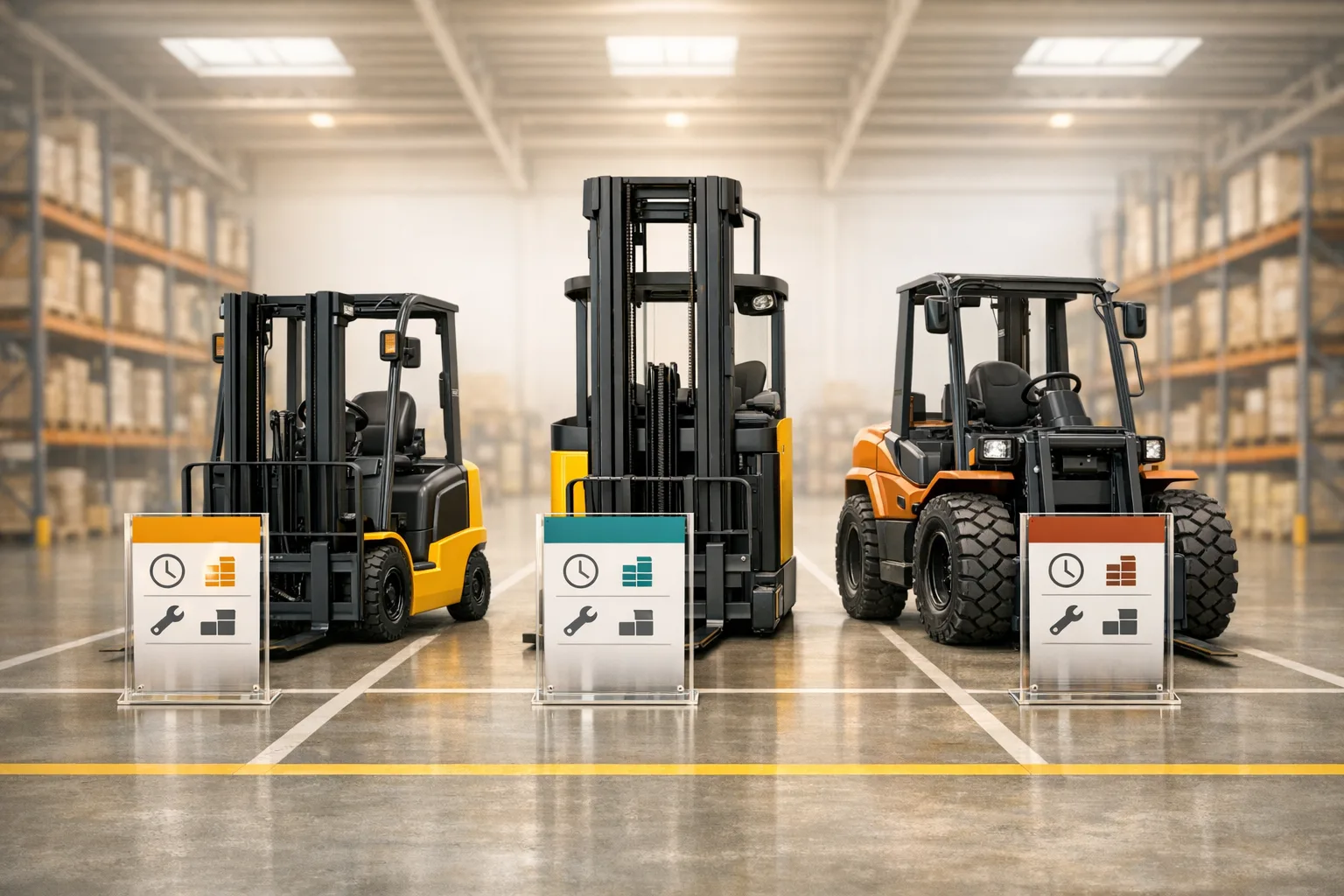
Their fleet is designed to meet a wide range of needs, featuring equipment like battery-operated forklifts, reach trucks, electric stackers, power pallets, and order pickers. These machines can handle loads ranging from 1 ton to 5.5 tons, ensuring flexibility for various operational demands. What truly sets them apart is their commitment to support. Through their FR Care maintenance programme, they offer equipment refurbishment and reconditioning services. Additionally, they supply genuine spare parts via their authorised partnership with TVH, a globally recognised distributor of spare parts. This robust in-house support ensures your equipment stays operational, aligning perfectly with the benefits of a well-structured rental agreement.
"Elevate your warehouse operations with a leading partner that has your back – comprehensive services, after-sales support, rental and sales solutions." - Fazlerasheed & Co.
Fazlerasheed And Company is also the authorised distributor for BYD, EP Green, and RoyPow lithium iron phosphate batteries in Pakistan. These advanced batteries are designed to minimise downtime, ensuring smooth and efficient operations. Trusted by some of the most prominent companies in Pakistan, they provide not just the equipment but also the after-sales infrastructure you need to support a reliable rental plan.
Conclusion: Steps to Choosing the Right Forklift Rental Plan
Choosing the right forklift rental plan boils down to understanding your needs, aligning equipment with your environment, and managing costs effectively. Here’s how you can make the best decision.
Start by assessing your workload and the conditions at your worksite. For example, electric forklifts are better suited for indoor tasks, while diesel or LPG forklifts handle outdoor or heavy-duty operations more efficiently. Also, think about how long you’ll need the equipment - whether it’s a short-term project or a longer commitment.
Once you’ve identified your operational and equipment requirements, it’s time to evaluate the overall costs. Don’t just focus on the base rental price; consider factors like maintenance, battery efficiency, and contract flexibility. Look for a provider that offers strong, ongoing support to ensure smooth operations.
Speaking of support, it’s crucial to have a dependable partner. Fazlerasheed And Company, with its extensive experience and wide-ranging fleet, is a trusted name across Pakistan. Their FR Care programme and access to genuine TVH spare parts ensure your equipment stays in top shape.
A well-thought-out rental plan doesn’t just provide the right forklift - it also offers favourable terms and a partner you can rely on.
FAQs
How do I choose the right forklift capacity for my loads?
To pick the right forklift capacity, focus on the rated capacity - typically stated in weight (e.g., 5,000 lbs) under standard conditions. These conditions include a 24-inch load center, forks positioned at ground level, and a vertical mast. However, keep in mind that the capacity reduces if the lift height increases or if the load center moves away from the standard position.
Always review the forklift's load chart to understand its limits. Ensure the load is properly centered and stable, as off-center positioning or tilting the mast can lower both the forklift's capacity and overall safety.
What measurements should I take at my site before renting?
Before you rent a forklift, it’s crucial to evaluate the specific needs of your worksite. Start by determining the maximum weight and height the forklift will need to manage - this ensures the equipment has the right lifting capacity and mast height. Take note of the flooring type - whether it’s smooth or uneven - as well as the aisle widths and any space limitations. These details will guide you in choosing the right forklift model and tyre type, making sure it’s suitable for your site’s conditions and tasks.
What extra charges should I expect besides the base rent?
When renting a vehicle, it's important to remember that the base rent isn't the only cost you might face. Additional charges could include fees for documented damage, service issues, rental extensions, or fuel and charging costs, depending on the terms of your agreement.
To steer clear of unexpected expenses, make sure to clarify these points ahead of time. Ask questions like: What qualifies as damage?, Who is responsible for refuelling or charging the vehicle?, and How are billing periods calculated? Getting these answers upfront can save you from unpleasant surprises later.
Looking for Forklifts or Parts?
Fazlerasheed & Co. supplies reconditioned forklifts, genuine spare parts, and traction batteries across Pakistan. Get a free quote today.