8 Ways to Reduce Material Handling Equipment Downtime
- Regular Maintenance: Use daily checklists for hydraulic systems, tyres, and brake systems. Digital tools help automate schedules and track issues.
- Battery Care: Extend battery life by avoiding overcharging, monitoring charge levels, and scheduling maintenance.
- Operator Training: Train staff on safe equipment handling, troubleshooting, and pre-operation inspections.
- Stock Spare Parts: Keep critical parts like hydraulic hoses and batteries in stock to avoid delays.
- Monitor Performance: Use IoT sensors to track metrics like Mean Time Between Failures (MTBF) and Overall Equipment Efficiency (OEE).
- Find Root Causes: Apply methods like the 5 Whys to identify and solve recurring issues.
- Retread Parts: Retread tyres and wheels to cut costs and extend lifespan.
- Adjust for Weather: In Pakistan's extreme heat and monsoon seasons, modify maintenance schedules accordingly.
Quick Tip: A Karachi facility reduced downtime by 30% by adopting structured maintenance plans and partnering with local suppliers. Implement these strategies to save time, money, and resources.
1. Set Up Regular Equipment Maintenance
Keeping warehouse equipment in top shape is essential to avoid costly breakdowns and ensure smooth operations in Pakistan. A well-planned maintenance schedule not only extends the life of machinery but also reduces downtime, setting the stage for reliable performance and fewer interruptions.
1.1 Daily Inspection Checklists
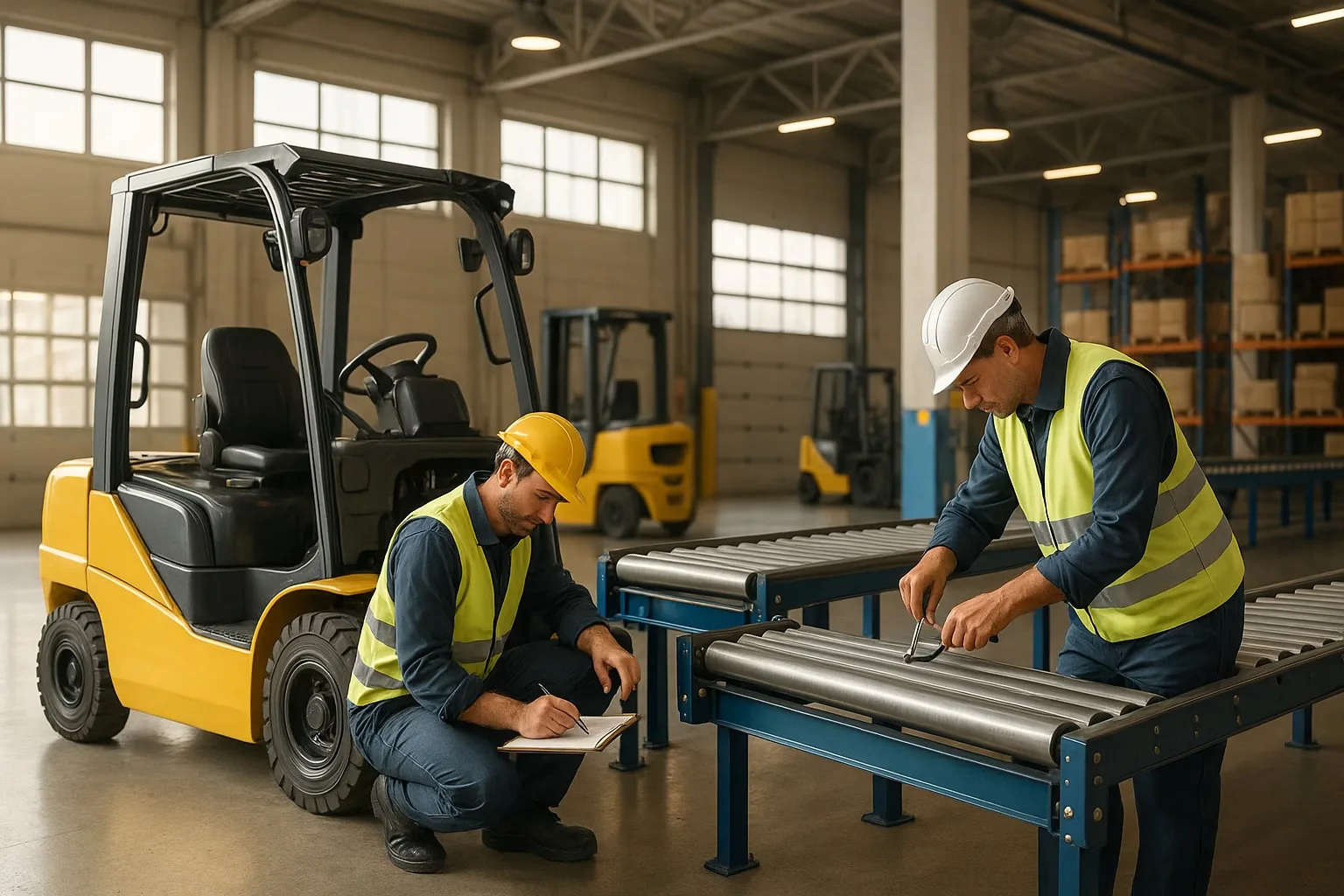
Daily inspections are a simple yet effective way to identify and address minor issues before they become major problems. Key areas to focus on include:
- Hydraulic systems: Check fluid levels and inspect for leaks.
- Mast chains: Ensure proper tension and lubrication.
- Brake systems: Test for responsiveness and monitor fluid levels.
- Battery connections: Look for corrosion and confirm terminals are secure.
- Tyres: Check for correct pressure and signs of uneven wear.
"Creating a work order takes 15 seconds or less", says David M., Maintenance Manager. This quick reporting process ensures small issues are resolved before they escalate.
1.2 Use Digital Maintenance Tracking
Incorporating digital tools has transformed equipment maintenance for many warehouses in Pakistan. For example, Planys Technologies achieved a 96% asset availability rate and cut critical breakdowns by 25% after adopting a digital maintenance system.
Here's how digital tracking makes a difference:
- Automated Scheduling: Maintenance tasks are automatically generated based on equipment usage and manufacturer guidelines, so nothing gets missed.
- Real-time Monitoring: IoT sensors send instant alerts about issues, enabling teams to act quickly. Perth County Ingredients reduced reactive maintenance by 54% using this approach.
- Data-driven Insights: Sensor data helps managers predict and prevent failures by scheduling repairs in advance.
"We now have additional data for all of our assets, which means I have answers I didn't have in the past", explains Scott Britton, GM of Operations at Rambler Metals & Mining.
1.3 Adjust for Weather Conditions
Pakistan's climate demands tailored maintenance strategies to keep equipment running efficiently. For instance, during summer months when temperatures exceed 40°C, additional precautions are necessary:
| Weather Condition | Maintenance Adjustment |
|---|---|
| High Heat (>40°C) | Check coolant levels twice daily |
| Dust Storms | Clean filters every 4-6 hours |
| Monsoon Season | Inspect electrical systems daily |
| High Humidity | Apply rust prevention weekly |
Scheduling intensive maintenance tasks during cooler parts of the day — early morning or evening — can protect both equipment and staff from extreme heat.
"The automation within our facility has basically allowed us to run multiple operations from one location. Without being there, you still know what's happening", notes Tom Dufton, Maintenance & Project Manager at Perth County Ingredients.
2. Improve Battery Life and Performance
Taking proper care of your batteries not only extends their lifespan but also ensures they perform at their best. Consistent battery care keeps your power supply reliable. Let's dive into some practical steps to keep your batteries in top shape.
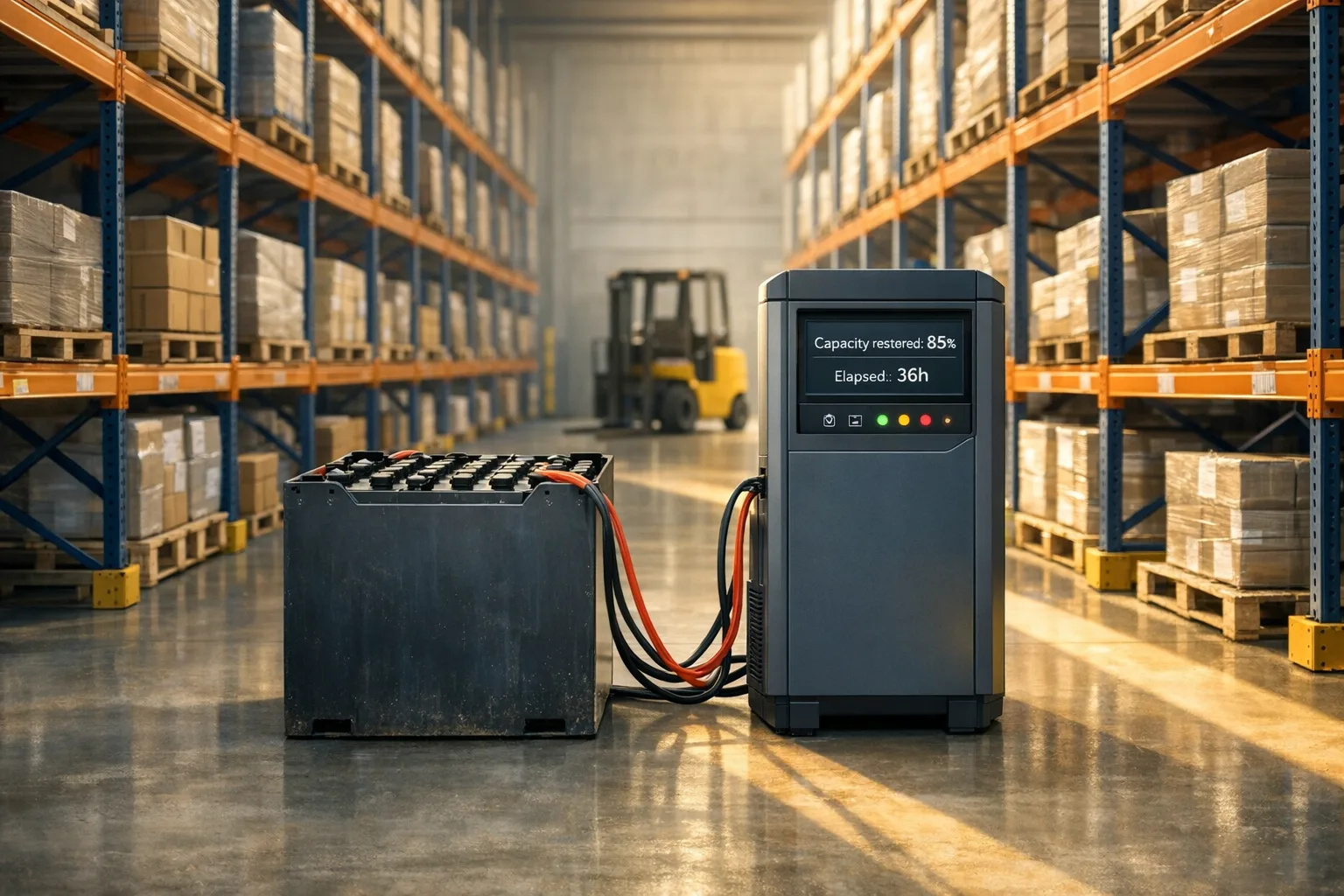
2.1 Regular Battery Restoration
Routine maintenance can save you from unexpected equipment failures and unnecessary expenses. Fazlerasheed & Co. offers battery regeneration services that can restore up to 80% of a battery's capacity using high-frequency pulsation technology. This process is especially helpful for:
- Breaking down sulphation build-up
- Balancing cell voltages
- Extending battery life
- Cutting down on replacement expenses
This service becomes even more valuable during Pakistan's scorching summer months, when high temperatures put additional strain on batteries.
2.2 Track Battery Charge Levels
Keeping an eye on charge levels can prevent damage and reduce the risk of sudden battery failure. Businesses using a forklift battery monitoring programme can detect issues early and take action before they turn into major problems.
| Charging Practice | Impact on Battery Life |
|---|---|
| Partial Charges | Helps prolong battery lifespan |
| Deep Discharges | Reduces overall capacity |
| Overcharging | Damages battery cells |
| Regular Calibration | Ensures accurate performance |
"Implementing a forklift battery condition monitoring program helps you identify potential problems before they escalate, enabling you to take preventive measures and minimize any negative impact on your operations." — Tyler Bennett, HCO Innovations
2.3 Basic Battery Care Steps
To keep your batteries running efficiently, follow these essential steps:
- Daily Maintenance: Regularly check water levels, using distilled water as needed, and clean the terminals to prevent corrosion.
- Charging Guidelines: Always use chargers that are compatible with your batteries and include built-in protection to avoid overcharging. Schedule charging during off-peak hours when the power supply is more stable.
- Temperature Control: Ensure proper ventilation during charging to reduce heat stress on the batteries.
For a more automated approach, a Battery Management System (BMS) can monitor these parameters in real time, sending alerts when maintenance is required. Make sure to calibrate the BMS regularly to maintain accurate tracking of battery health and charge levels.
For more detailed guidance, check out our forklift battery maintenance tips.
3. Improve Operator Skills
Investing in operator training can significantly boost reliability and cut down on equipment downtime. Research highlights that facilities with structured training programmes see 30-40% less downtime compared to those without such initiatives.
3.1 Equipment Operation Training
Proper training in equipment operation not only reduces wear and tear but also helps prevent about 20% of equipment breakdowns.
Here's what effective training should focus on:
- Pre-operation Inspections: Operators should perform daily checks to identify potential issues before starting work.
- Safe Loading Techniques: Teach proper weight distribution and how to secure loads for better stability.
- Equipment-specific Controls: Operators need to fully understand the controls, features, and limits of each machine they handle.
- Troubleshooting Skills: Spotting early warning signs can prevent minor issues from escalating into major failures.
By honing these skills, operators can work more efficiently and ensure equipment runs smoothly, complementing safe battery handling practices.
3.2 Safe Battery Handling
Proper battery handling is critical for keeping equipment running efficiently, especially in extreme temperatures. Training on this should cover the following:
Temperature Management
- Regularly monitor battery temperatures.
- Ensure charging areas are well-ventilated.
- Adjust charging schedules during very hot or cold weather to protect battery life.
Safety Protocols
- Always wear the right protective gear, like acid-resistant gloves and safety goggles.
- Use mechanical tools for handling batteries heavier than 25 kg.
- Follow the correct steps for connecting and disconnecting batteries.
Maintenance Procedures
- Check electrolyte levels frequently to ensure proper function.
- Clean battery terminals to avoid corrosion.
- Keep detailed records of charging cycles and maintenance tasks for better tracking.
Encouraging peer mentoring can improve adherence to safe practices. Additionally, regular skill assessments and quarterly refresher courses help operators maintain high safety and performance standards.
4. Keep Critical Parts in Stock
In addition to solid maintenance routines and proper battery care, having critical spare parts readily available is essential for minimising equipment downtime.
4.1 List of Essential Components
A well-maintained spare parts inventory should focus on the most critical components, prioritising them based on their importance and how often they're used. Here are some key items to keep on hand:
High-Priority Components
- Traction batteries and related components
- Hydraulic system parts (hoses, seals, filters)
- Drive train components (bearings, gears)
- Electrical parts (fuses, contactors, switches)
- Braking system components
- Load-bearing parts
Organising your inventory can be streamlined using methods like ABC analysis, which categorises parts based on their consumption value, and XYZ analysis, which assesses demand variability. These tools help ensure you stock the right quantities of the most critical parts.
Stock Management Tips
- Label parts with QR codes for easy tracking
- Use minimum-maximum inventory levels to avoid overstocking or shortages
- Monitor the shelf life of components that degrade over time
- Keep detailed records of part usage and replacements
4.2 Choose Local Parts Suppliers
Partnering with reliable local suppliers can make a significant difference in accessing genuine parts quickly. Fazlerasheed & Co. offers an extensive inventory of forklift spare parts to meet urgent maintenance needs.
Benefits of Local Sourcing
- Faster delivery times for critical parts
- Lower costs for shipping and handling
- Access to expert technical support
- Simplified processes for warranty claims
Inventory Management Best Practices
- Maintain a detailed Bill of Materials (BOM) for each piece of equipment
- Regularly track stock turnover and monitor for stock-outs
- Use a first-in, first-out (FIFO) system to manage inventory rotation
- Calculate safety stock levels based on lead times
Using predictive Computerised Maintenance Management Systems (CMMS) can further reduce maintenance expenses by as much as 30%. By combining a well-organised spare parts inventory with dependable local suppliers, you can significantly cut down on downtime and the resulting operational losses.
5. Monitor Equipment Performance
Effective equipment monitoring systems play a critical role in identifying issues early, helping to reduce downtime significantly. Analysing maintenance KPIs can lead to noticeable gains in operational efficiency while cutting costs.
5.1 Track Key Equipment Metrics
Real-time tracking of essential performance metrics is made possible through advanced sensors. These metrics provide valuable insights into equipment health and usage.
Key Performance Metrics:
- Mean Time Between Failures (MTBF)
- Mean Time to Repair (MTTR)
- Overall Equipment Efficiency (OEE)
- Equipment utilisation rates
- Maintenance completion rates
| Sensor Type | Primary Function | Best Application |
|---|---|---|
| Ultrasonic | Distance measurement | Diverse environments |
| Infrared | Heat detection | Temperature monitoring |
| Capacitive | Material sensing | Mixed material handling |
| Inductive | Metal detection | Harsh industrial settings |
The data collected by these sensors supports proactive maintenance efforts, helping teams address potential issues before they escalate into major problems. This approach minimises unexpected downtime and ensures smoother operations.
5.2 Use Data to Plan Repairs
Leveraging data for maintenance planning allows teams to detect failure trends and address them before equipment breaks down. David Norton, vice president of customer solutions and support at The Raymond Corp, explains:
"Overall, these technologies help drive consistent behavior around what operators are expected to do. When you have these sensor technologies, and then the data behind it from telematics, now the operation can work with their associates on best practices on an ongoing basis."
Steps for Implementation:
- Install telematics systems
- Set up automated alerts for abnormalities
- Develop maintenance schedules based on equipment usage
- Maintain detailed records of equipment history
6. Find Root Causes of Breakdowns
Understanding the root causes of equipment breakdowns is essential for reducing downtime and improving operational efficiency. By addressing problems at their origin, you not only prevent recurring issues but also strengthen the overall reliability of your systems.
6.1 Use the 5 Whys Method
The 5 Whys technique is a simple yet effective way to uncover the root cause of a problem. By repeatedly asking "why", you can peel back the layers of an issue until you reach its core.
Example: Investigating a Hydraulic Leak
- Why did the hydraulic system fail? A sudden loss of pressure occurred due to a leak in the main line.
- Why did the leak occur? The hydraulic hose showed premature wear and cracking.
- Why did the hose wear prematurely? It was rubbing against the equipment frame during operation.
- Why was the hose rubbing? The hose clamp had loosened, allowing excessive movement.
- Why did the clamp loosen? Vibration caused it to loosen because lock washers were missing.
6.2 Problem Analysis Charts
For more complex issues, structured tools like problem analysis charts can provide clarity. These charts allow maintenance teams to visualise patterns, prioritise interventions, and systematically address recurring problems.
| Analysis Tool | Best Used For | Key Benefit |
|---|---|---|
| FMEA | Complex systems | Predicts potential points of failure |
| Fault Tree Analysis | Critical equipment | Maps relationships between failures |
| Fishbone Diagram | Multiple contributing factors | Breaks down problems visually |
| Pareto Analysis | Resource allocation | Highlights major issues to prioritise |
Steps for Effective Problem Analysis:
- Document and categorise every instance of downtime
- Calculate critical metrics like Mean Time Between Failures (MTBF) and Mean Time to Repair (MTTR)
- Analyse historical maintenance records for recurring patterns
- Implement targeted solutions based on findings
Operators who interact with equipment daily can also offer crucial insights. Their observations often reveal early warning signs that might otherwise go unnoticed, enabling proactive action before minor issues escalate.
Key Metrics to Track:
- Equipment reliability
- Frequency of failures
- Repair time
- Cost of replacement parts
- Impact on production output
7. Extend Parts Life Through Retreading
Retreading is a smart way to stretch the lifespan of equipment parts, especially wheels and tyres, while also cutting down on downtime and costs. By giving these components a new lease on life, businesses can keep their equipment running efficiently without breaking the bank.
7.1 Castor Wheel Retreading
Castor wheels play a key role in keeping equipment stable, but they face constant wear and tear. Retreading these wheels not only extends their usability but also ensures they continue to meet safety and performance standards.
Benefits of retreading castor wheels:
- Prolongs the life of the wheels
- Minimises downtime
- Reduces the need for raw materials, contributing to environmental conservation
The retreading process typically involves:
- Inspecting the wheel for structural soundness
- Cleaning and prepping the surface
- Applying a fresh tread layer
- Testing the wheel post-retreading to ensure quality
7.2 Forklift Tyre Retreading
For forklifts, retreading tyres can be a cost-friendly alternative to replacing them outright, provided the operating conditions are suitable. Before opting for retreading, it's crucial to evaluate factors like wear patterns and the environment.
Key considerations for forklift tyre retreading:
- Environmental Factors: High humidity can lead to floor sweating, which increases tyre spin and accelerates wear.
- Load Analysis: Assess the load capacity, surface conditions, usage habits, and current tyre wear to determine if retreading is a viable option.
To ensure forklift stability and maintain optimal load capacity, using high-quality tyres that match the operational needs is essential. Maintaining detailed records — covering tyre rotation, load, operating conditions, wear, and retreading history — can help identify the best time for retreading.
8. Adjust Maintenance for Pakistan's Weather
Pakistan's extreme climate demands weather-specific maintenance strategies. From scorching summers exceeding 45°C to heavy monsoon rains, your equipment faces unique challenges that require proactive adjustments.
Summer Maintenance (April-September)
- Check coolant levels twice daily during peak heat
- Schedule heavy maintenance during early morning or evening hours
- Increase battery cooling and ventilation in charging areas
- Monitor hydraulic fluid viscosity as temperatures rise
Monsoon Maintenance (July-September)
- Inspect electrical systems daily for moisture damage
- Apply anti-corrosion treatments more frequently
- Ensure drainage around equipment storage areas
- Check tyre traction on wet surfaces regularly
Year-Round Best Practices
- Keep detailed weather-related maintenance logs
- Stock climate-specific consumables (coolant, anti-rust sprays, waterproof covers)
- Train operators on weather-adjusted operating procedures
Conclusion
Minimising downtime is all about having a well-thought-out maintenance strategy in place. By focusing on reliability and efficiency, businesses can avoid unnecessary disruptions and keep operations running smoothly.
A logistics company based in Karachi managed to cut unexpected breakdowns by 20% by implementing digital maintenance tracking. This success story highlights how adopting modern technology can revolutionise maintenance practices in Pakistani warehouses.
To achieve similar results, managers should keep a close eye on key metrics such as Mean Time Between Failures (MTBF), equipment availability, maintenance expenses, and unplanned stoppages. Tracking these data points can provide valuable insights and guide continuous improvement.
Here are some practical steps managers can take:
- Perform daily inspections and maintain detailed financial records in PKR
- Invest in operator training programmes, ensuring they are delivered in local languages
- Keep a stock of critical spare parts sourced from reliable local suppliers
Fazlerasheed & Co. offers tailored maintenance solutions to support these efforts. Our expertise in preventive maintenance programmes, operator training, and spare parts supply is designed to address the unique challenges faced by businesses in Pakistan. Contact us to discuss your equipment maintenance needs.
Frequently Asked Questions
How do digital maintenance tracking systems enhance material handling equipment performance in Pakistan's climate?
Digital maintenance tracking systems are a game-changer when it comes to keeping material handling equipment running smoothly, especially in Pakistan, where high temperatures and humidity can take a toll on machinery. These systems offer real-time monitoring and predictive maintenance, helping to spot potential problems early — before they turn into costly breakdowns.
By automating maintenance schedules and streamlining spare parts management, these tools reduce downtime and keep equipment performing at its best. Plus, features like remote diagnostics make it easier to troubleshoot issues quickly, which is especially handy given the varying weather conditions across the country.
How does operator training help reduce equipment downtime, and what are the best ways to implement it effectively?
Operator training plays a big part in keeping equipment running smoothly. When operators know how to spot and fix minor issues early, they can stop those problems from turning into costly repairs. Plus, trained operators are more likely to stick to safety rules and proper procedures, which helps reduce equipment wear and improves overall productivity.
To make operator training effective, focus on practical, hands-on sessions that are specific to the equipment being used. Include key topics like safety protocols, troubleshooting steps, and routine maintenance tasks. Regular assessments and refresher courses can help keep their skills sharp and up-to-date. Building a mindset of continuous learning encourages operators to take better care of the equipment, leading to fewer breakdowns and smoother operations overall.
Why should maintenance schedules be adjusted for Pakistan's weather, and what changes are needed during extreme heat or monsoons?
Pakistan's intense summers and heavy monsoon seasons can take a serious toll on material handling equipment, making weather-specific maintenance a must. High temperatures can push components like batteries and hydraulic systems to their limits, causing overheating, wear, and unexpected breakdowns. To combat this, focus on frequent inspections, servicing cooling systems, and battery regeneration during the scorching summer months.
Monsoon season brings its own set of challenges, with high humidity and water exposure increasing the chances of corrosion and electrical issues. To keep equipment in top shape, prioritise waterproofing, anti-rust treatments, and regular cleaning and lubrication of parts. These steps can help ensure your equipment stays reliable, minimises downtime, and keeps operations running smoothly — even in tough weather conditions.
Looking for Forklifts or Parts?
Fazlerasheed & Co. supplies reconditioned forklifts, genuine spare parts, and traction batteries across Pakistan. Get a free quote today.