Buying vs Renting Material Handling Equipment: Which to Choose?
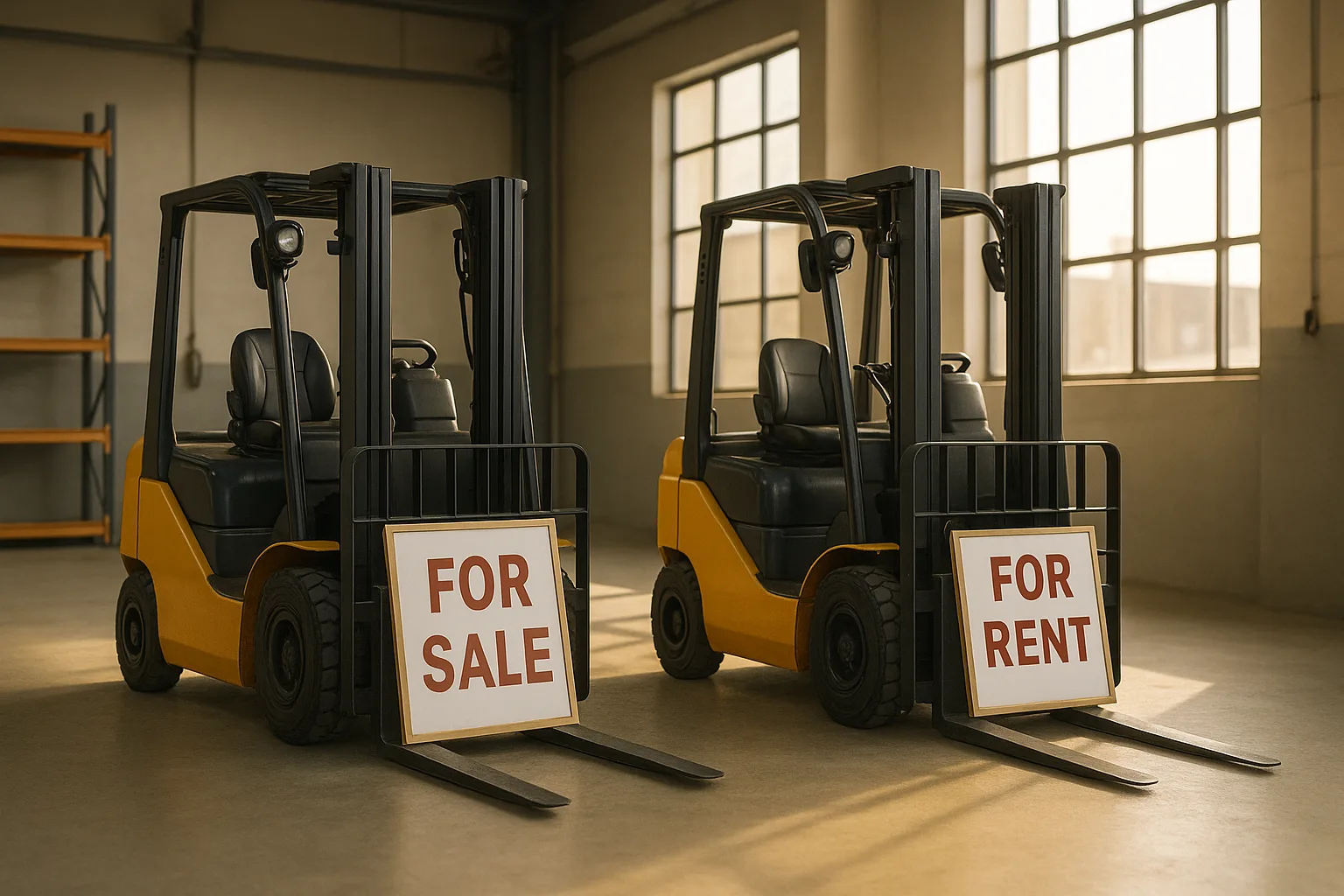
Should you buy or rent material handling equipment? The answer depends on your business needs, budget, and usage. Here’s a quick breakdown:
- Buy if you need equipment for daily, long-term use. Ownership lowers costs over time, avoids rental shortages, and lets you resell the equipment later.
- Rent if your needs are seasonal or short-term. Renting offers flexibility, lower upfront costs, and access to the latest models without maintenance worries.
Quick Comparison
| Factor | Buying | Renting |
|---|---|---|
| Upfront Cost | High (e.g., Rs 16,50,000 - Rs 82,50,000 for forklifts) | Low (e.g., Rs 16,500 - Rs 82,500 per week) |
| Maintenance | Owner pays (Rs 41,250 - Rs 1,23,750 annually) | Handled by the rental provider |
| Flexibility | Low | High (ideal for seasonal needs) |
| Depreciation | Yes | No |
| Access to New Models | Requires upgrades | Included in rental agreements |
| Tax Benefits | Depreciation deductions | Immediate expense deductions |
Key takeaway: Buy for consistent use; rent for flexibility. A hybrid approach - owning essential equipment and renting during peak periods - can also save costs while meeting operational demands.
Toyota Material Handling | Rentals: Rent vs. Buy
!Toyota Material Handling
Key Factors to Consider
Deciding between buying and renting material handling equipment largely depends on your operational needs and financial situation.
Initial Investment and Recurring Expenses
Buying equipment involves a hefty upfront cost. For instance, purchasing a new forklift in Pakistan can range from Rs 16,50,000 to Rs 82,50,000, depending on the model and features. If you're looking at used forklifts, prices typically fall between Rs 8,25,000 and Rs 41,25,000. Renting, on the other hand, requires far less initial expense, with weekly rental rates for forklifts varying from Rs 16,500 to Rs 82,500.
While buying may seem expensive at first, it can be more cost-effective in the long run, especially if your equipment usage stays below 1,000 hours annually. Renting, though often more expensive over time, offers flexibility for short-term or seasonal needs and eliminates the risk of owning unused equipment. Additionally, given Pakistan's fluctuating currency rates, the cost of imported equipment can rise over time, making it crucial to account for potential price increases in your long-term planning.
Usage Frequency and Duration
How often and for how long you need the equipment is a key factor. Industries with seasonal spikes, like agricultural processing or textile manufacturing, often find renting more practical. It allows businesses to meet high-demand periods without the financial commitment of owning equipment that may sit idle during off-peak seasons.
Apart from usage, maintenance responsibilities also play a significant role in the decision-making process.
Maintenance and Repair Responsibilities
Ownership comes with the added responsibility of maintenance. For example, annual maintenance costs for a diesel forklift in Pakistan can range from Rs 41,250 to Rs 1,23,750. Beyond regular servicing, you’ll also need to manage repairs, spare parts, and downtime, which can add up over time.
Renting, however, typically shifts these responsibilities to the rental provider. Most rental agreements include maintenance, offering predictable costs and quicker service when issues arise. Companies like Fazlerasheed And Company provide tailored maintenance solutions, including planned and full maintenance options, using skilled engineers and quality spare parts.
Tax implications are another consideration. When you buy equipment, you can claim depreciation over time, which reduces taxable income. In contrast, rental payments are treated as immediate expenses, impacting your tax liability and cash flow differently.
Cost Comparison: Buying vs Renting
When weighing the choice between buying and renting, it's essential to take a close look at the full range of costs involved. Breaking these down helps highlight the trade-offs between ownership and rental.
Cost Breakdown
Here's a side-by-side comparison of key expense categories for buying versus renting:
| Cost Category | Buying | Renting |
|---|---|---|
| Initial Investment | Requires a large upfront payment | Lower upfront cost with regular payments |
| Annual Maintenance | Owner is responsible for all maintenance expenses | Usually covered in the rental agreement |
| Insurance | Insurance costs fall on the owner | Often included or available at a minimal extra fee |
| Storage & Utilities | May require additional spending on storage and utilities | Not applicable |
| Depreciation | Subject to depreciation, reducing long-term value | No depreciation concerns |
| Repairs & Downtime | Owner bears repair costs and potential downtime | Typically handled by the rental provider |
| Technology Updates | Requires manual upgrades over time | Access to the latest models and technology |
This table makes it clear: buying comes with fixed costs, while renting offers more flexibility with variable expenses. If you're planning for frequent, long-term use, buying can be more economical over time. On the other hand, renting is often the smarter choice for short-term or occasional needs.
Tax treatment is another factor to consider. Buying equipment allows for depreciation deductions, which can reduce taxable income over time. In contrast, rental payments are generally treated as immediate business expenses, simplifying accounting and budgeting.
Renting also has the added advantage of giving you access to the latest equipment. Newer models often come with better fuel efficiency, improved safety features, and lower maintenance demands, which can enhance overall operational performance.
Next, we’ll dive into real-world scenarios to see how these options play out in practice.
sbb-itb-a884676
Usage Scenarios: When to Buy and When to Rent
Deciding whether to buy or rent equipment depends on your specific needs and operational priorities. Let’s break it down to help you make the right choice.
Buying for Long-Term, High-Frequency Use
If your operations rely on continuous, daily use of equipment, buying is often the smarter move. For instance, a warehouse running multiple shifts or handling materials year-round can benefit greatly from ownership. Over time, the cost of buying typically pays off compared to recurring rental fees.
Industries like manufacturing, logistics, and distribution that operate around the clock often find buying more practical. Owning your equipment ensures it’s always available, eliminating the worry of rental shortages or dealing with unfamiliar models that might require extra training for operators.
Another plus? Owned equipment becomes a financial asset. It can be resold or even used as collateral for loans. Plus, you won’t face usage limits or penalties, which means your forklifts can handle extended peak periods without extra charges.
Renting for Short-Term or Seasonal Needs
Renting, on the other hand, is ideal for businesses with fluctuating or temporary needs. In Pakistan, many companies experience seasonal peaks, and rentals offer the flexibility to scale up operations without the long-term commitment of buying.
For project-based work, rentals make perfect sense. They let you access the equipment you need without tying up capital, which is especially helpful for small and medium-sized businesses. Rental agreements often include maintenance and support, making them a great option if you lack in-house technical expertise.
Renting also gives you access to the latest technology. Whether you want to try out new models, explore advanced safety features, or benefit from improved fuel efficiency, renting allows you to test these upgrades without the financial risk of a purchase.
Another advantage? Rentals save you from the hassle of storage and maintenance when the equipment isn’t in use. You won’t need to invest in charging stations, spare parts, or dedicated maintenance areas - a key benefit for businesses operating in high-cost urban areas.
Ultimately, the choice between buying and renting comes down to balancing your operational demands with financial flexibility. Each option has its strengths, so consider what aligns best with your business goals.
Maintenance, Support, and Additional Services
When considering whether to buy or rent equipment, the availability of reliable maintenance and quick local support can make all the difference. These factors not only influence costs but also play a critical role in ensuring smooth operations.
Maintenance Plans and Support Services
Owning equipment means taking full responsibility for its upkeep. This includes regular inspections, cleaning, lubrication, replacing worn-out parts, and handling repairs. While ownership allows you to control the maintenance schedule, it demands careful planning based on OEM guidelines and consistent tracking of maintenance tasks. Ignoring these responsibilities can lead to breakdowns and costly emergency repairs.
On the other hand, rental agreements typically include scheduled maintenance, taking the burden of oversight off your plate.
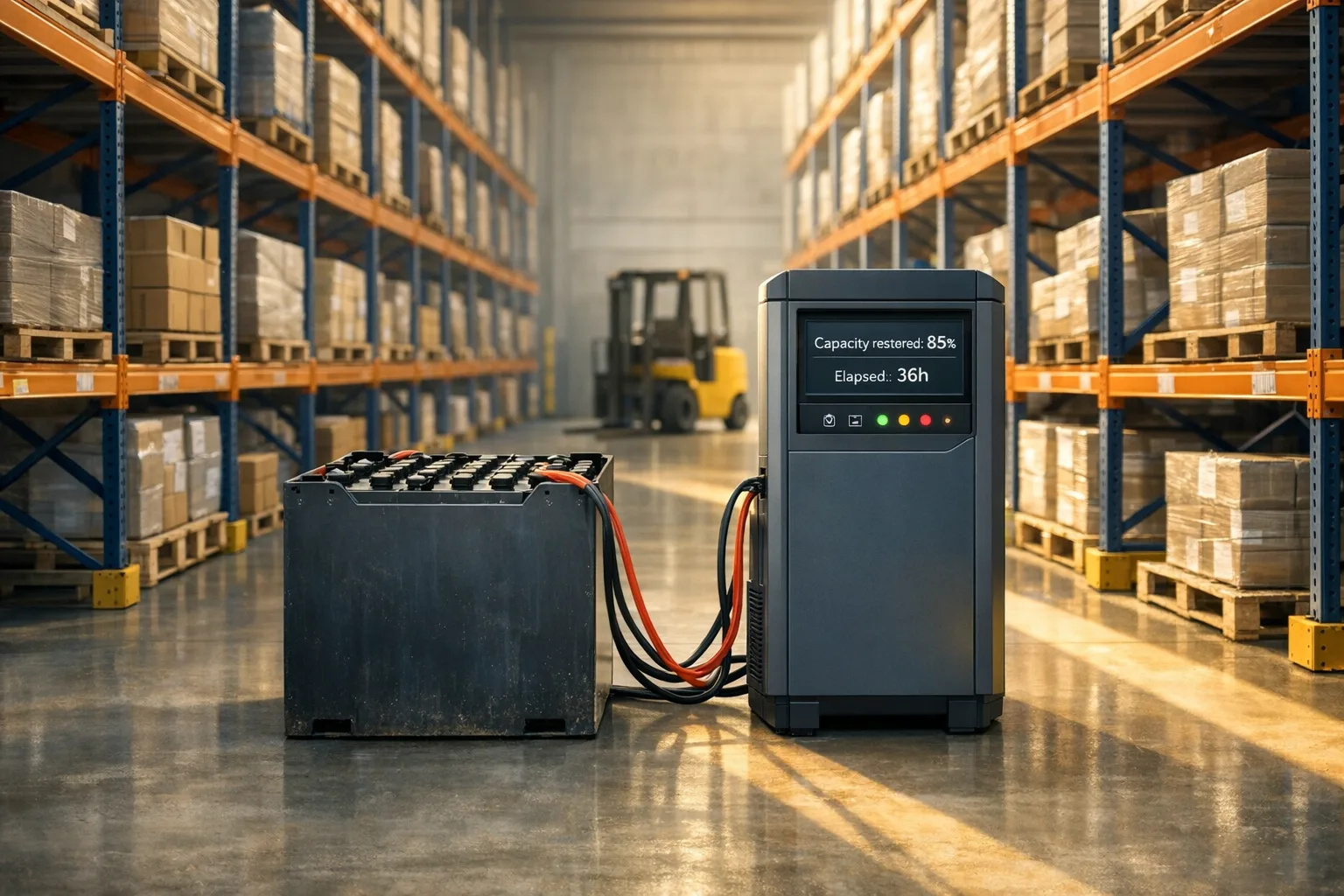
Fazlerasheed And Company offers structured and thorough maintenance plans to ensure equipment longevity. They also provide battery regeneration services, which restore battery capacity, extending the life of the equipment and cutting down on replacement expenses. Additionally, the company supplies genuine spare parts, including original and OEM components, wheels, and solid tyres. As an authorised distributor of TVH, a leading global parts supplier, Fazlerasheed And Company ensures access to high-quality components. Where feasible, they also repair costly electronic parts, further reducing expenses.
Reducing Downtime with Local Support
While maintenance plans are essential, having reliable local support is equally important to avoid operational disruptions. Proactive maintenance can help lower costs, but quick local support ensures your operations stay on track. Equipment downtime is particularly challenging for warehouses, where every hour of inactivity translates to lost productivity and revenue. Regular maintenance reduces the likelihood of breakdowns, but when issues do arise, timely support is critical to getting equipment back in action and maintaining efficiency.
Fazlerasheed And Company has strategically deployed teams across Pakistan to provide prompt maintenance and repair services. Their expert technicians, equipped with advanced tools, can refurbish machinery and offer reconditioning services, which can significantly cut down repair and replacement costs.
For businesses in industrial hubs like Karachi, Lahore, and Islamabad, dependable local support not only saves on additional labour costs caused by prolonged downtime but also ensures that equipment is operational as quickly as possible. Whether you're buying or renting, selecting a provider with a strong local support network ensures your material handling equipment is ready when you need it most, directly enhancing operational efficiency.
Conclusion
When deciding between buying or renting, consider your operational needs, financial resources, and long-term goals. Both options come with distinct benefits, making them suitable for different business scenarios in Pakistan.
If your operations require equipment for daily, long-term use, buying might be the better choice. Ownership often results in lower per-hour costs and gives you complete control over the equipment. This is particularly beneficial for manufacturing plants or large distribution centres where equipment is used extensively.
On the other hand, renting offers flexibility, especially for businesses dealing with seasonal demand or project-based work. It eliminates hefty upfront costs and reduces the burden of maintenance. Interestingly, more than 80% of businesses lease at least one piece of equipment to leverage these advantages. This option is especially appealing for small and medium enterprises aiming to manage cash flow efficiently.
The key is to evaluate how often the equipment will be used and your financial capacity. For sporadic or seasonal needs, renting could save costs. However, for consistent, high-frequency use, purchasing might be worth the investment. Don’t forget to account for hidden expenses like storage and insurance when calculating ownership costs.
A hybrid approach could also be a smart strategy: purchase essential equipment for daily operations and rent additional units during peak periods. This way, you can balance immediate requirements with future growth. Conduct a thorough cost-benefit analysis, factoring in maintenance, storage, and opportunity costs, to find the best fit for your business needs.
FAQs
What are the financial pros and cons of buying versus renting material handling equipment in the long run?
When it comes to material handling equipment like forklifts or pallet jacks, buying can make financial sense if you’re using the equipment regularly. Owning the equipment means you avoid repeated rental payments, and you can also take advantage of depreciation benefits. For businesses with steady operational demands, this approach often proves to be a worthwhile investment.
Renting, on the other hand, comes with lower upfront costs and offers flexibility, which works well for short-term projects or occasional use. That said, renting over an extended period can end up being more expensive than buying outright. For warehouses in Pakistan, it’s essential to weigh factors such as your budget, operational requirements, and maintenance expenses before making a decision. Generally, buying is a better choice for consistent, long-term use, while renting is more suitable for temporary or uncertain needs.
What are the benefits of renting material handling equipment, especially when it comes to accessing the latest technology?
Renting material handling equipment gives businesses a chance to use the latest technology without the hefty upfront cost of buying. With rentals, companies can frequently switch to modern, efficient models that come with advanced features like better safety systems, automation, and energy-saving designs. This not only boosts productivity but also helps meet updated safety standards.
Another big plus? Rental agreements often include maintenance and support. This means businesses can stay focused on their work without stressing over repair expenses or unexpected downtime. For short-term projects or testing new equipment before making a big purchase, renting offers an affordable and practical solution to stay ahead in a rapidly changing industry.
What should businesses in Pakistan consider when choosing between buying or renting material handling equipment for seasonal needs?
When determining whether to buy or rent material handling equipment like forklifts or pallet jacks for seasonal operations in Pakistan, it’s essential to weigh how often and for how long you’ll need the equipment. Renting tends to be a better choice for short-term or occasional use, while purchasing makes more sense for frequent, long-term needs.
Take a close look at the financial aspects. Buying requires a significant upfront investment, whereas renting comes with recurring fees. To make the right choice, compare these costs in the context of Pakistan’s market and currency (PKR) to see what fits your budget better. Don’t forget to factor in maintenance responsibilities - owning equipment means you’ll handle repairs and servicing, but rental agreements often include maintenance as part of the package.
Another key consideration is whether your operations demand customised equipment or access to the latest models. Purchasing gives you the option to customise, but renting offers the flexibility to switch to newer technology as your needs evolve. By evaluating these factors carefully, you can strike the right balance between efficiency and cost for your business.
Looking for Forklifts or Parts?
Fazlerasheed & Co. supplies reconditioned forklifts, genuine spare parts, and traction batteries across Pakistan. Get a free quote today.