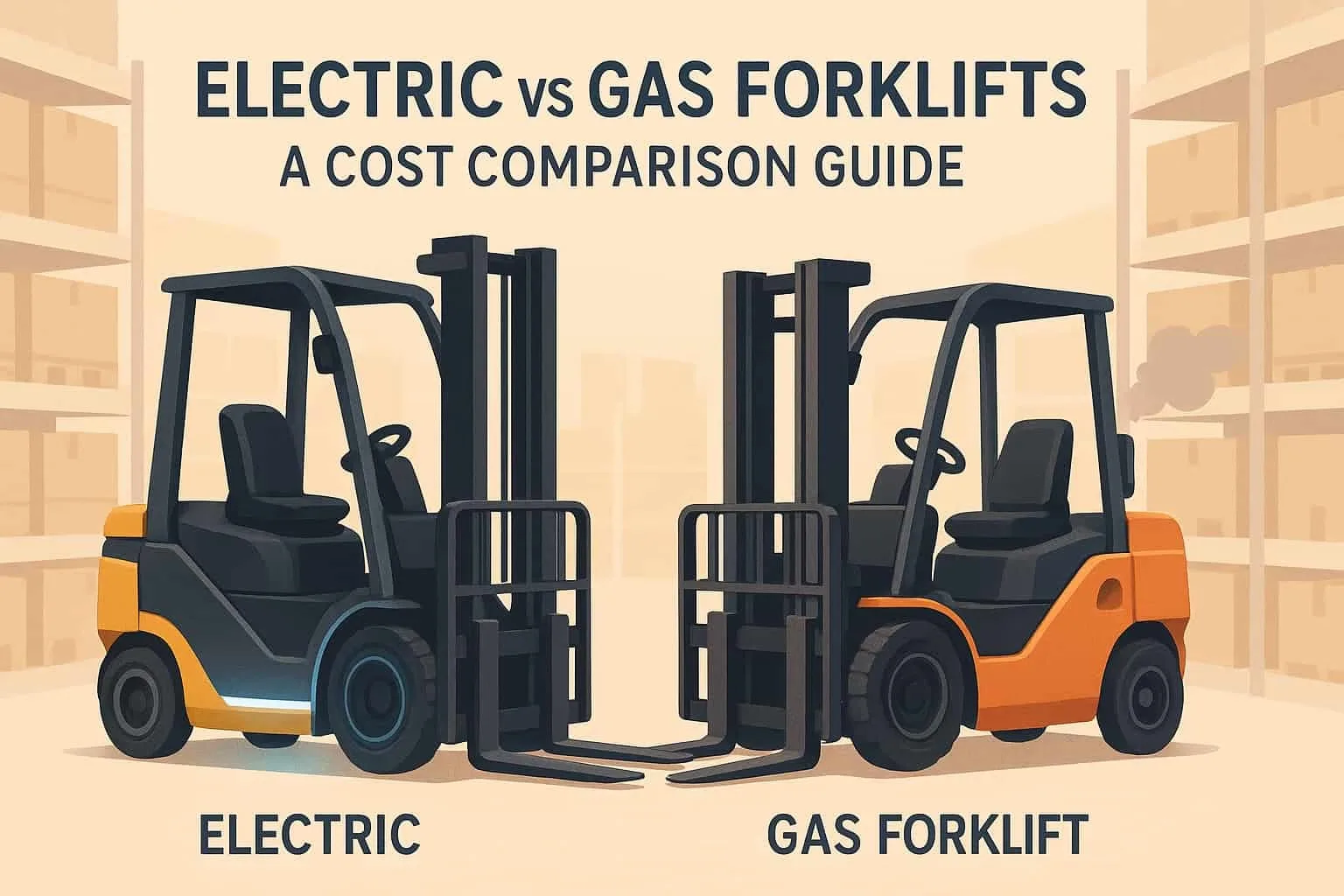
Electric Vs Gas Forklifts: A Cost Comparison Guide
Choosing between electric and gas forklifts in Pakistan can save you money and improve efficiency. Here's what you need to know:
- Electric Forklifts: Higher upfront cost (PKR 3,200,000–4,800,000 for 5,000 kg capacity), but cheaper to run long-term with lower energy and maintenance costs. Ideal for indoor use, quieter, and no emissions.
- Gas Forklifts: Lower upfront cost (starting at PKR 2,400,000 for 5,000 kg capacity), but higher daily fuel and maintenance expenses. Suitable for outdoor or multi-shift operations with quick refuelling.
Quick Comparison
| Factor | Electric Forklift | Gas Forklift |
|---|---|---|
| Initial Purchase Cost | PKR 3,200,000–4,800,000 | PKR 2,400,000–4,800,000 |
| Operating Expenses | Lower (electricity costs) | Higher (fuel costs) |
| Maintenance Costs | Lower (fewer parts) | 25–50% higher |
| Service Frequency | Every 500–1,000 hours | Every 250 hours |
| Emissions | None (indoor-friendly) | Produces exhaust fumes |
| Refuelling/Charging Time | Requires charging downtime | Quick refuelling |
Key Insight: Electric forklifts are better for long-term savings and indoor use, while gas forklifts suit outdoor and multi-shift operations. Choose based on your budget, work environment, and operational needs.
1. Electric Forklift Costs
Initial Purchase Price
Electric forklifts come with a higher upfront price tag, mainly due to their advanced lithium-ion batteries, built-in charging systems, and added safety features. In Pakistan, Fazlerasheed And Company offers electric forklifts ranging from 1 tonne to 5.5 tonnes. Prices depend on the machine's capacity, specifications, and optional features.
The purchase typically includes:
- The forklift itself
- Battery system
- Charging setup
- Safety equipment
While these costs may seem steep at first, the long-term savings in operational expenses make electric forklifts a smart choice.
Daily Operating Costs
Electric forklifts are cheaper to run daily. Electricity costs are lower than traditional fuels, and basic battery upkeep, along with operator training, keeps expenses manageable.
Service and Repairs
Electric forklifts have fewer moving parts, which means less wear and tear. Routine maintenance usually involves checking the battery, inspecting the motor, and ensuring the hydraulics are in good condition.
Total Cost Over Time
Over a five-year period, electric forklifts prove to be cost-effective thanks to:
- Lower energy costs compared to diesel or petrol
- Minimal maintenance requirements
- Longer working life due to advanced battery technology
- Higher resale value in Pakistan
Fazlerasheed And Company also offers maintenance packages for their electric forklifts, helping businesses streamline operations and avoid unexpected repair costs.
2. Gas Forklift Costs
Initial Purchase Price
Gas forklifts have a lower upfront cost compared to electric models. However, this price difference should be considered alongside the long-term operational and maintenance costs to get a clearer picture of overall expenses.
Daily Operating Costs
Running a gas forklift comes with additional costs like fuel consumption and the need for proper fuel storage. These factors, combined with more frequent maintenance, can drive up daily operating expenses.
Service and Repairs
Gas forklifts require more upkeep due to their combustion systems. Here's what you need to consider:
- Service Frequency: Maintenance is needed every 250 hours, compared to every 500 hours for electric forklifts.
- Higher Costs: Maintenance expenses are 25–50% more than electric models.
- Complex Design: With more moving parts, gas forklifts need regular inspections and part replacements.
Total Cost Over Time
Although gas forklifts are cheaper to buy, ongoing costs can add up significantly over time:
| Cost Factor | Impact on Total Cost |
|---|---|
| Maintenance Intervals | Requires servicing every 250 hours vs 500 hours for electric models |
| Service Costs | 25–50% higher compared to electric forklifts |
| Fuel Expenses | Continuous fuel costs and the need for proper storage |
| Parts Replacement | More frequent due to the complex mechanical system |
Sticking to a regular maintenance schedule is crucial to keep gas forklifts running efficiently and to extend their lifespan.
Electric vs Gas: Direct Comparison
Compare electric and gas forklifts by examining their costs and operational factors. This breakdown highlights how upfront and ongoing expenses affect overall profitability.
Cost Comparison Overview
| Factor | Electric Forklift | Gas Forklift |
|---|---|---|
| Initial Purchase Cost | PKR 3,200,000–4,800,000 (5,000 kg capacity) | PKR 2,400,000–4,800,000 (5,000 kg capacity) |
| Additional Setup Costs | Battery and charger (up to PKR 800,000) | N/A |
| Service Intervals | Every 500–1,000 hours | Every 250 hours |
| Maintenance Costs | Lower baseline | 25–50% higher than electric |
| Operating Expenses | Lower long-term costs | Higher due to fuel and maintenance |
| Parts Complexity | 90% fewer parts | More complex mechanical system |
Efficiency and Performance Factors
Recent trends show a growing preference for electric forklifts due to their cost savings and efficiency. These advantages make them an attractive option for businesses looking to optimise expenses.
Long-term Cost Breakdown
While gas forklifts have a lower starting price (as low as PKR 2,400,000), electric forklifts save more in the long run because:
- Reduced Maintenance: Fewer mechanical parts mean less wear and tear.
- Lower Operational Costs: No fuel expenses and fewer part replacements.
- Extended Lifespan: A simpler design leads to a longer working life.
These factors make electric forklifts a smarter investment over time.
Operational Considerations
The right choice depends on your specific needs:
- Shift Duration: Gas forklifts are better for multi-shift operations due to quick refuelling.
- Indoor Usage: Electric forklifts are ideal for indoor tasks, offering zero emissions.
- Maintenance Setup: Electric forklifts need charging stations but require less frequent servicing.
Overall, electric forklifts deliver better long-term value through cost savings and efficient performance.
Making the Right Choice
Selecting the right forklift depends on factors like your business size, operating environment, budget, infrastructure, and overall impact on the surroundings.
Business Size and Budget Considerations
If you're running a small or medium-sized business with limited funds, gas forklifts are a more affordable option upfront compared to electric models.
Operational Environment Assessment
Your work environment plays a big role in how well a forklift performs. Here's a quick breakdown:
| Environment Type | Recommended Choice | Why It Works |
|---|---|---|
| Indoor Warehouse | Electric Forklift | No emissions, quieter, and needs less maintenance |
| Outdoor Yard | Gas Forklift | Handles weather well and refuels quickly |
| Mixed Use | Gas Forklift | Works flexibly without charging interruptions |
| Temperature-Controlled | Electric Forklift | No exhaust fumes and steady performance |
Cost-Effective Selection Guide
Here's how to decide based on your work schedule:
- Single Shift: Electric forklifts are ideal for 8-hour shifts. They can charge during off-hours and require less upkeep.
- Multi-Shift: Gas forklifts are better for continuous operations. They refuel quickly but may need more frequent maintenance.
Infrastructure Requirements
Make sure your facility is equipped for the type of forklift you choose:
For Electric Forklifts:
- A designated charging area
- Reliable power supply
- Space for battery upkeep
- Proper ventilation in the charging zone
For Gas Forklifts:
- Safe fuel storage
- Adequate ventilation
- A maintenance area
- Safe procedures for handling fuel
Environmental Considerations
Electric forklifts produce no emissions, which can lower the need for extra ventilation in your facility.
Frequently Asked Questions
What are the long-term cost advantages of using an electric forklift instead of a gas-powered one?
Electric forklifts provide significant long-term cost advantages over gas-powered forklifts. They are more economical to operate due to lower fuel costs, as electricity is generally more affordable than gas in Pakistan. Additionally, electric forklifts have fewer moving parts, which reduces maintenance expenses and minimises the need for frequent repairs.
Another key benefit is their extended lifespan. With proper care, electric forklifts can last longer, offering better value over time. They are also energy-efficient and environmentally friendly, making them a sustainable choice for businesses aiming to reduce operational costs and environmental impact.
What are the differences in maintenance requirements between electric and gas forklifts?
Electric forklifts generally require less maintenance compared to gas-powered forklifts. This is because electric forklifts have fewer moving parts and do not rely on components like engines, fuel systems, or exhaust systems, which are common in gas forklifts. Additionally, electric forklifts typically have longer service intervals — around 500 hours — compared to gas forklifts, which usually need servicing every 250 hours.
This reduced maintenance frequency not only lowers upkeep costs but also minimises downtime, leading to improved operational efficiency. Over time, maintenance expenses for electric forklifts can be 25-50% lower than those for gas-powered models, making them a cost-effective option for businesses focused on long-term savings and productivity.
What should I consider when choosing between an electric or gas forklift for my business in Pakistan?
When deciding between an electric and a gas-powered forklift for your business in Pakistan, consider key factors such as cost, performance, and suitability for your operations.
Electric forklifts are environmentally friendly with zero emissions, making them ideal for indoor use. They require less maintenance due to fewer moving parts and offer long-term savings on operational costs. However, they come with a higher upfront cost, limited runtime due to battery dependency, and require several hours for recharging.
Gas forklifts, on the other hand, are versatile and suitable for both indoor and outdoor applications. They provide quick refueling and higher power for heavy-duty tasks. However, they produce emissions, require regular maintenance, and incur higher running costs due to fuel consumption.
Evaluate your business needs, such as the type of work environment, daily usage, and long-term budget considerations, to make the best choice for your operations. Contact us for a personalised recommendation.
Looking for Forklifts or Parts?
Fazlerasheed & Co. supplies reconditioned forklifts, genuine spare parts, and traction batteries across Pakistan. Get a free quote today.