How to Calculate Forklift Total Cost
Want to know the real cost of owning a forklift? It’s not just about the upfront price. The Total Cost of Ownership (TCO) includes everything from purchase or rental fees, maintenance, and energy costs to operator wages and unexpected repairs. Here's a quick breakdown of what you need to consider:
-
Capital Costs:
-
New electric forklifts: Rs. 7,080,000–Rs. 10,680,000
-
Used forklifts: Rs. 2,376,000–Rs. 6,720,000
-
Rentals: Rs. 387,000–Rs. 479,000/month
-
Battery costs: Lead-acid (Rs. 480,000–Rs. 1,440,000), Lithium-ion (Rs. 4,080,000–Rs. 4,800,000)
-
Maintenance Costs:
-
Routine servicing: Rs. 24,000 every 200 hours
-
Major overhauls: Rs. 360,000 after 2,000 hours
-
Tyre expenses: 12–15% of ownership costs
-
Operational Costs:
-
Energy: Rs. 150,000–Rs. 600,000 annually for electric forklifts
-
Labour: Average operator salary in Pakistan is Rs. 954,829/year
Quick Tip: Electric forklifts may cost more upfront but save up to 40% in energy and maintenance costs over time. Renting is cheaper initially but can be expensive long-term.
| Cost Type | New Electric Forklift | Used Forklift | Rental |
|---|---|---|---|
| Upfront Cost | Rs. 7,080,000–10,680,000 | Rs. 2,376,000–6,720,000 | Rs. 387,000–479,000/month |
| Energy Costs (Year) | Rs. 150,000–600,000 | Rs. 150,000–600,000 | N/A |
| Maintenance (Year) | Rs. 24,000–360,000 | Higher costs due to age | Included in rental fee |
Understanding these costs upfront helps businesses in Pakistan plan better and avoid surprises. Keep reading to learn how to calculate TCO step-by-step and make smarter forklift investments.
Manitou Total Cost of Ownership - TCO
!Manitou
Capital Costs
When it comes to forklifts, capital costs make up the largest chunk of the initial expense. Whether you're buying a brand-new machine, opting for a used one, or going with a rental, understanding these costs is crucial. It helps you align your spending with your budget and operational goals.
Purchase Price and Initial Investment
The cost of a forklift depends on several factors - its type, capacity, and whether it’s new or used. Electric forklifts typically carry a higher price tag upfront compared to diesel or LPG models. For instance:
- A new 1,360 kg electric forklift costs between Rs. 8,760,000 and Rs. 9,480,000, while the cushion tyre variant is slightly cheaper, ranging from Rs. 7,080,000 to Rs. 7,680,000.
- Larger 2,270 kg electric forklifts are priced at Rs. 8,880,000 to Rs. 10,680,000, with cushion tyre models costing Rs. 8,400,000 to Rs. 8,880,000.
For those considering used forklifts, prices vary widely. A 1,360 kg electric model can cost anywhere from Rs. 2,376,000 to Rs. 6,720,000, with an average price of around Rs. 4,100,000 for electric models and Rs. 4,400,000 for cushion tyre versions.
Don’t forget to factor in import duties, taxes, and customs brokerage fees. These additional costs can pile up quickly and should be accounted for to avoid unnecessary delays or penalties.
Battery Costs for Electric Forklifts
If you’re considering electric forklifts, battery costs are a major part of the upfront investment. The type of battery you choose - lead-acid or lithium-ion - can significantly impact both your initial spending and long-term operations:
- Lead-acid batteries cost between Rs. 480,000 and Rs. 1,440,000 each. However, they also require charging infrastructure, which adds to the expense.
- Lithium-ion batteries, though pricier at Rs. 4,080,000 to Rs. 4,800,000, offer clear advantages. They are 30% more energy-efficient, charge up to eight times faster, and have a lifespan two to four times longer. Just make sure to check compatibility and ballast requirements before investing.
Fazlerasheed And Company provides tailored traction battery solutions to help you choose the right option for your needs and budget.
Rental Costs
Renting forklifts is another option, especially if you want to avoid a hefty upfront cost. For 1,810–2,270 kg electric forklifts, monthly rental fees range from Rs. 474,000 to Rs. 479,000. Internal combustion models are slightly cheaper:
- 2,270 kg cushion tyre forklifts average Rs. 397,000 per month.
- Pneumatic tyre versions cost about Rs. 387,000 monthly.
While renting eliminates the need for a large initial investment, it’s worth noting that long-term rentals can end up being more expensive. Interestingly, in the U.S., 80% of companies lease some or all of their equipment.
| Acquisition Method | Upfront Cost | Long-term Consideration |
|---|---|---|
| New Purchase | Highest initial investment | Lowest cost per year over the equipment's lifetime |
| Used Purchase | Moderate initial investment | Potential for higher maintenance costs as equipment ages |
| Rental | Lowest upfront cost | May become the most expensive option over extended periods |
Fazlerasheed And Company offers flexible rental plans, ranging from short-term to long-term contracts. These solutions are designed to match your operational needs and budget, giving you the flexibility to scale as required.
Up next, we’ll dive into maintenance and service costs to give you a complete picture of your forklift’s lifecycle expenses.
Maintenance and Service Costs
When calculating the total cost of owning forklifts, maintenance and service expenses are a major consideration. These costs can vary significantly depending on how you manage upkeep. A proactive, planned maintenance approach is generally more economical than reactive repairs. By understanding these costs, you can budget more effectively and avoid unpleasant surprises.
Routine Maintenance Expenses
Routine maintenance is essential for keeping forklifts running smoothly. Interestingly, electric forklifts tend to cost about 14% less to maintain compared to internal combustion models. While the upfront cost of electric forklifts may be higher, their long-term savings make them a smart investment.
Monthly maintenance includes tasks like lubrication, filter and brake checks, and tyre inspections. Annual servicing is more intensive, covering engine or motor maintenance, replacing major components, and conducting thorough safety checks.
The frequency of maintenance depends on how much the forklift is used. For example, maintenance every 200 operating hours costs around Rs. 24,000, while a complete overhaul after 2,000 hours can cost Rs. 360,000. Keeping track of operating hours is crucial for accurate budgeting.
Tyres are another significant expense, making up 12–15% of ownership costs. Regular inspections and retreading can extend their lifespan. Fazlerasheed And Company offers retreading services that help tyres last longer, providing a cost-effective alternative to full replacements.
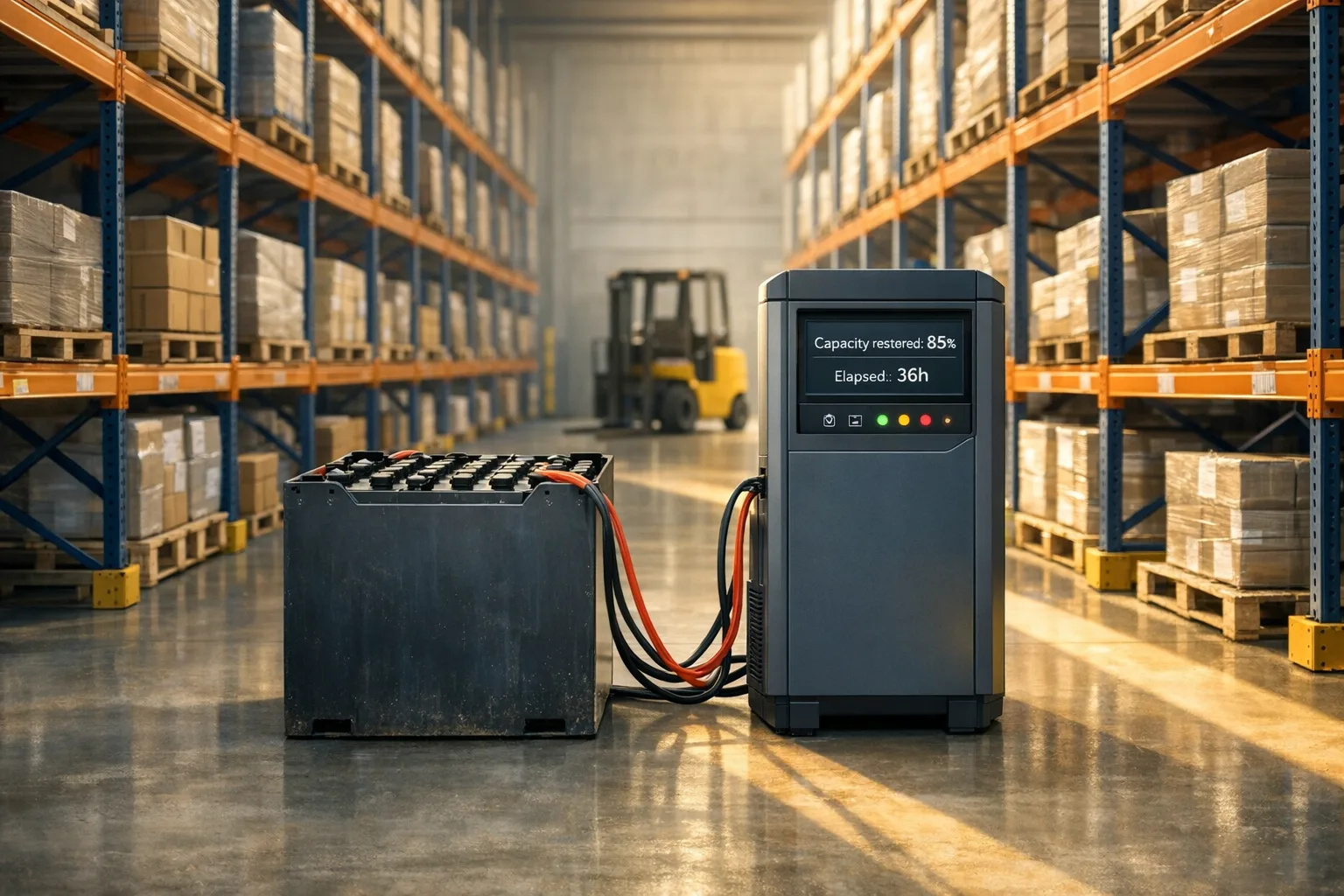
For electric forklifts, battery upkeep is another major factor. Lead-acid batteries need regular electrolyte checks and proper charging to stay in good shape. Fazlerasheed And Company also provides battery regeneration services, which can restore up to 80% of battery capacity, delaying costly replacements.
While routine maintenance helps prevent many issues, unexpected repairs and wear-and-tear can still arise.
Unplanned Repairs and Wear-and-Tear
Unplanned repairs can be both disruptive and expensive. For example, downtime in a warehouse can cost as much as Rs. 2,400,000 per hour, while repair costs average Rs. 1,200,000 (or Rs. 150,000 per hour).
Several factors contribute to unplanned maintenance. Poor driving habits, such as speeding or hard braking, can accelerate wear and tear. Similarly, uneven surfaces, potholes, and poorly designed loading docks can cause unnecessary damage.
Using genuine spare parts is one way to reduce long-term repair costs. Authentic parts are specifically designed for your equipment, ensuring better performance and avoiding compatibility issues. Fazlerasheed And Company stocks high-quality spare parts to help you avoid repeated repairs.
Certain components require regular attention to prevent unexpected failures. These include:
- Forks: Check for cracks or excessive wear.
- Hydraulic systems: Monitor for leaks and ensure oil quality.
- Masts: Tighten nuts and bolts and keep them well-lubricated.
- Brakes: Inspect for proper functioning and pad wear.
Planned Maintenance Contracts
Planned maintenance contracts turn unpredictable repair costs into fixed monthly expenses. These agreements help identify and resolve potential problems early, preventing them from escalating into costly repairs. Regular maintenance can reduce downtime by 30% to 50%, and professional servicing can lower repair costs by up to 25%.
Such contracts also provide transparency, making it easier to plan your budget while minimising the risk of unexpected downtime. A proactive maintenance strategy is almost always more economical.
When evaluating maintenance contracts, keep in mind factors like travel costs, after-hours rates, and potential surcharges. Typically, Planned Maintenance (PM) covers scheduled servicing but excludes replacement parts, while Full Maintenance (FM) includes comprehensive upkeep at a fixed monthly rate, with specific exclusions.
Fazlerasheed And Company offers customised maintenance contracts tailored to your operational needs. Their trained engineers use high-quality spare parts and follow manufacturer guidelines to ensure your forklifts operate safely and efficiently. These contracts usually range from 24 to 60 months, offering predictable costs over the long term.
The type of maintenance approach you choose can greatly influence your total cost of ownership. For instance, forklifts with lithium-ion batteries generally require the least maintenance, followed by traditional electric counterbalance trucks. Internal combustion models, on the other hand, tend to have the highest maintenance costs due to their complex engines and additional wear components.
These maintenance strategies tie directly into overall ownership costs. Up next, we’ll explore operational and energy expenses.
sbb-itb-a884676
Operational and Energy Costs
When it comes to forklifts, operational costs like energy, labour, and other recurring expenses can make up a large chunk of the total expenditure. These costs aren't just limited to fuel or electricity; they also include wages and other overlooked factors. Knowing these costs upfront can help businesses make smarter choices about the type of forklift they need and how to manage operations more efficiently.
Energy and Fuel Costs
The cost of energy depends on the type of forklift and local electricity or fuel rates. For electric forklifts, electricity is the primary expense, while diesel or LPG forklifts require regular fuel purchases.
In Pakistan, electricity rates vary significantly based on the supplier and usage levels. Industrial electricity prices in 2024 averaged 13.5 cents per kWh, which is nearly double the rates in countries like China, India, and the United States. These rates are regulated by the National Electric Power Regulatory Authority (NEPRA) and fluctuate due to factors like fuel costs, subsidies, and inefficiencies in the power grid. For instance, LESCO charges PKR 10 per unit for the first 100 units, but the cost jumps to PKR 42–47 per unit for usage above 700 units. Similarly, FESCO's rates range from PKR 22 per unit for the first 100 units to PKR 42 per unit for higher consumption brackets. Businesses can save on costs by scheduling forklift charging during off-peak hours, as electricity is pricier during peak demand times.
Another way to cut down on energy expenses is through battery energy storage systems (BESS). Pakistan imported approximately 1.25 gigawatt-hours of BESS in 2024, showing a growing interest in this technology. Fazlerasheed And Company offers battery-operated forklifts with energy-efficient designs, helping businesses reduce electricity usage without compromising productivity. They also provide battery regeneration services, which extend battery life and lower charging frequency.
Energy costs are just one piece of the puzzle - labour expenses also play a critical role in operational budgets.
Operator Wages and Labour Costs
Forklift operator wages in Pakistan vary by city, experience, and job conditions. On average, operators earn PKR 954,829 annually or about PKR 459 per hour. However, this can differ significantly by location. In Karachi, for instance, operators make an average of PKR 1,072,378 per year (or PKR 516 per hour), while in Lahore, the average drops to around PKR 891,042 annually (or PKR 428 per hour). Monthly salaries typically hover around PKR 40,843, according to Indeed.com. Additionally, SalaryExpert data indicates that operators could see a 42% salary increase over five years, making long-term wage planning essential.
Extra costs like shift premiums for night or weekend work, overtime pay, and training fees can also add up. For example, online forklift training programs cost between $50 and $60, while in-person courses range from $150 to $200. Operators with certifications, such as OSHA Forklift Operator training, usually earn more and are often more efficient and safer. Beyond wages, businesses also need to budget for recruitment, social security contributions, ongoing training, and any productivity losses during training periods.
Labour and energy costs aren't the only factors to consider - other operational expenses can quietly add to the total cost of ownership.
Other Expenses
There are several other ongoing costs to account for when owning and operating forklifts. Insurance is a key expense, with costs varying based on the forklift's value, usage, and coverage. Comprehensive insurance is critical, covering equipment damage, third-party liability, and operator injury protection.
Safety measures are another area where costs arise, but they are crucial for both productivity and worker well-being. Regular safety inspections and compliance with regulations can help prevent accidents and reduce downtime. As one safety expert noted:
"You can't put a value on preventing a colleague's death or life-changing injury, but a formal pre-use safety check can also help reduce these TCO costs. Identifying maintenance issues early reduces downtime and product damage, increasing productivity."
Warehouse maintenance is another factor that affects forklift costs. Uneven floors, potholes, or poorly designed loading areas can wear down forklifts faster and pose safety risks. Fazlerasheed And Company offers solutions like warehouse floor crack fillers to keep surfaces smooth and minimise equipment stress.
Other costs to consider include licensing and registration fees, as well as investments in environmental compliance. For instance, businesses may need to install ventilation systems, emission controls, or waste management solutions to meet regulations.
Total Lifecycle Cost Analysis
When it comes to managing forklift expenses, looking at the big picture is crucial. A full view of the total cost of ownership (TCO) helps businesses make smarter decisions and plan budgets effectively. By combining all costs - capital, maintenance, and operational - into one figure, you can better understand the true expense of owning and operating a forklift over its entire lifespan.
Compiling Total Cost of Ownership
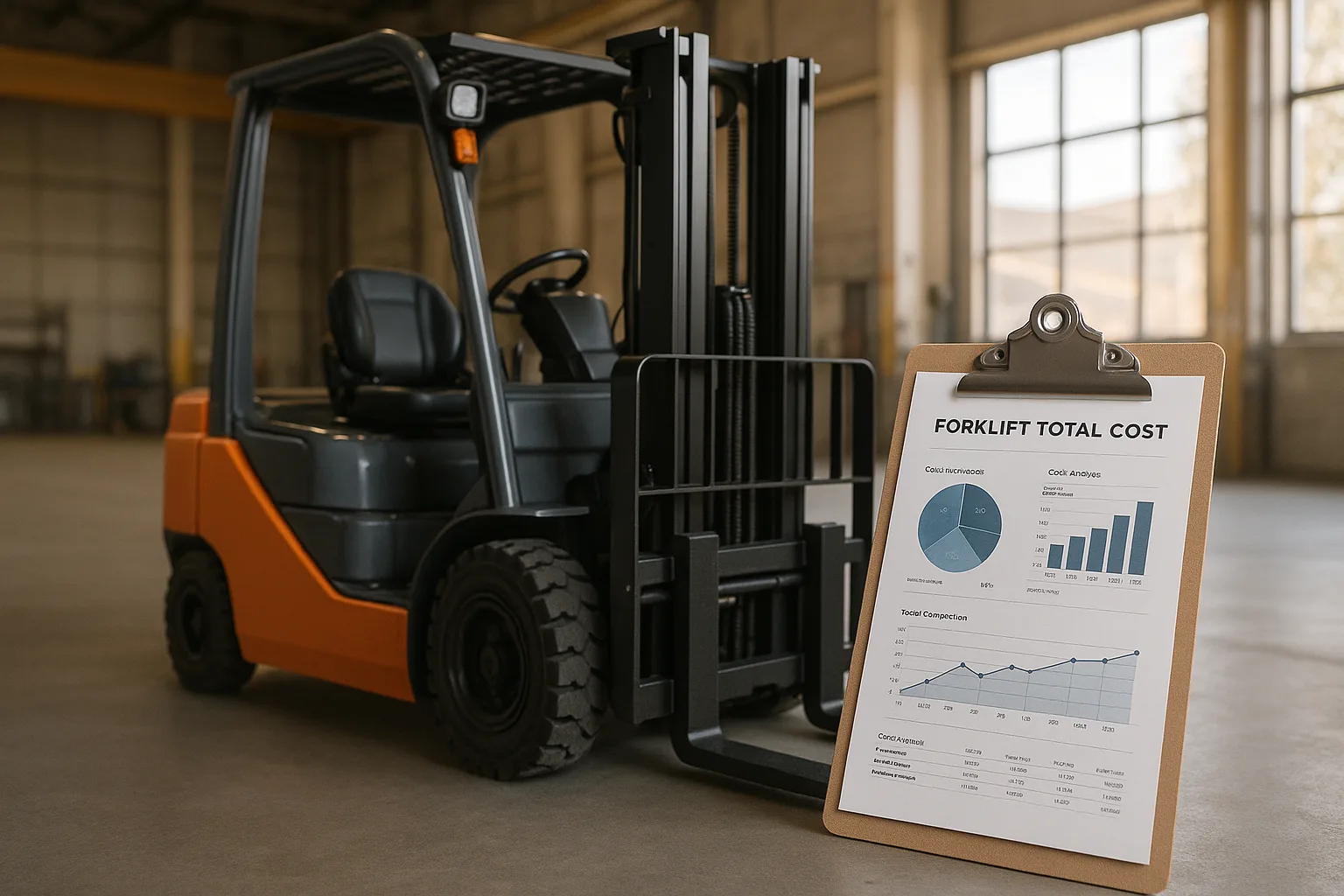
The TCO calculation covers everything tied to running and maintaining a forklift throughout its life. The formula is straightforward: TCO = acquisition cost + (related costs × years of use) – resale value. If you plan to sell the forklift later, deduct its estimated resale value to get a clearer picture of your final TCO.
Each cost category plays a key role in the overall calculation:
| Cost Category | Factors to Include |
|---|---|
| Capital Costs | Purchase price, battery costs (for electric models), rental costs |
| Maintenance Costs | Routine servicing, unplanned repairs, maintenance contracts |
| Operational Costs | Energy or fuel expenses, operator wages, and additional charges |
One striking insight: operator wages can make up as much as 77% of the TCO. It’s also worth noting that a forklift with a lower upfront price may end up costing more in the long run due to frequent repairs or reduced lifespan.
Lifecycle Cost Comparison
Once you've compiled all costs, comparing lifecycle expenses can help identify when replacing a forklift becomes the more economical choice. Lifecycle cost analysis shows when an asset's operating costs start to outweigh its value. Ideally, you want to spread capital costs over the longest possible period before yearly TCO begins to rise.
For example, a five-year analysis might reveal that electric forklifts can save up to 40% in operating costs compared to internal combustion models. To ensure accuracy, group similar equipment and track their maintenance, downtime, energy, and capital costs. Use depreciation to estimate residual values and adjust historical costs to current-year values by factoring in inflation.
Finding Cost-Saving Opportunities
Digging into these numbers can uncover areas where you can cut expenses and optimise your investment. Regularly reviewing your forklift costs is a great way to spot savings. Focus on the cost categories that take up the bulk of your budget and look for ways to bring them down.
For example, Fazlerasheed And Company offers services like battery regeneration and wheel retreading, which can extend battery life, reduce charging needs, and lower replacement costs - all while maintaining safety standards.
Using a mobile CMMS (computerised maintenance management system) to keep detailed service logs can also help. These logs make it easier to identify patterns or anomalies in your expenses. Proactive maintenance - such as scheduling regular servicing, choosing the right forklift for the job, and ensuring dependable repair services - can significantly lower your TCO. Don’t forget to account for downtime costs, which, in Britain, total a staggering £180bn annually.
As Total Warehouse aptly puts it:
"Prevention costs pennies, repairs cost dollars."
FAQs
What’s the best way to decide between renting or buying a forklift for my business?
When deciding between renting or buying a forklift, it all boils down to your business requirements, how often you'll use the equipment, and your budget. Renting is ideal if you have short-term or seasonal needs. It saves you from hefty upfront costs and often includes maintenance in the rental fee, making it a hassle-free option.
On the flip side, buying a forklift makes more sense for long-term use. Ownership allows you to claim depreciation, spread costs over time, and potentially lower your overall expenses in the long run.
To choose wisely, think about how long you'll need the forklift, assess your cash flow, and consider whether you have the resources to handle maintenance. Carefully weighing these factors will help you find the most cost-efficient option for your business in Pakistan.
What are the long-term advantages of choosing a lithium-ion battery for an electric forklift in Pakistan, despite its higher upfront cost?
Investing in a lithium-ion battery for your electric forklift can be a game-changer for your business. While the upfront cost may be higher, the long-term benefits make it a worthwhile choice. These batteries are built to last, often surpassing 2,500 charge cycles, which means fewer replacements and reduced overall ownership expenses.
What sets lithium-ion batteries apart is their energy efficiency. They consume less electricity, cutting down on power bills, and charge much faster than traditional batteries. This not only reduces downtime but also boosts productivity and trims labour costs. Plus, they require minimal maintenance, saving you even more time and money in the long run.
For businesses in Pakistan, these features translate into a stronger return on investment (ROI). With lower operating costs, improved efficiency, and exceptional durability, lithium-ion batteries are a smart and forward-thinking choice for electric forklifts.
What are the best ways to manage and reduce forklift maintenance costs in Pakistan?
To keep forklift maintenance costs in check, start with routine inspections and servicing every 250–300 operating hours. Regular checks can catch minor issues before they become expensive repairs. Opting for reliable spare parts and remanufactured components is another smart way to save money while ensuring your forklifts continue to perform efficiently.
Having a standardised forklift fleet can also make maintenance simpler and more consistent. On top of that, using local maintenance services can be a game-changer. For instance, companies like Fazlerasheed And Company specialise in servicing battery-powered forklifts and material handling equipment, offering expert solutions tailored to your needs. By staying ahead with regular care and partnering with trusted local experts, you’ll not only extend the life of your forklifts but also keep costs under control.
Looking for Forklifts or Parts?
Fazlerasheed & Co. supplies reconditioned forklifts, genuine spare parts, and traction batteries across Pakistan. Get a free quote today.