How to Monitor Forklift Battery Health
Monitoring forklift battery health is key to reducing downtime and cutting costs, especially in Pakistan's industrial sector. Here's what you need to know:
- Lead-acid batteries are cheaper (Rs 5,00,000–Rs 12,00,000) but need frequent manual maintenance and have a lifespan of 1,000–1,500 charge cycles.
- Lithium-ion batteries are costlier (Rs 17,00,000–Rs 25,00,000) but offer longer life (2,500–3,000+ cycles), real-time data via a Battery Management System (BMS), and require minimal upkeep.
- A battery monitoring system includes a BMS controller, sensors (voltage, temperature, current), and software for real-time updates, alerts, and predictive analytics.
- Regular checks, proper charging practices, and timely maintenance can extend battery life and prevent unexpected failures.
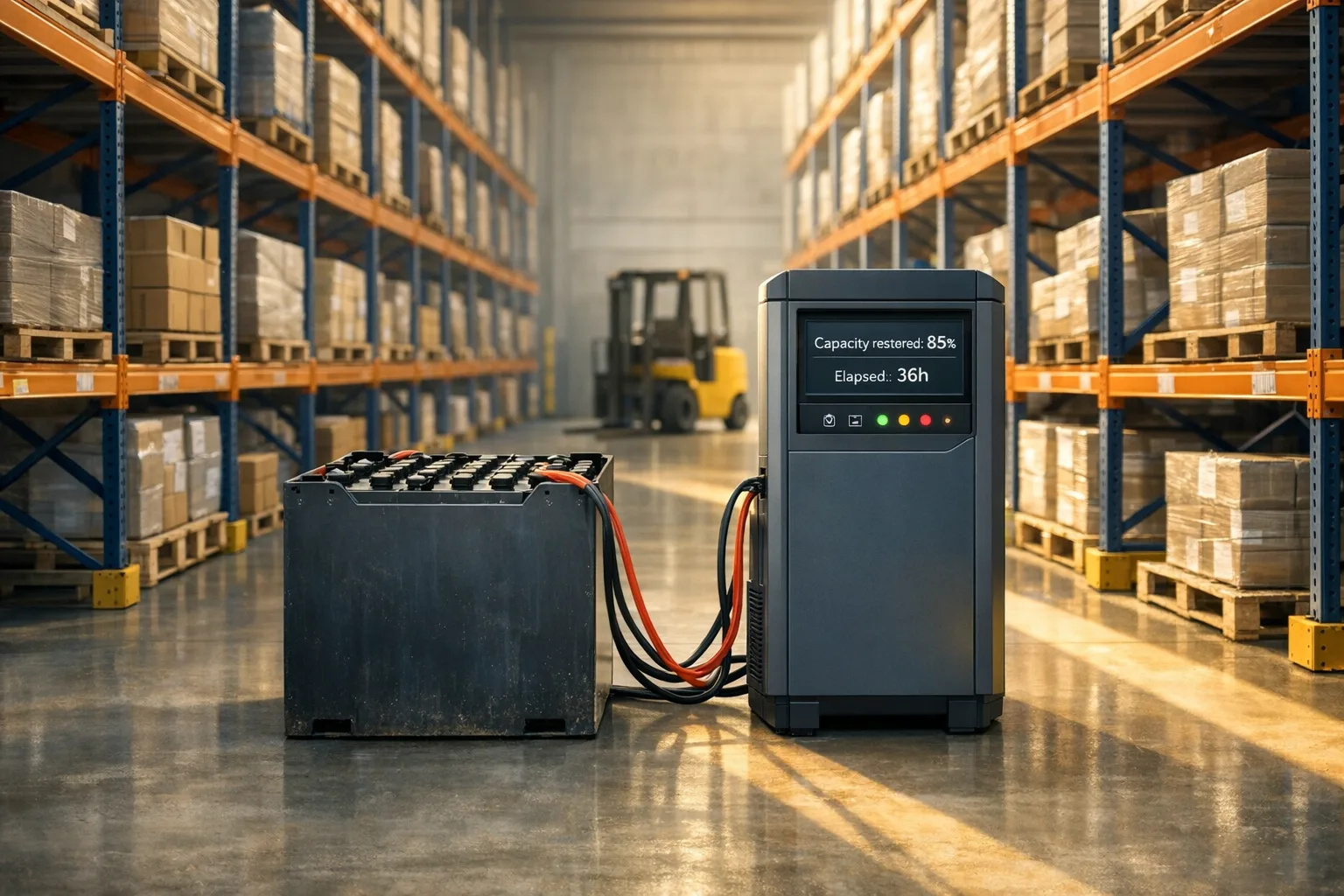
- For persistent issues or aging batteries, professional services like regeneration can restore up to 80% of capacity, saving costs.
Proper monitoring ensures smooth operations, reduces expenses, and maximizes battery lifespan.
Battery Monitoring System Components
A battery monitoring system is made up of several essential parts that work together to keep track of forklift battery performance. By understanding these components, you can choose a setup that fits both your operational requirements and budget.
Hardware Components
The Battery Monitoring Unit (BMS Controller) serves as the brain of the system. Typically mounted on the battery itself, this unit monitors its condition continuously and applies safety protocols to prevent issues.
Sensors play a crucial role in gathering data. These include voltage, temperature, and current sensors, as well as fluid level sensors for lead-acid batteries. They track key parameters to identify problems like overheating, imbalances, or low electrolyte levels. In Pakistan’s hot summers, where temperatures can soar past 45°C, temperature sensors become particularly important to prevent battery damage.
Display panels provide quick, visual updates on battery status, showing charge levels, runtime estimates, and alerts using easy-to-read colour codes. The data collected by the sensors is then sent to software platforms for real-time tracking and analysis.
Software Platforms
The software component takes raw data from the sensors and turns it into actionable insights using sophisticated algorithms. It processes this information to generate detailed reports on battery performance, charging efficiency, and maintenance needs.
Alert systems are built into the software to notify maintenance teams when something goes wrong. For instance, if a battery cell's temperature exceeds 60°C or its voltage drops below a critical level, the system can send alerts via SMS, email, or dashboard notifications.
Some systems also include fleet management integration, allowing the software to connect with your warehouse management tools. This integration gives you a complete view of your equipment’s performance, helping you schedule maintenance during downtime and manage battery rotation across multiple forklifts.
Advanced platforms may also feature predictive analytics, which use historical data to anticipate when a battery might need servicing or replacement. This helps businesses plan maintenance costs and avoid unexpected failures. These insights are shared through communication modules, ensuring quick responses and seamless data sharing.
Communication Modules
Communication modules are the backbone of real-time monitoring and remote diagnostics.
Wired communication systems, such as CAN bus or RS485 protocols, connect sensors directly to the monitoring unit. These wired setups are reliable and less prone to interference, making them ideal for industrial environments like warehouses and factories in Pakistan.
Wireless communication modules offer more flexibility, using Wi-Fi, cellular networks, or Bluetooth to transmit data. This allows managers to check battery status remotely through apps or online dashboards, even when they’re off-site.
The communication setup can vary based on the system’s complexity. In modular systems, communication modules help individual components share data with other equipment. More advanced systems may have a centralised master unit that manages all external communication, acting as a hub for data exchange.
These modules continuously send updates on critical metrics like remaining energy, operating range, and overall battery health. This steady flow of information supports both immediate operational decisions and long-term maintenance planning, helping to keep your forklift fleet running smoothly while reducing the risk of unplanned downtime.
How to Set Up a Battery Monitoring System
Getting a battery monitoring system up and running requires careful preparation and precise installation. By following these steps, you can ensure accurate readings and dependable performance for your forklift fleet.
Step 1: Install Sensors and Hardware
Before starting, make sure the forklift is powered down, the battery is disconnected, and you're wearing protective gear in a well-ventilated area.
Begin by mounting the Battery Monitoring Unit (BMS Controller) directly onto the battery housing. Use brackets to secure it in a spot that’s easy to access for maintenance but shielded from potential damage during daily operations. Avoid placing it near the battery's charging ports to prevent interference.
Next, install voltage sensors by connecting them to the terminals of each battery cell. For example, a 48-volt forklift battery with 24 cells will need individual voltage monitoring leads attached to each cell. Ensure the connections are tight and insulated to avoid short circuits. Use the provided colour-coded cables - red for positive and black for negative terminals.
Place temperature sensors strategically, with at least one in the centre and another on the edge of the battery. This setup is especially useful for monitoring in Pakistan's high temperatures, which can reach up to 45°C.
For current flow monitoring, attach current sensors (Hall effect sensors) around the main battery cables. These should be clamped onto the positive cable without breaking the circuit, with the sensor arrow pointing in the direction of current discharge.
If you're working with lead-acid batteries, add electrolyte level sensors to representative cells. These sensors help monitor fluid levels and signal when it's time to top up. Follow the manufacturer’s guidelines for placement, ensuring they cover different sections of the battery pack.
Finally, secure all wiring with cable ties and protective conduits. Route the cables away from moving parts and label each connection for easy identification later. Once everything is in place and connections are verified, you’re ready to move on to integrating the system with software.
Step 2: Connect to Monitoring Software
After installing the hardware, the next step is to integrate it with the monitoring software.
Start by downloading and installing the software onto your computer or mobile device. Most systems offer both desktop and mobile options. Use your business email to create an account and register your hardware using the serial numbers on each component.
Connect the monitoring unit to your network via Ethernet, Wi-Fi, or cellular APN, depending on the system's capabilities. This enables real-time data transmission.
Set up your dashboard by adding each forklift battery to the system. Assign unique identifiers that align with your fleet numbering system, such as BAT-001 for forklift FL-001.
Create user accounts for your team with varying access levels. Maintenance staff might need full access to all parameters, while operators may only require basic information like charge levels and alerts. Management can have accounts tailored for fleet-wide reports.
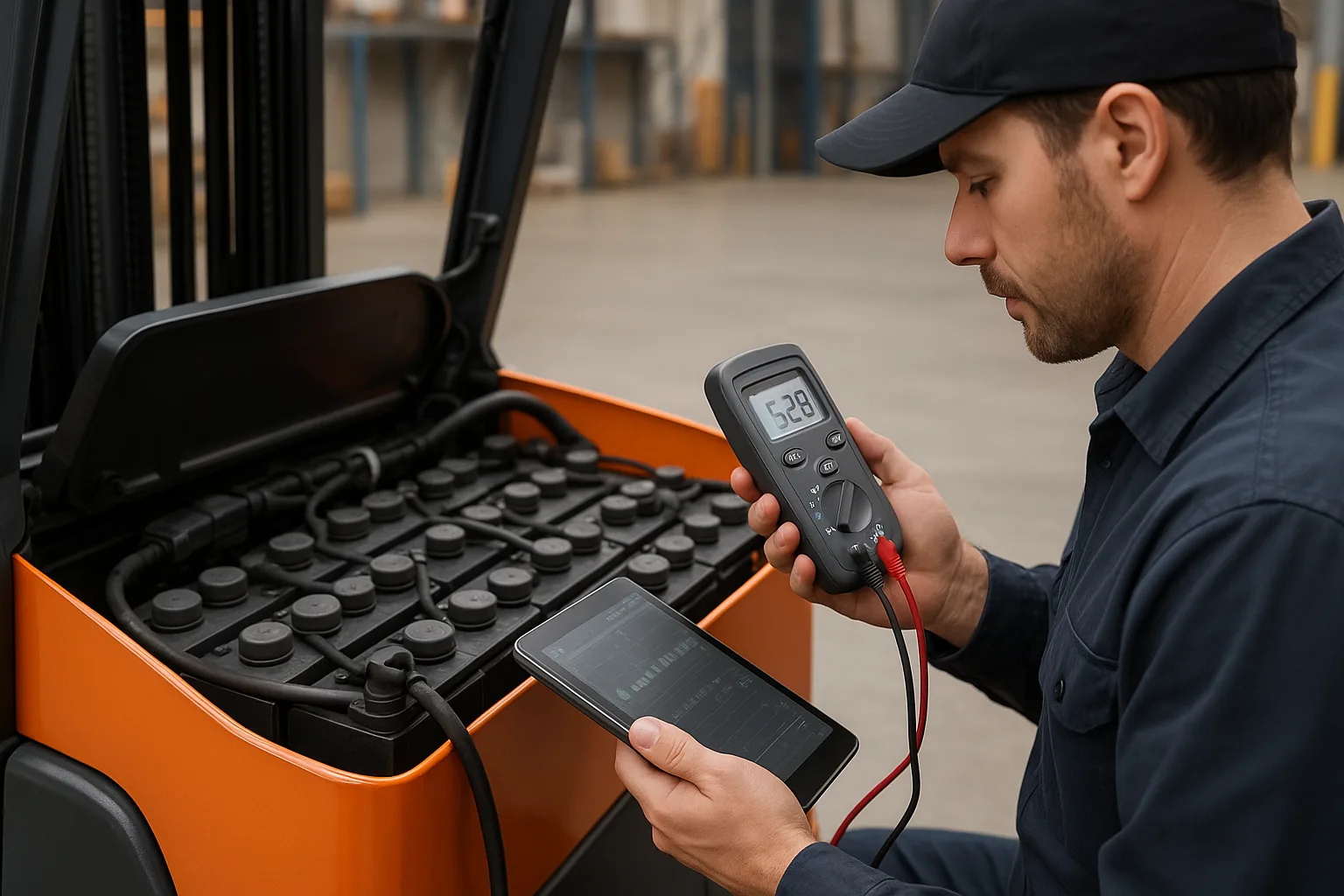
To ensure everything is working, test the data flow. Check that real-time readings appear on your dashboard and verify voltage readings with a digital multimeter. Confirm that temperature readings reflect actual battery conditions.
Step 3: Configure Alerts and Notifications
Once the system is operational, setting up alerts and notifications ensures quick responses to any issues.
Set monitoring thresholds for key parameters:
- Voltage: Warn at 1.75 V per cell (42 V for 48 V) and alert at 2.4 V per cell (57.6 V for 48 V)
- Temperature: Warn at 50°C; critical alerts at 60°C
- Current: Alert if usage exceeds 80% of the battery’s rated capacity
Enable notifications through SMS for critical alerts and email for routine updates. Set escalation protocols to notify supervisors if an issue isn’t addressed within 30 minutes.
Schedule regular reports to monitor battery performance over time. Weekly reports can include charging efficiency, cycle counts, and temperature trends, while monthly reports might focus on capacity degradation and maintenance recommendations.
Run test alerts to confirm that SMS messages are delivered promptly, emails aren’t marked as spam, and push notifications work on all team devices.
Finally, document your alert settings and train relevant staff. Provide a quick reference guide explaining each alert type and the necessary actions. This documentation will be especially helpful during shift changes and when onboarding new team members.
sbb-itb-a884676
Battery Health Monitoring Best Practices
Keeping a close eye on forklift batteries is crucial for extending their lifespan and avoiding expensive downtime. Once sensors are installed and alerts are configured, regular physical inspections become an essential part of proactive battery maintenance.
Routine Inspections
Start each shift with a quick visual inspection of the batteries. Check for cracks, leaks, or swelling in the battery cases, connectors, vent caps, and cables. Watch out for early warning signs like wear, crystallisation, or corrosion around terminals and fill caps, as these could signal potential problems.
Ensure all cables and connectors are securely fastened. Clean the contacts whenever necessary. Battery terminals, clamps, and cables should also be checked to confirm they are free from corrosion and properly secured. Regularly clean contact posts to maintain their conductivity.
For lead-acid batteries, it's important to monitor electrolyte levels using the correct tools. Top them up with distilled water every 5–10 charge cycles, but only add water to the cells that need it. Be careful to avoid both underfilling and overfilling.
Charging areas should always be well-ventilated, and fans in these areas should be checked regularly to ensure proper functioning.
Keep a detailed maintenance log of all inspections, repairs, and servicing. This helps track recurring issues and plan preventive maintenance more effectively. These routine checks, combined with other maintenance efforts, play a vital role in keeping batteries running efficiently.
| Component | Inspection Frequency | Action | Benefit |
|---|---|---|---|
| Battery Terminals | Weekly | Clean with neutralising solution | Reduces corrosion, maintains conductivity |
| Battery Case | Weekly | Wipe down with a damp cloth | Prevents acid residue buildup |
| Battery Compartment | Bi-weekly | Thorough cleaning and drying | Enhances safety and accessibility |
| Spilled Acid | Immediate | Neutralise with baking soda | Prevents damage to metal components |
How to Read and Fix Battery Monitoring Data
Keeping an eye on your battery monitoring data can save you from unexpected downtime and expensive repairs. Today’s monitoring systems provide real-time alerts and visual tools that let you address issues before they escalate.
Common Alerts and Their Meanings
Battery monitoring systems flag specific problems through alerts. Here’s what some of the most common ones mean:
-
Low Voltage Alerts: These indicate that the battery is struggling to retain charge. This could mean it needs recharging or that individual cells require testing. If the issue persists after a full charge, professional help might be necessary.
-
High Temperature Warnings: Overheating during charging or operation is a red flag. This could result from overworked batteries, poor ventilation, or increased internal resistance due to ageing or damage.
-
Electrolyte Level Alerts: For lead-acid batteries, these alerts warn about low water levels. Insufficient electrolyte can damage battery plates and drastically reduce capacity.
-
Charge Cycle Alerts: These track the number of full charge-discharge cycles the battery has completed. As the battery nears its cycle limit, these alerts help you plan timely replacements.
-
State of Health Warnings: These provide an overall snapshot of the battery’s condition. Modern systems often display visual indicators for batteries in poor health, signalling the need for maintenance or replacement.
How to Fix Common Issues
When you encounter these alerts, here’s how you can address them:
-
Low Voltage: Start by giving the battery a full charge. If the problem persists, inspect individual cells for issues.
-
High Temperature: Improve ventilation, ensure cooling systems like fans are working properly, and keep batteries out of direct sunlight.
-
Low Electrolyte Levels: Refill the cells with distilled or demineralised water. Be cautious - using tap water or adding the wrong amount can cause damage. If unsure, consult a technician.
-
Excessive Charge Cycles: While you can’t reverse wear from charge cycles, you can extend the battery’s life by following proper charging practices and avoiding deep discharges.
-
State of Health: Adjust charging schedules based on the battery’s condition to slow degradation. If these steps don’t resolve the issues, it’s time to call in an expert.
When to Get Professional Help
Sometimes, basic fixes aren’t enough, and professional assistance becomes necessary:
-
Persistent Alerts: If voltage, temperature, or electrolyte issues continue despite your efforts, it’s time to involve a professional.
-
Major Defects: Visible problems like fluid leaks or swollen battery cases require immediate attention. Don’t use the equipment until these defects are addressed.
-
Consistent Issues: If certain batteries or vehicles repeatedly show problems, this points to underlying issues beyond routine maintenance.
-
Warranty Concerns: If monitoring data highlights problems that might fall under warranty, consult your battery vendor to explore possible coverage.
For businesses in Pakistan, Fazlerasheed And Company offers expert battery regeneration services and maintenance support. Their experience with traction batteries and material handling equipment can help extend battery life and improve performance when professional intervention is required.
Finally, if you’re ever uncertain about how to handle an issue, don’t hesitate to seek help. Attempting repairs without proper knowledge can worsen the problem. Following these guidelines will help maintain your batteries and keep operations running smoothly.
When to Use Professional Maintenance or Battery Regeneration
While monitoring systems can catch early issues, some problems require expert repair to prevent costly breakdowns and minimise downtime.
Signs You Need Professional Help
There are several clear indicators that your forklift battery requires professional attention beyond routine upkeep. For instance, a noticeable drop in performance is a red flag. If your forklift struggles to reach full capacity, can’t lift its usual load, or displays dimmed or flickering screens, it’s time to call in the experts \17–19]. Charging issues are another major clue - if the battery takes longer to charge, drains unusually fast, or needs frequent jump-starts or mid-shift recharges, internal damage may be to blame [17–19].
Physical damage is another critical area to monitor. Swelling, cracks, dents, or visible corrosion on the battery’s exterior or terminals demand immediate professional assessment [17–19]. Acid leakage is particularly serious and should only be handled by trained professionals [17–19].
Excessive sulfation is another common issue, where sulfuric acid builds up on the battery plates. This can lead to reduced power and longer charging times [[9]. If cleaning doesn’t resolve it, the battery may have deteriorated significantly, requiring professional intervention.
Temperature problems are also a warning sign. Batteries that frequently overheat, feel unusually warm, or emit strong odours need to be inspected by an expert. Unusual noises or burning smells from your forklift could also point to underlying battery faults.
Finally, the age and usage of the battery are key factors. Most forklift batteries last around 1,500 charge cycles, which translates to about five years of service [17,19]. If your battery is nearing or exceeding this lifespan and showing performance issues, it’s time for a professional evaluation. These signs highlight when routine maintenance isn’t enough, and expert help becomes essential.
When these warning signs persist, battery regeneration can be a cost-effective solution.
Benefits of Battery Regeneration
Battery regeneration is an affordable alternative to replacing an entire battery, making it especially appealing for businesses in Pakistan working with limited budgets. This process can restore up to 80% of the battery’s original capacity, extending its lifespan and reducing replacement expenses.
Regeneration works by using high-frequency pulsation to remove sulfation, improving battery performance. It’s a fraction of the cost of buying a new battery, offering a strong return on investment while keeping the battery functional for several more years. Additionally, it’s an environmentally friendly option, as it helps cut down on battery waste and reduces the demand for new batteries.
For Pakistani businesses, where importing new batteries can be both expensive and time-consuming, regeneration is a practical way to maintain fleet operations without major financial strain.
Fazlerasheed And Company's Services
!Fazlerasheed And Company
Fazlerasheed And Company offers specialised battery regeneration and maintenance services tailored for businesses in Pakistan. As a trusted warehousing solutions provider for the top 1% of companies in the country, they deliver expert refurbishment and reconditioning services.
"Our clients entrust us with their malfunctioning machines, which we expertly refurbish and recondition, ultimately saving them significant costs."
Their services include battery regeneration, routine maintenance, and the supply of traction, semi-traction, and backup batteries from leading European brands like Hawker, Eternity, Sunlight, and Trojan. They also provide repair services for expensive electronic components, helping businesses avoid costly replacements.
With teams strategically located across Pakistan, Fazlerasheed And Company ensures timely and efficient maintenance of material handling equipment, reducing downtime and labour costs for their clients. Their comprehensive service also includes genuine spare parts and expert technical support.
"We are going global for business of electric fork lifters reconditioning / trade and all material handling solution with the aim to help our customers achieve efficient operations and reduced downtimes."
This nationwide presence ensures that businesses across Pakistan can access professional battery services, no matter their location. By combining these expert services with regular monitoring, companies can keep their forklift operations running smoothly and without interruptions.
FAQs
What are the key differences between lead-acid and lithium-ion forklift batteries in terms of maintenance and lifespan?
Lithium-ion forklift batteries have an impressive lifespan of 8–10 years or up to 3,000 charge cycles, far outlasting lead-acid batteries, which typically last 3–7 years or 1,200–1,800 cycles. This extended durability makes them a strong contender for businesses seeking long-term reliability.
When it comes to maintenance, lithium-ion batteries are a hassle-free option. Unlike lead-acid batteries, which require regular water refills and frequent cleaning to prevent corrosion, lithium-ion batteries eliminate these tasks entirely. This not only saves time but also ensures steady performance over the years.
For businesses in Pakistan, switching to lithium-ion batteries could be a smart financial move. Their longer lifespan and minimal maintenance needs make them a practical and efficient choice for the long haul.
How does a battery monitoring system with predictive analytics help avoid forklift battery failures?
A battery monitoring system equipped with predictive analytics is a game-changer for preventing forklift battery failures. It keeps an eye on critical factors like battery usage, charging patterns, temperature, and electrolyte levels. By analysing this data in real time, the system can detect early warning signs of potential problems and send timely alerts for maintenance.
This forward-thinking method not only reduces the chances of unexpected breakdowns but also helps extend the battery's lifespan. Plus, it ensures your forklift stays in top working condition. On top of that, regular monitoring can cut down on expensive repairs and keep your operations running without hiccups.
What are the warning signs that your forklift battery may need professional regeneration?
A forklift battery that isn’t performing as it should might need professional regeneration. Watch out for signs like reduced run time, extended charging periods, overheating during operation, or an inability to maintain a full charge. Physical signs such as corroded terminals or uneven electrolyte levels also indicate that the battery requires attention.
Taking quick action when these issues arise can help bring the battery back to optimal performance, prolonging its life and keeping your forklift running smoothly.
Looking for Forklifts or Parts?
Fazlerasheed & Co. supplies reconditioned forklifts, genuine spare parts, and traction batteries across Pakistan. Get a free quote today.