Pulse Technology vs. Traditional Desulfation
Pulse Technology vs. Traditional Desulfation: Which is Better for Battery Maintenance?
Battery sulfation is the main reason lead-acid batteries fail, making up 82–85% of cases. When lead sulfate crystals harden on battery plates, performance drops significantly, especially in industrial settings like forklifts and warehouses.
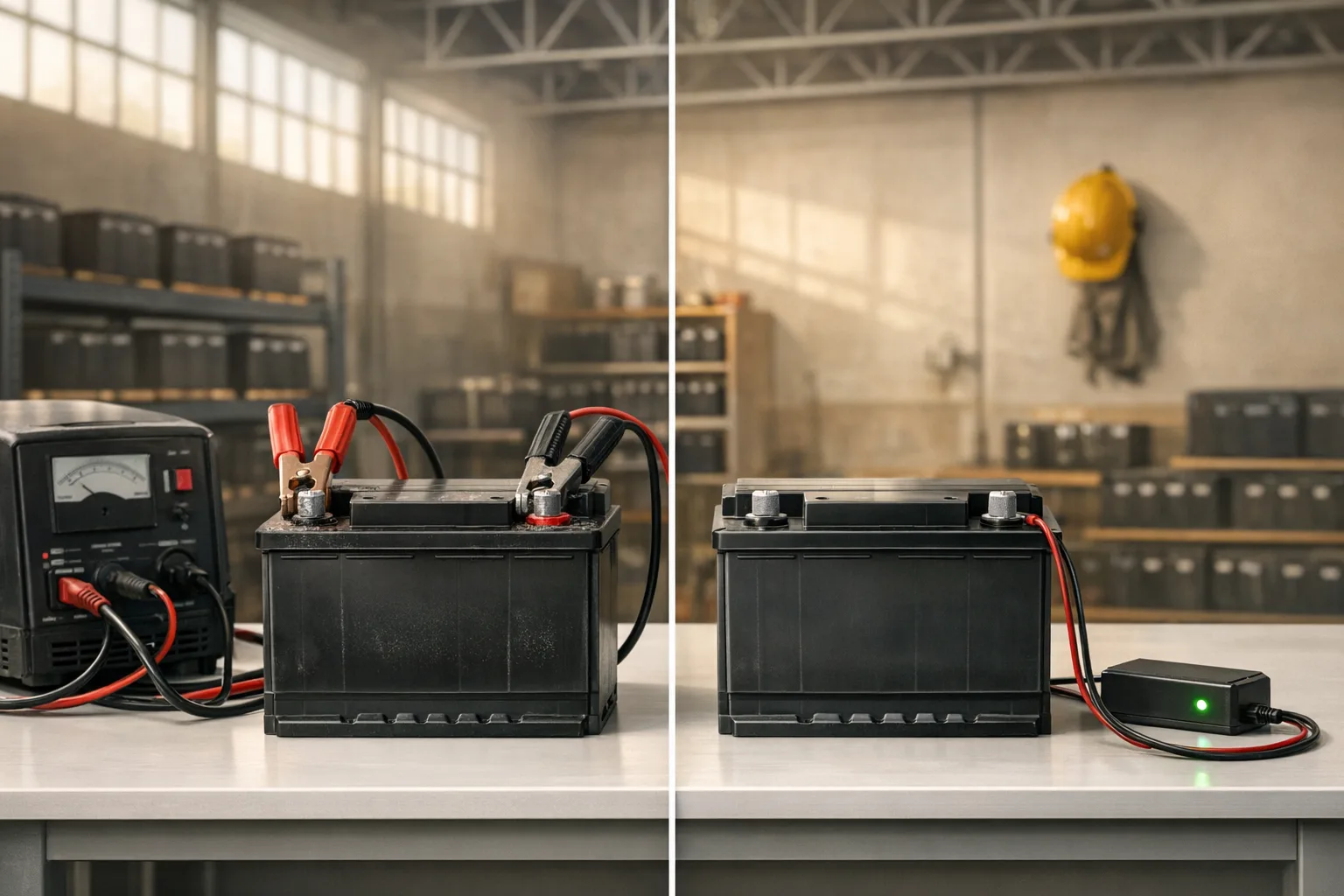
Pulse technology and traditional methods both aim to fix this issue, but they work differently:
- Pulse Technology: Uses high-frequency pulses to break down hardened sulfate crystals safely. It improves battery lifespan, reduces downtime, and prevents future sulfation. However, it’s slower and less effective for severely damaged batteries.
- Traditional Methods: Overcharging, heat, or chemical treatments dissolve crystals but risk damaging the battery. These methods are cheaper upfront but can shorten battery life over time.
Quick Comparison
| Feature | Pulse Technology | Traditional Methods |
|---|---|---|
| How It Works | High-frequency pulses to dissolve crystals | Overcharging, heat, or chemicals |
| Effectiveness | Extends lifespan up to 3x, prevents future sulfation | Works for mild cases but risks damage |
| Risks | Minimal, but slower for severe cases | Can cause grid corrosion or overheating |
| Cost | Higher initial investment (Rs. 11,500–1,060,000) | Lower upfront cost |
| Industrial Use | Ideal for forklifts and large batteries | Limited, especially for AGM batteries |
Pulse technology is safer and more effective for industrial batteries, especially in Pakistan’s demanding logistics and warehousing sectors. It reduces costs in the long run by extending battery life and lowering maintenance needs. Traditional methods, while simpler, often cause long-term harm to batteries, making them less suitable for large-scale operations.
How Pulse Technology Desulfation Works
Pulse technology uses high-frequency pulses to break down hardened lead sulfate crystals that form on battery plates. Unlike older high-voltage methods, this technique relies on resonance. The pulses are tuned to the natural resonant frequency of lead sulfate molecules, causing them to vibrate and break apart.
"The frequency of the voltages was the one with which the resonant frequency of the sulfate molecule caused oscillation in the sulfate salt molecules, causing the sulfate molecules to return to the sulfuric acid electrolyte solution." – Wuttibhat Jamratnaw, Department of Electronics and Computer Technology, Loei Rajabhat University
This process, called Ion Transfer, dissolves the crystals and restores them to the battery acid as active electrolyte. Importantly, pulse technology works within safe voltage levels, avoiding the damage and material loss often caused by high-voltage methods. This sets the foundation for understanding how the pulse technology process operates in detail.
The Pulse Technology Process
What makes pulse technology effective is its carefully controlled waveform. The patented pulse frequency usually ranges between 22,000 and 28,000 pulses per second (22–28 kHz). Each pulse peaks in under a microsecond and then gradually returns to zero. This rapid pulsing keeps the battery plates clean, enabling the battery to take a faster, deeper charge and release more energy.
This process reduces internal resistance, boosts Cold Cranking Amps (CCA), and improves overall battery health. The result? Batteries last longer and perform better in demanding environments. Research shows pulse technology can extend the lifespan of lead-acid batteries by up to three times.
Use in Forklift and Industrial Batteries
This method is especially beneficial for industrial applications. Pulse technology is ideal for traction batteries used in forklifts, reach trucks, and warehouse equipment - situations where batteries often face sulfation due to deep discharge cycles or long periods of inactivity. It works with all types of lead-acid batteries, including flooded, AGM, and gel cells.
For forklift batteries, passive desulfators like PowerPulse units are installed directly on the battery terminals to provide continuous maintenance. These devices are tailored to match specific system voltages (12V, 24V, 36V, 48V) and prevent new sulfate buildup. While these units are designed for smaller amp-hour capacities compared to full-size forklift batteries, they are still effective. However, restoring heavily sulfated batteries may take more time. For batteries that no longer accept a charge due to severe sulfation, recovery chargers like the XCR-20 are used. These chargers deliver higher amperage - around 16 amps - combined with pulsing to rejuvenate the battery.
In Pakistan's warehousing and logistics sectors, where operational costs and productivity are closely tied to battery performance, pulse technology offers a practical solution to extend battery life and improve efficiency.
How Traditional Desulfation Works
Traditional desulfation methods rely on a mix of heat, extended overcharging, and chemical treatments. While these approaches can sometimes reverse mild sulfation, they come with risks that can reduce the lifespan of industrial batteries. These drawbacks make them less practical for large-scale or industrial use.
Traditional Desulfation Processes
One of the most common methods is prolonged overcharging, where a 200mA current is applied to a fully charged battery for 24 hours. This causes the terminal voltage to rise to 2.50–2.66V per cell, equivalent to 15–16V for a standard 12V battery. The goal is to break down hardened lead sulfate crystals and return them to the electrolyte.
Another technique is thermal dissolution, which involves raising the battery temperature to 50–60°C to speed up the chemical reactions needed to dissolve the crystals. While effective in some cases, higher temperatures bring their own set of problems.
The "boiling" method increases voltage to create bubbling, which helps dislodge sulfate crystals. Before AGM batteries became common, this method was widely used. Additionally, chemical additives like carbon powder or titanium dioxide are sometimes introduced to dissolve the crystals.
Drawbacks of Traditional Techniques
For industrial environments where downtime is expensive, the drawbacks of these methods - like grid corrosion and sediment buildup - can severely undermine battery performance. Even when these techniques work, they often come with significant risks.
The "boiling" method, for instance, doesn’t just remove sulfate crystals. It also strips away active lead material from the battery plates. As Impact Battery explains:
"This boiling effect would slough off some of the crystals as well as part of the active material on the plates. It would all end up in the bottom of the battery to slush around and cause problems in the future."
This sediment, or "slush", collects at the bottom of the battery and can eventually lead to internal short circuits. Furthermore, this high-voltage method is largely ineffective for AGM batteries, as their tightly woven fibrous glass mats prevent crystals from being dislodged.
Overcharging also poses a major risk by accelerating grid corrosion. Battery University notes that "applying random pulses or blindly inducing an overcharge can harm the battery by promoting grid corrosion". This type of damage is irreversible and shortens the battery's lifespan. Additionally, some traditional treatments can cause "soft shorts", increasing the self-discharge rate and making the battery unreliable.
Chemical additives, while sometimes helpful, are labour-intensive and not practical for large-scale use. In Pakistan's industrial sector, where time and efficiency are critical, these methods aren’t feasible for managing large battery fleets. While traditional desulfation might offer temporary relief for lightly sulfated batteries, the long-term harm often outweighs any immediate benefits.
Pulse Technology: Advantages and Disadvantages
Pulse technology provides a different approach to desulfation, offering benefits and posing challenges that are important to weigh when making decisions about battery maintenance.
Benefits of Pulse Technology
Pulse technology can significantly extend battery life by breaking down sulfate crystals using high-frequency pulses. This process helps maintain the battery's overall condition.
For instance, a 2020 study demonstrated its effectiveness by restoring an 840 Ah, 36V battery. The discharge time improved from 3 hours and 27 minutes to 5 hours, extending its usability in industrial applications.
Another major advantage is preventing future sulfation. When these devices are permanently installed, they keep the battery plates clean, ensuring no new deposits harden over time. This feature is especially beneficial in Pakistan’s industrial settings, where equipment like forklifts is in constant use. Furthermore, pulse technology is compatible with all lead-acid battery types, including AGM, Gel, VRLA, and flooded cells, making it a versatile solution.
Despite these benefits, there are some operational limitations to consider.
Drawbacks of Pulse Technology
While pulse technology offers impressive advantages, it does come with challenges that users should be aware of.
One key limitation is the slower desulfation process. It can take several days to achieve effective results, and it struggles to revive batteries that are severely damaged - such as those with voltages below 2V or internal faults. Overuse of pulsing can also lead to unintended consequences, like creating an electroplating effect. This may transfer lead between plates and potentially cause internal short circuits.
Additionally, pulse charging operates with lower energy efficiency, typically ranging from 61% to 80%. It can also increase the temperature of the electrolyte, requiring close monitoring to prevent overheating.
sbb-itb-a884676
Traditional Desulfation: Advantages and Disadvantages
Traditional desulfation methods have been a cornerstone of industrial battery maintenance for years. By weighing their strengths and weaknesses, businesses can better evaluate these methods for their battery care needs.
Benefits of Traditional Methods
Traditional desulfation often relies on equalisation charging, a controlled overcharging process that’s already integrated into most industrial battery chargers. This eliminates the need for additional hardware, unlike pulse technology devices, which can range from Rs. 11,500 for basic models to over Rs. 1,060,000 for advanced multi-bank systems.
This method is straightforward and widely adopted in industrial settings. Routine practices like using floating chargers or ensuring batteries are fully recharged after use help prevent sulfate crystals from hardening. Since these tasks don’t require specialised training, they’re manageable for forklift operators and maintenance teams in warehouses and factories across Pakistan. However, these advantages come with notable risks.
Drawbacks of Traditional Methods
While simple, traditional desulfation can pose serious risks to battery health and longevity. The high-voltage boiling process not only removes sulfate crystals but also strips away critical active material, which settles as sludge at the bottom of the battery. This sludge increases the risk of internal short circuits.
Overcharging can also accelerate grid corrosion, leading to "soft shorts" that degrade the battery’s lifespan. Additionally, the process generates significant heat, with temperatures often reaching 50–60°C, which places extra stress on the battery’s internal components. Traditional desulfation methods are particularly ineffective for AGM batteries, as their tightly packed fibrous mats make it harder to address sulfation. They also struggle to reverse permanent "hard" sulfation that develops over extended periods.
While traditional methods may seem cost-effective initially, their long-term risks - such as reduced battery lifespan and inefficiency with modern battery types - underscore the need for exploring alternative solutions.
Comparing the Effectiveness of Both Methods
Recovery Rates and Battery Lifespan
Pulse technology stands out when it comes to recovering and maintaining batteries. By using high-frequency pulses, it breaks down sulfate crystals that form on battery plates, a problem traditional high-voltage charging methods often fail to address.
Research highlights that this approach can extend battery life by up to three times compared to conventional methods. This is due to pulse technology's ability to lower internal resistance and improve critical battery metrics like Cold Cranking Amps (CCA) and voltage. As Scott Schilling from PulseTech Products Corp. explains:
Pulse technology helps eliminate battery failure by maintaining a higher active material processing area whilst creating a more consistent charge acceptance environment within the battery.
This translates into longer-lasting batteries and reduced costs over time. Extensive testing and real-world data back these claims, showing the practical advantages of pulse technology.
Evidence from Studies and Field Use
Studies and on-the-ground data reinforce the effectiveness of pulse technology. It not only reduces internal resistance but also boosts voltage and CCA, leading to better overall battery performance.
Field data paints a stark picture: nearly 50% of lead-acid batteries fail or lose significant capacity due to sulfation before reaching their expected lifespan. Pulse technology directly tackles this issue by stopping sulfate deposits from hardening on the plates, a key factor in premature battery failure.
For industries in Pakistan, particularly those relying on forklift and material handling equipment, these advancements are game-changing. With batteries being a major investment, the cost savings and improved reliability offered by pulse technology are invaluable. These benefits play a crucial role in ensuring smoother operations in Pakistan's industrial landscape.
Pulse Technology at Fazlerasheed And Company
!Fazlerasheed And Company
Battery Regeneration Services
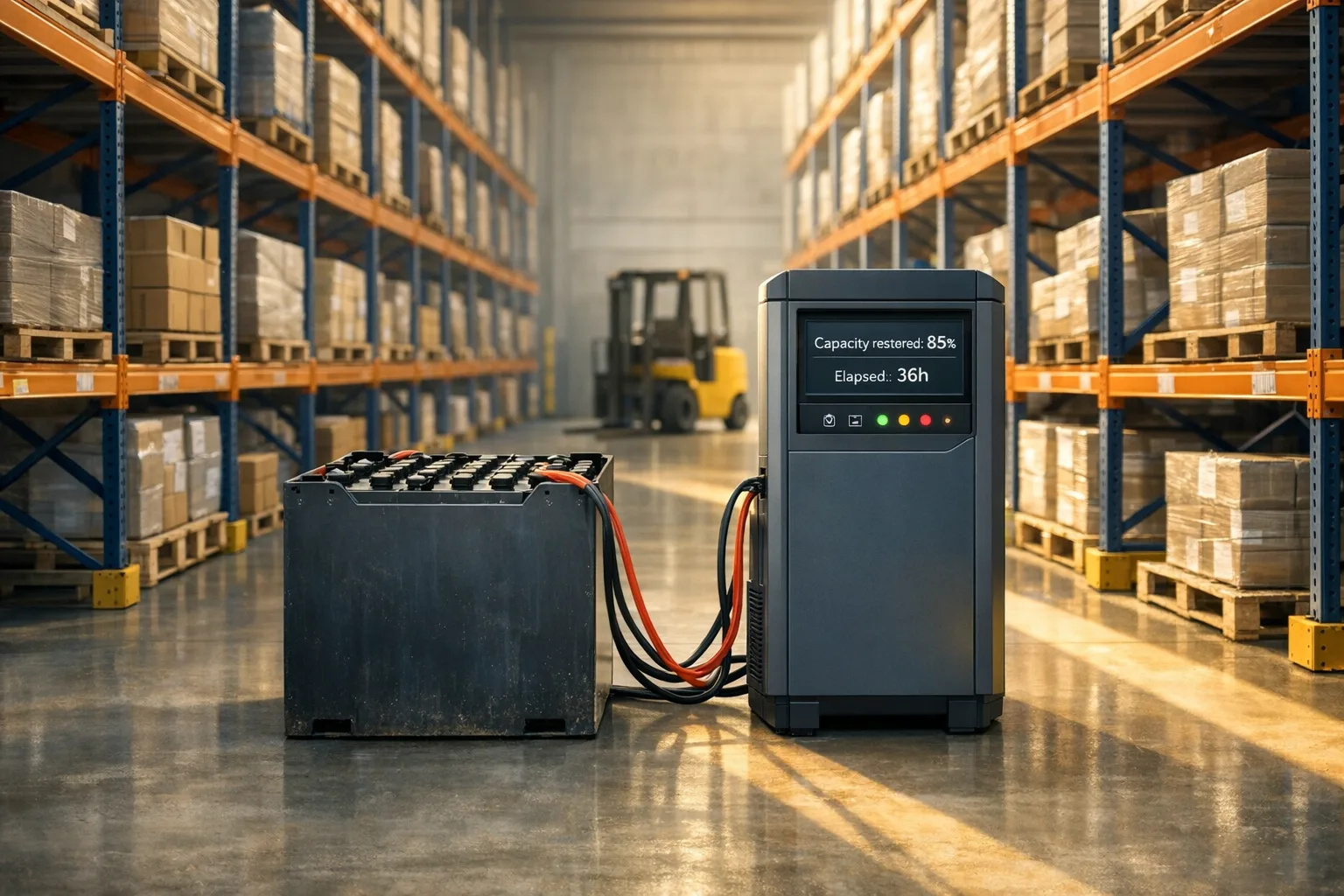
Fazlerasheed And Company offers battery regeneration services using patented high-frequency pulse technology, specifically designed for Pakistan's industrial sector. This advanced method breaks down lead sulfate crystals that form on battery plates, converting them back into active material within the electrolyte. This ion transfer process allows batteries to handle deeper and faster charges without causing overheating or physical damage. The result? Forklift batteries can regain up to 80% of their original capacity.
Given Pakistan's warm climate, this technology is a game-changer. Premium batteries can see their lifespan extended from 3–4 years to 5–8 years, while average batteries can last twice as long. Data shows a remarkable improvement in discharge capacity, jumping from 68% to 99% for 840 Ah, 36V forklift batteries. These improvements directly benefit the industrial sector by enhancing battery performance and durability.
Benefits for Pakistan's Industrial Sector
Beyond the technical advantages, battery regeneration offers practical benefits for industries across Pakistan. By reducing equipment downtime and cutting down on costly imports, this technology also addresses environmental concerns. Extending battery life means less hazardous waste, including lead and sulphuric acid, which reduces the need for energy-heavy recycling processes and prevents harmful disposal practices that can degrade soil and water.
Interestingly, nearly 50% of lead-acid batteries experience sulphation before reaching their expected lifespan. Fazlerasheed And Company's pulse technology directly tackles this issue, ensuring smoother operations for warehouses, factories, and distribution centres across the country. This not only keeps businesses running efficiently but also contributes to a cleaner and safer environment.
Conclusion
High-frequency pulse technology offers a more effective solution for desulfation compared to traditional methods. It can extend battery life by up to three times and lower internal resistance to 8–13 mΩ, all while restoring batteries without causing physical damage. While traditional methods may work for mild sulfation, they often fall short when dealing with hardened crystals and carry risks like overheating or battery damage during high-voltage equalisation charges.
Pulse technology tackles these issues by using an ion transfer process to convert lead sulfate deposits back into active electrolyte. This makes it especially useful in Pakistan's industrial sector, where downtime can lead to significant financial losses.
As Wuttibhat Jamratnaw explains:
"The effectiveness of pulse charging for desulfation stems from the fact that the high-frequency pulses provide sufficient energy to break the molecular bonds between lead and sulfate molecules without requiring substantial overall energy input or risking damage to the battery." - Wuttibhat Jamratnaw
This advanced technology forms the backbone of Fazlerasheed And Company's battery regeneration services. By restoring forklift batteries to up to 80% of their original capacity, the company helps businesses cut replacement costs and reduce the environmental harm caused by lead and sulphuric acid waste. These services are tailored for warehouses, factories, and distribution centres, ensuring both financial and ecological benefits.
For industries in Pakistan seeking dependable and cost-efficient battery maintenance, pulse technology clearly stands out as the smarter, more sustainable option.
FAQs
What makes pulse technology more effective than traditional desulfation in extending battery life?
Pulse technology helps batteries last longer by addressing a common issue: the build-up of lead sulfate crystals. These crystals form during regular use and, if left untreated, can cause sulfation - a leading reason for battery failure. By breaking down these crystals, pulse technology can extend a battery's lifespan, sometimes up to five times longer compared to older desulfation methods.
What sets pulse technology apart is its efficiency and reliability. It reduces the hassle of frequent maintenance and cuts down on expensive replacements. This makes it particularly useful for batteries in forklifts, material handling equipment, and other industrial machines commonly used across Pakistan.
What are the potential drawbacks of traditional desulfation methods?
Traditional desulfation methods come with their fair share of risks when not done properly. One major concern is the potential damage to the battery, as incorrect techniques can harm its internal components. On top of that, these methods often fall short of fully eliminating sulfation, which directly impacts the battery’s performance and overall lifespan.
For businesses that depend on battery-powered equipment - like forklifts or material handling tools - this issue can translate into higher maintenance costs and unplanned downtime. To avoid these setbacks, it’s crucial to rely on dependable solutions that help optimise battery performance and extend its life.
How does pulse technology improve the performance of industrial batteries in Pakistan?
Pulse technology plays a key role in improving the performance and durability of industrial batteries in Pakistan. It works by breaking down lead sulfate crystals that build up over time - a process known as sulfation. This helps restore the battery's capacity, ensuring it runs efficiently for longer periods. This is particularly important in Pakistan, where industries heavily depend on lead-acid batteries.
For businesses relying on equipment like forklifts and material handling machines, consistent battery performance is critical. Pulse technology provides a cost-effective way to minimise the need for frequent battery replacements and reduce maintenance costs. By extending battery life, it helps businesses improve productivity and cut down on operational delays.
Looking for Forklifts or Parts?
Fazlerasheed & Co. supplies reconditioned forklifts, genuine spare parts, and traction batteries across Pakistan. Get a free quote today.