Top 5 Signs Your Forklift Battery Needs Regeneration
Struggling with forklift downtime? Your battery might need regeneration. Here are 5 key warning signs to look out for, along with why they matter and how to act:
- Shorter Run Time Between Charges
- If your battery used to last 8 hours but now dies in 5–6 hours, it’s losing capacity.
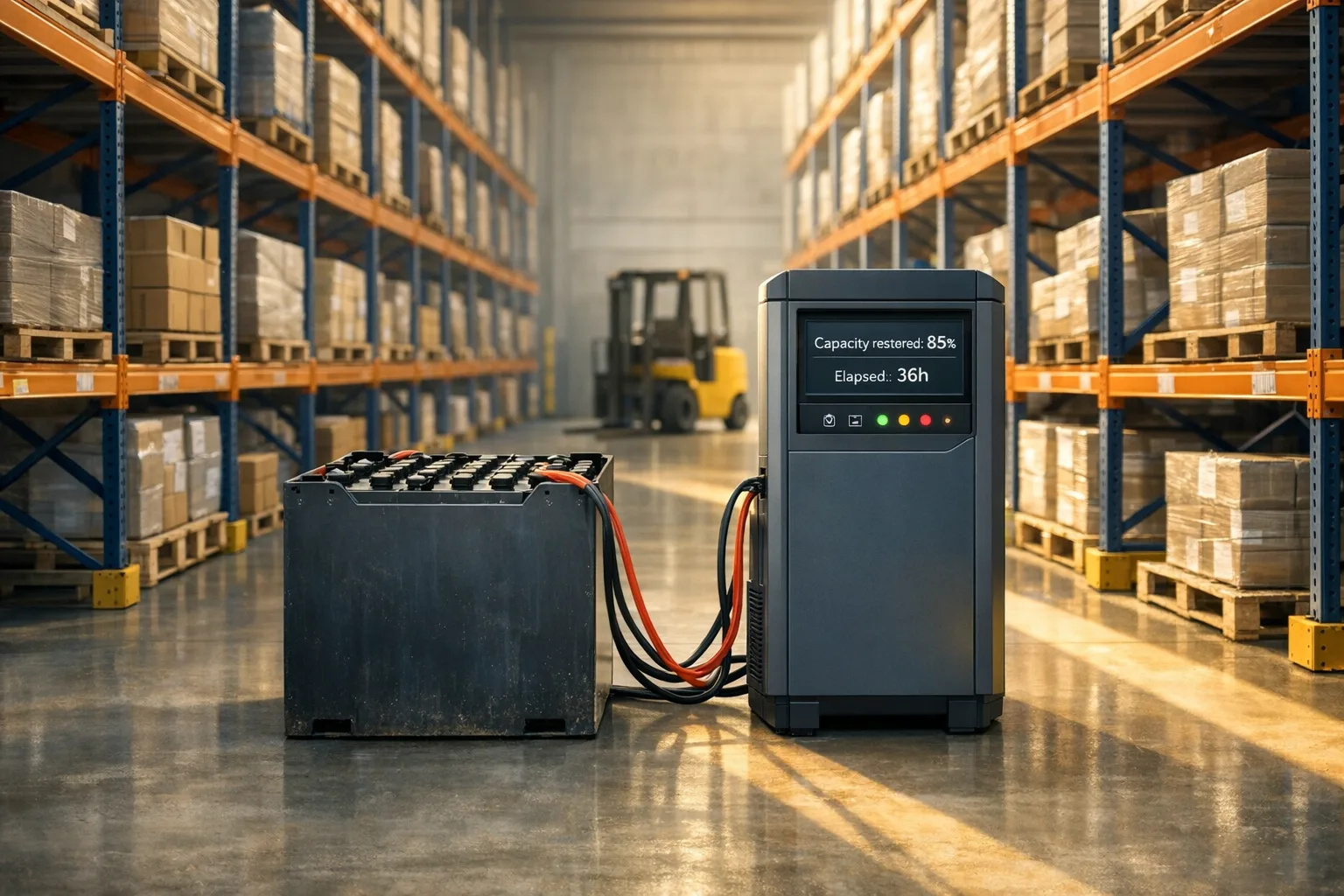
- Regeneration can restore up to 80% of its original efficiency, saving you from costly replacements.
- Extended Charging Times
- Charging takes longer than usual? This signals wear and tear.
- Ignoring this can lead to downtime and higher energy costs.
- Excessive Heat During Operation or Charging
- Overheating (above 45°C) damages internal components and halves battery life.
- Regular maintenance and proper ventilation can prevent this.
- Physical Damage and Corrosion
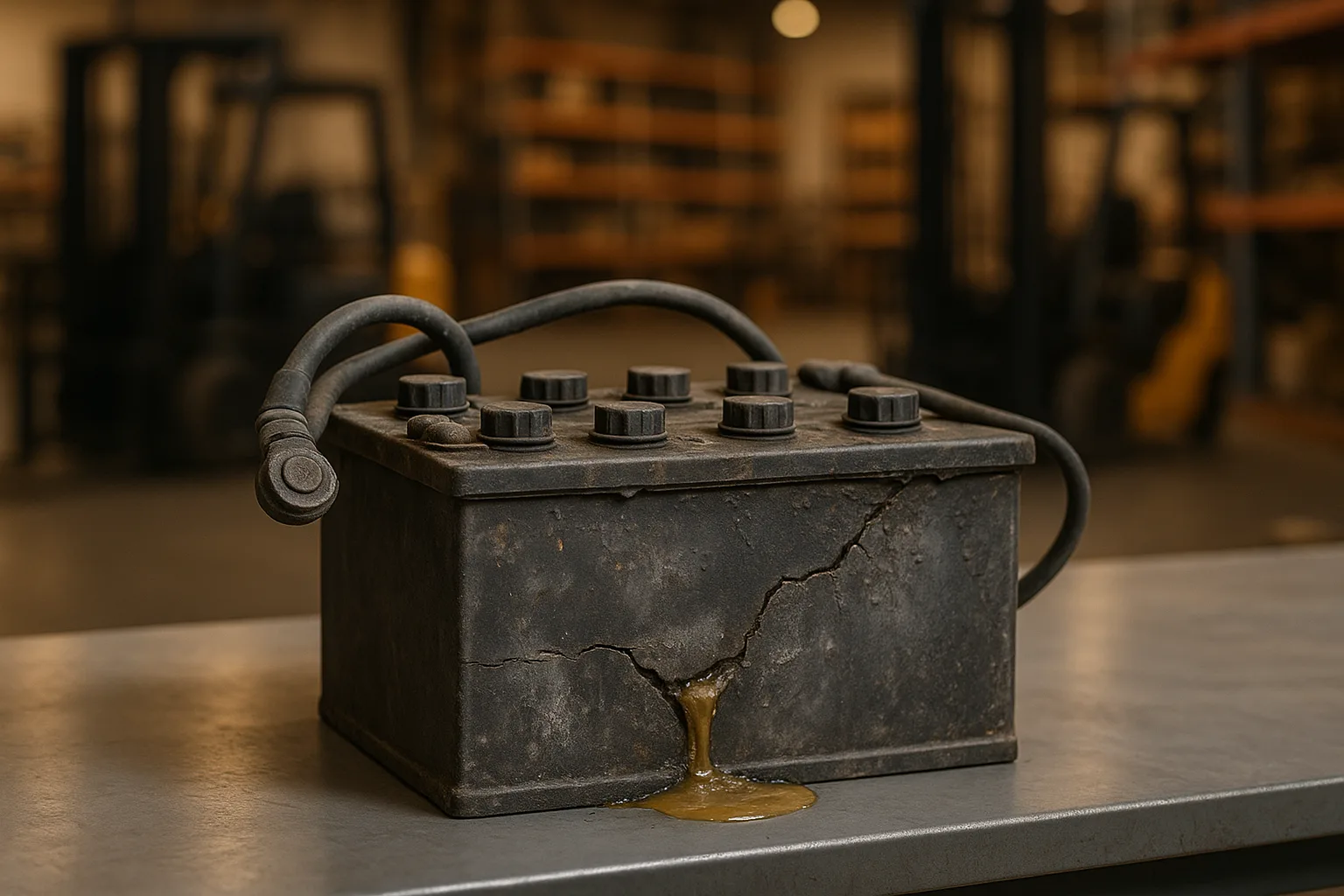
- Swelling, cracks, or corroded terminals reduce performance by 10–15%.
- Regular inspections can catch these issues early.
- Sulphur or Rotten Egg Smell
- This odour indicates severe damage or overcharging.
- Immediate action is required to avoid safety risks.
Why Regeneration Beats Replacement
- Cost: Regeneration costs PKR 45,000–120,000 vs. PKR 400,000–4,000,000 for a new battery.
- Lifespan: Adds 1–2 years to your battery’s life.
- Environmental Impact: Reduces waste by extending battery usage.
Quick Tip: Schedule regeneration every 12–18 months to avoid unexpected failures and keep your operations running smoothly.
Don’t wait for a complete breakdown. If you notice any of these signs, consult a professional service like Fazlerasheed And Company for a cost-effective and timely solution.
1. Shorter Run Time Between Charges
If your forklift battery starts needing more frequent charging, it’s likely a sign that regeneration might be necessary. A noticeable drop in operating time is often the first indicator of battery wear and tear in warehouse settings.
Impact on Forklift Performance
When a battery's run time decreases, it can disrupt your forklift's ability to perform consistently throughout a shift. As the battery's capacity diminishes, its chemical efficiency weakens, resulting in shorter operating periods and potential downtime. This issue becomes particularly evident under heavy workloads - forklifts might struggle to lift loads properly, operate at normal speeds, or maintain hydraulic pressure for long durations.
Factors like overcharging, undercharging, extreme temperatures, deep discharging, and poor upkeep can speed up this capacity decline. Additionally, as batteries age, sulphation - a buildup of lead sulphate crystals on the plates - reduces their ability to hold a charge effectively. This degradation not only slows down daily tasks but also highlights the need for timely regeneration to avoid further complications.
Detecting the Problem
Operators can easily recognise this issue by observing how long a battery lasts. If a battery that once powered an 8-hour shift now needs recharging after just 5–6 hours, it’s a clear sign of capacity loss. To extend battery life, it’s advisable to keep charge levels above 20%.
Safety Concerns
A battery with reduced run time can lead to safety risks. Worn-out batteries may fail to deliver adequate power, increasing the chances of sudden power loss during critical tasks like lifting heavy loads or navigating crowded aisles. Such failures can result in accidents and pose a serious hazard to workers.
Financial Considerations
Ignoring shorter run times can lead to significant financial consequences. Battery regeneration typically costs between Rs 45,000 and Rs 120,000 - a fraction of the cost of a new battery, which can go up to Rs 3,000,000.
"This enables our customers' batteries to operate at their optimal capacity for up to twice their normal life span, leading to reduced costs for forklift battery repair, replacement, and maintenance." - A + Battery and Charger Service
Delaying action can result in complete battery failure, forcing emergency replacements that are far more expensive and disruptive. Scheduling proactive regeneration every 12–18 months can help maintain battery health, reduce unexpected costs, and keep operations running smoothly.
2. Extended Charging Times
If your forklift battery starts taking longer than usual to charge, it’s a clear signal that something might be wrong. Just like reduced run times, extended charging periods can indicate that your battery could benefit from regeneration. A healthy battery charges within a predictable timeframe, so when charging takes longer, it’s not just an inconvenience - it’s a sign of deeper issues with the battery’s health.
Impact on Forklift Performance
Extended charging times can throw a wrench in your warehouse operations. Lead-acid batteries, for example, typically need about 8 hours to fully charge, followed by an 8-hour cool-down period. As batteries age and degrade, this process can take much longer, cutting into the hours your forklift is available for use. This often forces businesses to either invest in spare batteries or adjust their work schedules around longer charging cycles. Both options drive up costs and reduce overall productivity.
For lead-acid batteries, longer charging times are a strong indicator of significant wear and tear.
How Operators Can Spot the Issue
Operators can usually detect this problem pretty easily. If a battery that used to charge within a normal timeframe now takes 20% longer or shows signs like terminal corrosion, it’s a red flag. Comparing actual charging times to the manufacturer’s benchmarks is key. When charging durations consistently exceed those benchmarks by 20% or more, it’s time to consider regeneration. Catching these signs early can help prevent more serious performance issues and rising expenses.
The Cost of Ignoring Extended Charging Times
Overlooking extended charging times can lead to a cascade of problems: shorter battery lifespan, reduced forklift efficiency, a higher risk of breakdowns, and increased repair costs. There’s also the potential for safety hazards. On the other hand, timely regeneration can restore 80-90% of a battery’s capacity at just 25-35% of the cost of replacing it. This not only prevents expensive breakdowns but also keeps operations running smoothly.
For example, a 2023 case study showed that combining opportunity charging with weekly equalisation cycles stretched a fleet’s battery replacement schedule from 18 months to 28 months. Additionally, smart energy management practices can significantly extend battery life and cut down on operating costs.
Regular maintenance, proper operator training on battery handling, and investing in power management solutions for your forklift fleet can go a long way in optimising charging processes and avoiding the costly consequences of extended charging times.
3. Excessive Heat During Operation or Charging
If your forklift battery feels unusually hot during use or charging, it’s a red flag that shouldn’t be ignored. Overheating can lead to safety risks, expensive repairs, and reduced battery life.
Impact on Forklift Performance
Excessive heat - anything above 45°C (113°F) - can wreak havoc on battery performance. It speeds up chemical reactions inside the battery, leading to internal corrosion and warped lead plates, which can cause cell failures. For every 10°F increase in temperature, the lifespan of a sealed lead-acid battery is cut in half. Heat also speeds up water evaporation in lead-acid batteries, requiring more frequent refills. Even worse, the rates of plate corrosion and sulphation double with every 18°F increase.
Here’s a stark comparison: batteries kept at 25°C (77°F) deliver 98% of their rated cycles, but those operating at 40°C (104°F) drop to just 72% of their expected lifespan. That’s a huge loss in efficiency and longevity.
Ease of Detection for Operators
Spotting overheating is relatively simple. If the battery feels excessively hot during or after charging, that’s a major warning sign. Operators can use infrared thermometers to measure surface temperatures and pinpoint hotspots. Common causes of overheating include overcharging, poor ventilation around the battery compartment, continuous use without cooling breaks, and using the wrong charging equipment.
In regions like Pakistan, where summer temperatures soar, high ambient heat in warehouses can worsen the problem. Other visible signs include battery leakage, swelling or bulging cases, and heavy corrosion around terminals.
Potential Safety Hazards
Overheating isn’t just a performance issue - it’s a serious safety concern. It can lead to fires or explosions, especially in poorly ventilated areas. Leaking electrolytes can cause chemical burns, and charging under high heat generates hydrogen gas, creating a heightened risk of explosions.
Given that forklifts are involved in 7% of workplace fatalities, addressing overheating promptly isn’t just smart - it’s essential for workplace safety.
Cost Implications of Ignoring the Issue
Ignoring excessive heat can cost more than just a replacement battery. Heat damage often impacts multiple cells, making repairs less effective or even impossible. This means a full battery replacement, which is far more expensive. Beyond that, overheating leads to downtime, lost productivity, and emergency repair costs.
As one industry expert explains:
"Modern thermal management isn't optional - it's ROI insurance. We've seen 8,000-cycle lithium batteries last 12 years with liquid cooling, versus 4 years passively cooled. Pair phase-change materials with predictive analytics for maximum efficiency." - Redway Power Solutions Engineer
Preventing overheating is far less expensive than fixing the damage it causes. Regular maintenance, proper ventilation, using the correct charging equipment, cleaning terminals, and monitoring temperatures can all help extend battery life and avoid costly breakdowns. Catching overheating early is key to maintaining both safety and efficiency.
sbb-itb-a884676
4. Physical Damage and Corrosion
Physical damage and corrosion are some of the clearest signs that your forklift battery needs immediate attention. These problems, much like charging issues or overheating, often point to deeper underlying issues with the battery's health. Regular visual inspections make these signs easy to spot, making them essential for warehouse operators to monitor.
Impact on Forklift Performance
When a battery suffers from physical damage or corrosion, its performance takes a hit. For instance, corrosion around the terminals can reduce the battery’s efficiency by 10–15%. Similarly, corroded intercell connectors can weaken conductivity and lower overall capacity.
Acid leaks caused by physical damage can harm other forklift components. Corroded terminals disrupt power transfer and make charging less effective, while a damaged battery casing can lead to leaks or prevent proper terminal connections.
One tell-tale sign is a white, powdery buildup on the battery terminals, often caused by electrolyte leaks. This residue forces the charging system to work harder, reducing the battery's ability to hold and deliver a charge. Such visible damage serves as a clear warning of potential safety risks and financial consequences.
Ease of Detection for Operators
Spotting physical damage and corrosion doesn’t require specialised tools - just a careful visual inspection. Regular checks can reveal swelling, leaks, cracks, or dents that might indicate internal pressure or structural failure. Inspecting battery terminals for corrosion and ensuring vent caps are secure should be part of routine maintenance.
Damaged connectors are also easy to identify, often showing signs of heat damage or wear. These visual cues make it easier for operators to flag potential problems early.
Potential Safety Hazards
Overlooking physical damage and corrosion can lead to serious safety risks. For example, gases from overcharging or short circuits can cause batteries to burst or even explode, potentially resulting in chemical burns or shrapnel injuries. Leaking batteries increase the risk of burns, while corrosion can disrupt electrical flow, escalating the chances of sparks, shorts, or fires. Additionally, a poorly maintained battery might overheat or suffer sudden power loss, leading to equipment malfunctions and potential injuries. Addressing these issues promptly helps prevent such hazards and keeps operations running safely.
Cost Implications of Ignoring the Issue
Failing to address physical damage and corrosion can be costly - far beyond just replacing the battery. Acid leaks often render batteries irreparable, with 90% of such cases deemed unsafe for repair. Crown Equipment highlights the risks:
"Unattended or neglected batteries potentially affect the safety of your operators and those around them, as they can be prone to leakage, swelling and, on rare occasions, may even have the potential to explode. When you have battery and charger maintenance in place, the likelihood of unexpected battery failures diminishes because physical damage and corrosion can be identified sooner than later. Well-maintained batteries are also more energy efficient, which may result in lower energy bills and fewer battery replacements."
Ignoring these issues can lead to inefficiencies that drive up electricity costs and reduce productivity. Emergency repairs, unexpected downtime, and safety incidents only add to the financial burden. However, simple steps like cleaning terminals regularly and replacing damaged connectors can prevent most corrosion-related problems. Catching these issues early allows for timely repairs or regeneration, saving significant costs in the long run.
5. Sulphur or Rotten Egg Odour
If your forklift battery starts giving off a sulphur or rotten egg smell, it's a serious red flag. This odour is caused by the release of hydrogen sulphide (H₂S), which typically happens when a battery cell is overcharged or has failed. Unlike other warning signs that might creep up gradually, this one demands immediate attention for safety and operational concerns.
Why Operators Notice It Quickly
The smell of rotten eggs is hard to miss. It occurs when current flows through a damaged or depleted cell, causing it to overheat and the sulphuric acid inside to boil. Crown Battery explains it clearly:
"If you smell a strong hydrogen sulphide odour (resembles a rotten egg), that means the battery experienced damage beyond economical repair."
Serious Safety Risks
Hydrogen sulphide is both toxic and flammable, making it a significant hazard, especially in areas with poor ventilation. In confined spaces, the gas can quickly build up to dangerous levels. Safety protocols recommend turning off the charger, ventilating the area, and staying clear until the smell dissipates. Ignoring this odour could lead to severe health risks or even fire hazards.
How It Affects Forklift Performance
This odour is more than just unpleasant - it’s a clear sign of major battery damage. Severely overcharged or dead cells can't function properly, leading to total operational failure. Your forklift won't be able to maintain power or hold a charge, essentially rendering it useless.
The Cost of Ignoring the Problem
Ignoring this issue can be costly. Hydrogen sulphide odour usually means the battery is beyond repair, and regeneration isn’t a feasible option. This means you'll likely need to replace the battery entirely, which is both expensive and disruptive. As Forklifts Direct advises:
"If your forklift is starting to smell like rotten eggs, you should stop use of the machine immediately."
Delaying action not only risks safety but also leads to unexpected downtime and higher replacement costs. Addressing the problem promptly can save you both time and money while ensuring a safer work environment.
Battery Regeneration vs Replacement Comparison
When your forklift battery starts to struggle, you’re left with a critical choice: should you regenerate it or replace it? Let’s break down the financial and practical differences to help you decide.
Cost Analysis in Pakistan
Regenerating a battery is a much cheaper option compared to buying a new one. It typically costs just 25–35% of the price of a new battery while restoring 80–90% of its original capacity. In Pakistan, the price of a new lead-acid battery ranges between PKR 400,000 and PKR 1,200,000, while lithium batteries are even pricier, costing PKR 3,400,000 to PKR 4,000,000.
Performance and Lifespan
Lead-acid batteries generally have a lifespan of 1,500 cycles or about 2–3 years. Regenerating these batteries can add another 1–2 years to their life while bringing back over 80% of their capacity. On the other hand, lithium batteries last much longer - up to 5,000 cycles - and charge significantly faster, sometimes up to eight times quicker. This is especially important when you consider that downtime in a warehouse can cost as much as $10,000 per hour.
Here’s a quick comparison to help you weigh your options:
| Factor | Battery Regeneration | Battery Replacement |
|---|---|---|
| Cost Range | PKR 100,000 – PKR 420,000 (25–35% of new) | PKR 400,000 – PKR 4,000,000 (depending on type) |
| Capacity Restoration | 80–90% of original capacity | 100% (new battery) |
| Lifespan Extension | 1–2 years | Full battery lifespan (2–3 years for lead-acid, 5+ years for lithium) |
| Environmental Impact | Reduces waste and extends battery life | Requires proper disposal of old batteries |
| Best Suited For | Lead-acid batteries with moderate sulfation | Severely damaged or end-of-life batteries |
Environmental and Maintenance Considerations
Regenerating your battery not only saves money but also helps the environment. By extending the life of lead-acid batteries, you reduce waste and the need for frequent disposal. For the best results, it’s recommended to regenerate your battery every 12–18 months.
When to Opt for Replacement
Sometimes, replacement is the only viable option. If your battery emits a strong sulphur smell, has severe physical damage, or can no longer be regenerated effectively, it’s time to invest in a new one. Replacing the battery ensures reliability and reduces safety risks, whether you choose a lead-acid or lithium option.
Conclusion
Identifying early signs of battery failure can help you save money and avoid unexpected disruptions. Key warning signs include shorter run times, longer charging periods, excessive heat, physical damage, and sulphur-like odours. These indicators act as a red flag for potential battery deterioration.
Addressing these issues promptly is crucial, as battery-related problems often account for a significant portion of forklift operational costs - up to 70% in some cases. Ignoring these signs can lead to reduced performance, frequent breakdowns, and increased repair expenses. Regularly inspecting for corrosion and physical damage is essential. Additionally, training operators on proper battery handling and maintaining a consistent upkeep schedule can help prevent minor issues from escalating into costly emergencies. This proactive approach not only protects your equipment but also ensures smoother operations and long-term savings.
If your battery shows any of these symptoms, Fazlerasheed And Company offers professional regeneration services capable of restoring up to 80% of your battery’s original capacity - at a fraction of the cost of a new battery. With extensive experience in material handling equipment and partnerships with renowned European battery suppliers like Hawker, Eternity, Sunlight, and Trojan, we deliver tailored solutions to extend battery life and minimise downtime.
Don’t wait for a complete battery failure. Reach out to Fazlerasheed And Company today for a professional diagnosis and regeneration service, ensuring your operations stay efficient and cost-effective.
FAQs
How often should I regenerate my forklift battery to maintain peak performance?
Forklift batteries typically require regeneration every 6 to 12 months, depending on their usage and the working conditions. In Pakistan's climate, where higher temperatures can speed up battery deterioration, regular upkeep becomes even more crucial.
To avoid problems like sulfation and to prolong the battery's lifespan, scheduling regeneration every 6 months is a good practice for forklifts that are heavily used or operate in tough conditions. That said, the exact timing will depend on factors like your equipment's workload and the battery's current state. Regular inspections can help you figure out the best schedule for your forklift batteries.
What are the environmental advantages of regenerating a forklift battery instead of replacing it?
Regenerating a forklift battery instead of opting for a replacement brings several environmental benefits. It cuts down the demand for raw materials and avoids the energy-heavy manufacturing process, which in turn helps reduce carbon emissions and shrinks the overall environmental impact. This is especially relevant in Pakistan, where there's a growing focus on adopting more sustainable practices.
Moreover, battery regeneration extends the lifespan of existing batteries, significantly reducing waste. This is crucial in Pakistan, where waste management systems often struggle to keep up. By regenerating batteries, we can ease the pressure on landfills, minimise pollution, and take meaningful steps towards conserving natural resources and maintaining a cleaner environment.
What should I do if my forklift battery emits a sulphur or rotten egg smell?
If your forklift battery starts emitting a sulphur-like or rotten egg smell, it’s a clear sign to take immediate action. Turn off the charger and stop using the battery without delay. Let the battery cool down and get in touch with a qualified forklift technician or battery expert for a detailed inspection and necessary maintenance.
This odour usually points to overcharging or battery decomposition, both of which can pose serious risks. Do not attempt to use or charge the battery again until it has been thoroughly examined by a professional to ensure safety and avoid potential damage.
Looking for Forklifts or Parts?
Fazlerasheed & Co. supplies reconditioned forklifts, genuine spare parts, and traction batteries across Pakistan. Get a free quote today.