Ultimate Guide to Forklift Wheel Alignment and Balancing
Forklift wheel alignment and balancing are critical for safety, efficiency, and cost management in Pakistan's industrial sector. Misaligned or unbalanced wheels can lead to uneven tyre wear, increased maintenance costs, and safety risks. Proper alignment ensures stability, even weight distribution, and better handling, while balancing reduces vibrations and extends tyre life.
Key points covered:
- Alignment: Adjusts wheel angles for stability and even tyre wear.
- Balancing: Ensures smooth rotation and reduces vibrations.
- Causes of Issues: Uneven loads, rough terrains, poor driving habits, and incorrect tyre pressure.
- Warning Signs: Uneven wear, flat spots, vibrations, and steering difficulties.
- Maintenance Tips: Regular inspections, proper tyre pressure, and professional services like Fazlerasheed And Company for retreading and alignment.
Invest in regular checks and professional services to avoid costly repairs and ensure smooth operations.
Basic Principles of Forklift Wheel Alignment
Getting the wheel alignment right on a forklift is essential for smooth operations and extending tyre life - something especially important in Pakistan’s diverse industrial environments. When alignment is off, it can lead to uneven tyre wear, reduced efficiency, and higher maintenance costs.
What Affects Alignment
Several factors can throw forklift wheel alignment off balance:
-
Load Distribution: When loads are uneven or too heavy, it puts extra stress on the tyres. This not only speeds up wear but can also cause them to deform over time.
-
Terrain and Road Conditions: Rough or uneven surfaces increase friction and tyre stress. Add floor debris into the mix, and you’re looking at disrupted rotation and potential tyre damage.
-
Operator Driving Habits: Driving style matters more than you’d think. Rapid acceleration, sudden braking, and sharp turns can all lead to tyre stress and uneven wear.
-
Tyre Pressure: Maintaining correct tyre pressure is key. Over-inflated or under-inflated tyres lose proper contact with the floor, leading to irregular wear patterns and reduced performance.
Proper alignment and attention to these factors can save both time and money while keeping operations running smoothly.
Methods and Tools for Forklift Alignment and Balancing
Getting forklift alignment and balancing right requires careful attention to methods and tools. The choice often depends on factors like budget, expertise, and the level of precision needed.
Common Alignment Methods
Manual measurement is a go-to option for many businesses in Pakistan. It relies on basic tools to check wheel positioning and is ideal for routine inspections without requiring significant investment.
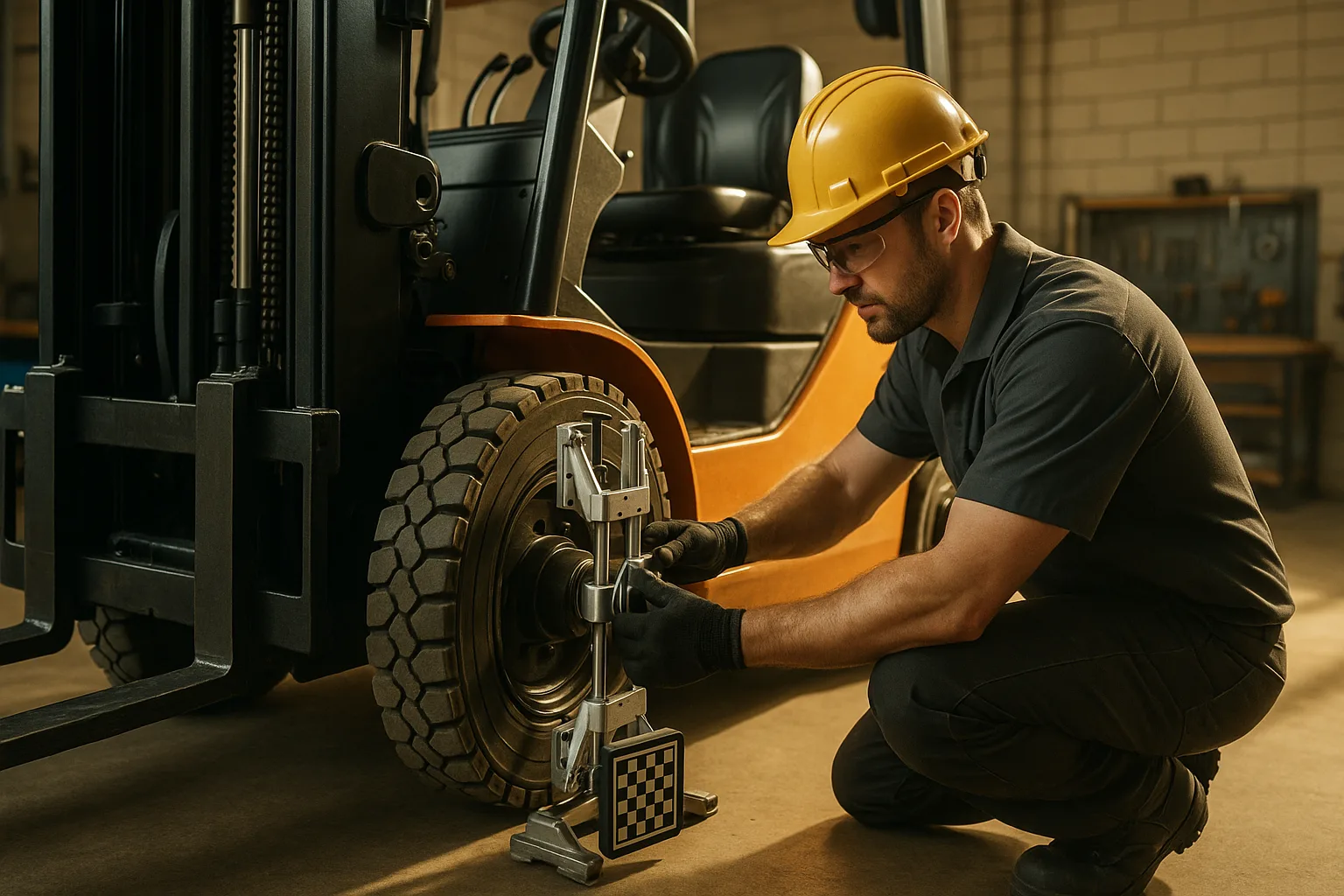
Laser alignment systems offer a more advanced solution, providing precise results quickly. These systems can achieve millimetre-level accuracy, making them a solid choice for medium to large-scale operations managing multiple forklifts daily.
String line alignment involves stretching strings along fixed reference points to visually assess and adjust wheel positions. This method works particularly well in workshops with enough space for proper setup and alignment.
These methods form the groundwork for effective balancing techniques.
Balancing Approaches
Once alignment is sorted, balancing ensures smooth wheel rotation by distributing weight evenly.
Static balancing focuses on correcting weight distribution when the wheels are stationary. By identifying heavy spots that cause vibrations or uneven tyre wear, technicians can add or remove weights as needed. This approach is straightforward and ensures even wear over time.
Dynamic balancing, on the other hand, addresses issues that arise during wheel rotation. It detects problems like lateral wobble or dynamic imbalance, which static balancing might miss. Although it requires specialised equipment, dynamic balancing is ideal for forklifts used intensively in demanding environments.
Tools Available for Alignment
Companies like United Equipment, with nearly two decades of experience, offer a wide range of tools for automotive workshops. Their selection includes wheel balancers with advanced features like Magnetic Levitation Systems, as well as simpler mechanical balancers suited to varying levels of precision.
3D wheel aligners are among the most advanced tools available in Pakistan. These systems use multiple cameras and sensors to provide detailed wheel positioning data, enabling technicians to make precise adjustments with ease.
When choosing a wheel balancer, it’s crucial to consider your specific forklift models and operating conditions. Factors like required accuracy, ease of use, and durability in Pakistan’s industrial environments should guide your decision.
For added reliability, many businesses turn to professional services. For example, Fazlerasheed And Company offers expert alignment and balancing support, particularly for battery-operated forklifts and reach trucks. Their team of trained engineers understands the unique needs of different forklift models and can recommend the most effective tools and methods for your operations.
Before investing in tools, evaluate your workshop’s capabilities and workload. High-precision equipment is ideal for businesses managing multiple forklifts, while smaller operations might find it more practical to collaborate with service providers who already have the necessary expertise and equipment.
Warning Signs of Misalignment and Imbalance
Spotting alignment issues early can save you both money and hassle, preventing costly repairs and reducing safety risks.
Common Warning Signs
One of the clearest signs of alignment trouble is uneven tyre wear. If one side of a tyre is wearing down faster than the other, it’s a strong indication that the wheels aren’t properly aligned with the forklift frame. You might notice the inner or outer edge thinning out while the centre tread stays relatively untouched.
Flat spots on tyres are a classic sign of imbalance. These occur when wheels aren’t evenly balanced, causing certain sections to press harder against the ground. Over time, this results in patchy wear and the development of flat areas.
Debris embedded in the tread, like stones or metal fragments, can also point to alignment issues. Misaligned wheels tend to scrape against surfaces at odd angles, picking up more debris along the way.
Pay attention to steering difficulties too. If the forklift pulls to one side, refuses to travel straight, or requires extra effort to turn, there’s likely an alignment issue.
Another red flag is vibration, especially if you feel it through the steering wheel, operator seat, or even the chassis. These vibrations often worsen at certain speeds, potentially leading to operator fatigue. Similarly, noisy steering or squealing tyres during turns are signs that the wheels are struggling to stay on their proper path.
Catching these signs early allows for detailed inspections to address the root cause before the problem escalates.
How to Inspect for Problems
Once you’ve noticed these warning signs, a thorough inspection is the next step. Regular visual checks are a key part of forklift maintenance and should complement your routine servicing schedule.
Start by examining each tyre for uneven tread wear, flat spots, cracks, or bulges. If you spot debris lodged in the tread, remove it carefully to avoid further damage.
Use a tread gauge to measure wear on different parts of the tyre. For example, if the outer edge measures 8 mm but the inner edge is down to 4 mm, it’s a clear sign of misalignment.
Inspect the wheels themselves for visible damage or deformities, such as bent rims or cracked assemblies. These issues can’t be fixed by simple alignment adjustments and may require part replacements.
During operation, monitor for steering resistance or vibrations. If the forklift feels harder to steer or you notice rhythmic bouncing, document these issues along with details like operating hours and conditions.
For example, a warehouse in Karachi found their battery-operated forklift pulling to the left, with the left front tyre wearing out much faster than expected. Upon inspection, technicians discovered a misaligned front axle. After realigning the wheels and rotating the tyres, the forklift’s handling improved, and tyre wear normalised.
In Pakistan, it’s advisable to inspect forklift wheels at least once a month or after every 250 operating hours - whichever comes first. However, in environments with rough flooring, heavy dust, or intense usage, more frequent checks may be necessary.
For expert help, services like Fazlerasheed And Company specialise in forklift wheel maintenance and retreading. With experience in handling battery-operated forklifts and other material-handling equipment, they can identify and address issues during routine inspections.
Ignoring these warning signs can lead to premature tyre failure, increased energy usage, reduced load stability, and even accidents. In severe cases, you could face costly repairs to suspension and steering systems, not to mention the downtime that disrupts productivity.
sbb-itb-a884676
Maintenance and Prevention Best Practices
Once alignment and balance issues are identified, keeping up with regular maintenance becomes crucial. Staying on top of upkeep not only keeps alignment in check but also prolongs wheel life and helps avoid expensive repairs.
Regular Maintenance Schedule
Design a maintenance schedule suited to your local operating conditions. In Pakistan’s diverse industrial environments, maintenance needs can vary based on factors like terrain, usage, and climate.
Start with quick visual checks to spot signs of damage or uneven wear. Weekly tasks should include checking tyre pressure and ensuring wheel bolts are properly secured using the right tools. On a monthly basis, conduct more thorough inspections, such as analysing tyre wear patterns. If forklifts are used heavily or operate in demanding settings, consider periodic professional assessments to catch issues early.
For battery-operated forklifts, extra care is needed, especially for traction batteries. Seasonal temperature changes can also affect tyre performance, so it’s wise to adjust maintenance practices during these periods. Regular inspections help you decide whether wheels can be retreaded or need replacing.
Retreading and Replacement
Knowing when to retread or replace wheels is key to efficient fleet management. Retreading works well if the tyre casing is still in good condition, but it must be done before excessive wear compromises safety. Routine evaluations will help determine whether retreading or a complete replacement is the better option. Storing tyres in a cool, dry environment also helps extend their lifespan.
Keep in mind that environmental factors like extreme heat and dusty conditions can impact the success of retreading, so plan accordingly.
Professional Services
While basic maintenance can often be handled in-house, professional services offer specialised expertise and equipment to fine-tune wheel alignment and balance. This not only reduces downtime but also helps extend the lifespan of your forklifts.
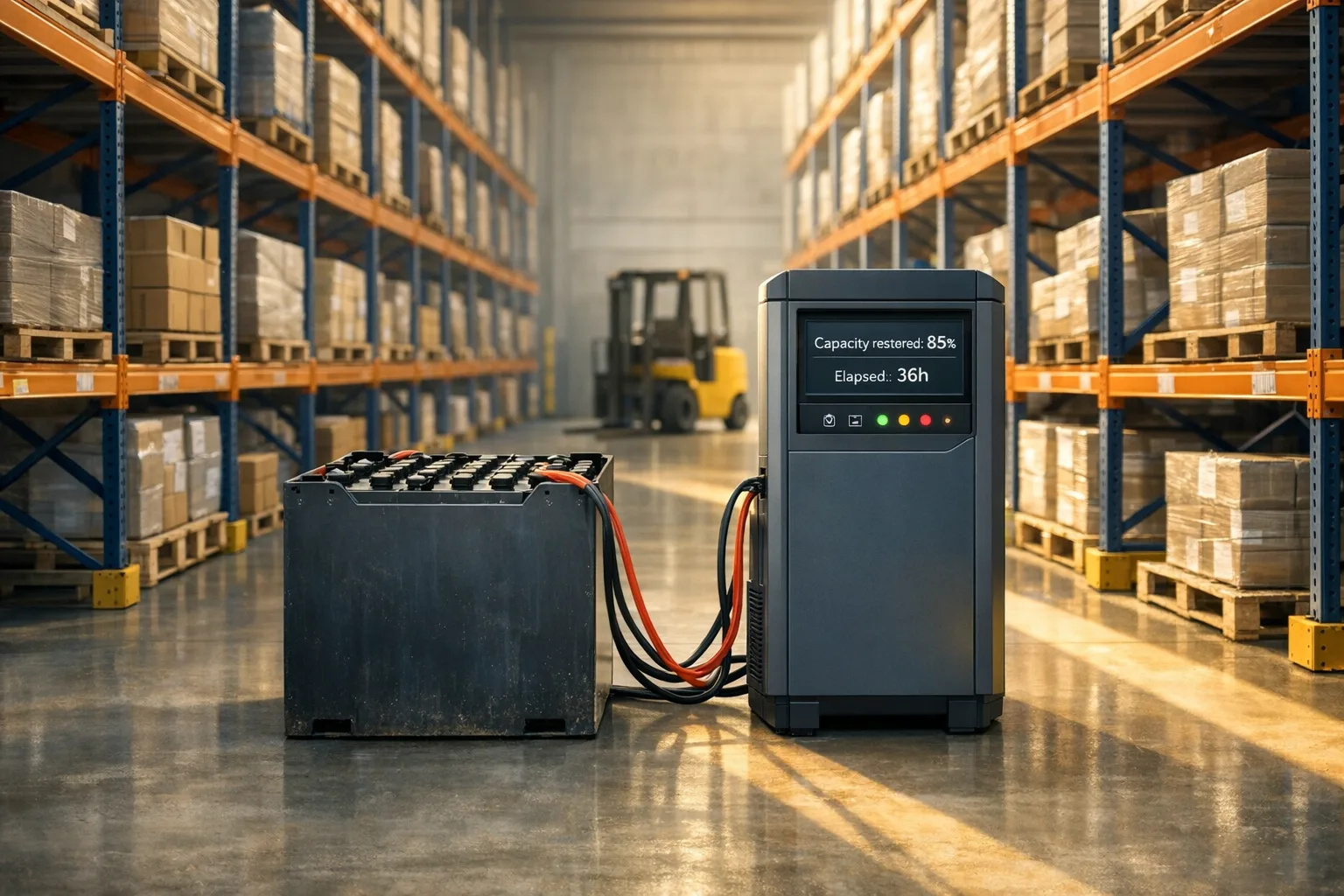
Fazlerasheed And Company provides tailored maintenance solutions for Pakistan’s industrial needs. Their services include preventive maintenance, emergency repairs, high-quality spare parts, and efficient retreading. They also offer battery regeneration services, ensuring consistent performance for battery-operated forklifts.
Relying on expert services ensures smoother operations, reduces unexpected repair costs, and keeps your fleet running efficiently over the long haul.
Comparison: Aligned vs. Misaligned Forklift Wheels
Keeping forklift wheels properly aligned plays a major role in maintaining even tyre wear, extending tyre life, and cutting down on maintenance expenses.
Comparison Table
Here’s a quick look at how aligned and misaligned wheels differ:
| Factor | Aligned Wheels | Misaligned Wheels |
|---|---|---|
| Tyre Wear Pattern | Even wear across the entire tyre surface | Uneven wear leading to flat spots |
| Tyre Lifespan | Extended with regular maintenance | Shortened due to uneven wear |
| Operating Costs | Lower due to fewer replacements | Higher with frequent replacements and downtime |
In Pakistan’s industrial sector, these differences can have a noticeable impact on overall costs. Regular alignment checks not only help tyres last longer but also reduce the need for unplanned maintenance and downtime, saving both time and money.
Forklift Wheel Care Considerations for Pakistan
When it comes to forklift wheel care in Pakistan, the local environment adds a unique layer of complexity. The country's industrial conditions demand careful attention to wheel maintenance to ensure optimal performance and avoid unnecessary costs.
Local Conditions
Pakistan's climate and infrastructure significantly impact forklift wheel care. The arid environment often leads to dust build-up, which can clog wheel components and throw alignment off balance. Regular and thorough cleaning is essential before carrying out any maintenance work.
During the monsoon season, from July to September, high humidity levels become a major concern. Bearings and alignment mechanisms are particularly vulnerable to corrosion, which speeds up wear and tear. The combination of dust and moisture makes maintaining proper wheel alignment even more challenging.
Adding to these issues, many industrial facilities operate on older concrete floors riddled with cracks and uneven surfaces. These conditions put extra stress on forklift wheels, leading to faster misalignment and uneven wear. Moreover, Pakistan's temperature extremes - ranging from 5°C in winter to 45°C in summer - cause metal components to expand and contract, further complicating alignment and softening tyres, which accelerates deterioration.
Finding Maintenance Services
Given these harsh conditions, professional maintenance services are indispensable. Fazlerasheed And Company stands out as a reliable provider of tailored wheel care solutions. Their services include tyre retreading and precision alignment, both designed to extend the lifespan of forklift wheels in Pakistan's demanding industrial environments.
What sets them apart is their integrated approach. Alongside wheel care, they offer battery regeneration services to keep forklifts running smoothly. Their supply of high-quality spare parts ensures replacements meet original equipment standards, preserving alignment and performance.
Additionally, their flexible pricing options allow businesses to create maintenance plans that suit their specific needs and budgets. This is particularly useful for companies managing multiple forklifts across diverse facilities and operating conditions throughout the country.
Conclusion
Taking care of your forklift’s wheel alignment and balancing isn’t just about protecting your tyres - it’s about safeguarding your operations and your investment. Misaligned wheels can cause tyres to wear out prematurely, leading to unexpected downtime and unnecessary expenses, which can directly affect your business’s profitability.
The bottom line? Prevention is far more cost-effective than repairs. By prioritising regular alignment, proper balancing, and routine maintenance, you can count on consistent and reliable forklift performance. This requires a forward-thinking maintenance strategy.
That’s where Fazlerasheed And Company steps in. They offer a complete range of forklift maintenance services, from wheel alignment and tyre retreading to battery regeneration and spare parts supply. Their flexible pricing plans make it easier for businesses to maintain their equipment without straining their budgets, all while ensuring top-tier performance.
Investing in professional alignment and balancing services not only prevents mechanical issues that could endanger operators or damage inventory but also cuts long-term costs and boosts efficiency. The message is clear: staying proactive with maintenance enhances both safety and productivity, ensuring your forklift fleet operates smoothly and reliably.
FAQs
How often should forklift wheel alignment and balancing be checked in Pakistan's industrial settings?
In Pakistan's industrial settings, it's a good practice to inspect forklift wheel alignment and balancing every 3 to 6 months. Additionally, these checks should be carried out right after any major collision, repairs, or if you observe uneven tyre wear or issues with handling.
Staying on top of maintenance doesn’t just promote safety - it also boosts the performance and durability of your forklift. For optimal outcomes, always follow the manufacturer's recommendations or seek advice from local professionals familiar with the specific challenges of Pakistan's industrial landscape.
What is the difference between static and dynamic balancing for forklift wheels, and when should you use each method?
Balancing forklift wheels is crucial for smooth operation and safety. Static balancing is a straightforward method that corrects radial imbalances by adding weights along a single plane around the wheel's circumference. It's a simpler and more budget-friendly option, making it a practical choice for lighter or less demanding forklift wheels.
On the other hand, dynamic balancing takes things a step further by addressing imbalances in two planes - vertical and lateral. This method involves placing weights on both sides of the wheel, offering a more comprehensive correction. It's especially effective for heavier, wider, or high-speed forklift wheels, ensuring reduced vibrations and smoother performance.
For forklifts operating under heavy loads or at higher speeds, dynamic balancing is the better option. However, for lighter or less critical tasks, static balancing typically does the job just fine.
How do Pakistan's climate and terrain influence forklift wheel alignment and maintenance?
Pakistan's diverse climate and challenging landscapes significantly impact forklift wheel alignment and upkeep. The intense summer heat can cause metal components to expand, potentially throwing off the precision of wheel alignment. On top of that, the dusty and uneven terrains typical of industrial zones and warehouses accelerate wear and tear on wheels and suspension systems, making frequent maintenance a necessity.
Forklifts operating on rough or uneven surfaces often experience misalignment due to uneven weight distribution and the constant jolts from irregular ground. To ensure safety and maintain efficiency, regular inspections and alignment adjustments are a must. Keeping the wheels properly aligned not only boosts the forklift's lifespan but also minimises costly operational delays - an important factor for businesses navigating Pakistan's demanding working conditions.
Looking for Forklifts or Parts?
Fazlerasheed & Co. supplies reconditioned forklifts, genuine spare parts, and traction batteries across Pakistan. Get a free quote today.