Warehouse Floor Maintenance: 6 Best Practices for Longevity
Maintaining warehouse floors isn't just about cleanliness; it's about protecting your investment, ensuring safety, and avoiding costly repairs. Neglected floors can lead to equipment wear, operational delays, and even accidents. Here’s a quick breakdown of six practical steps you can implement today to keep your warehouse floors in top condition:
- Clear debris first: Sweep before deep cleaning to prevent damage from trapped dirt.
- Use floor scrubbers: Opt for the right scrubber type and pH-neutral cleaners for effective deep cleaning.
- Disinfect properly: Apply EPA-approved disinfectants with the correct contact time to ensure safety.
- Inspect regularly: Catch small cracks or chips early to avoid expensive repairs.
- Choose durable flooring: Invest in materials like polished concrete or epoxy for high-traffic areas.
- Create maintenance schedules: Plan daily, weekly, and annual tasks to keep floors and cleaning equipment in optimal shape.
1. Clear Debris and Loose Dirt Before Deep Cleaning
Before diving into deep cleaning with a floor scrubber, it’s essential to clear away any surface debris. This simple step not only protects your floors but also prevents damage to your equipment. Richard Bodo, Director of Training at Karcher North America, puts it best:
Doing so \sweeping first] ensures that the dry particulate doesn't get caught in the scrubber pads and basically become "one large sanding disc" [[1].
In warehouse settings, about 80% of the dirt is made up of dry particulate matter. If this grit gets trapped in the scrubber pads, it can act like sandpaper, stripping the floor’s protective finish and leaving scratches behind. Additionally, loose dirt can gather along the scrubber’s squeegee blade, preventing a proper seal and leaving behind dirty water.
Start by manually removing larger debris, like packaging straps, shrink wrap, or pallet chips, as these items can wrap around the scrubber’s cylindrical rollers. The friction caused by this can damage the rollers, leading to expensive repairs.
Choosing the right sweeping equipment for your debris type is also key. Direct throw sweepers, which work like a broom and dustpan, are great for fine dust and sand. On the other hand, overthrow sweepers are better suited for bigger items like pallet chips. For daily upkeep, soft-bristled brooms or microfibre mops are excellent choices to avoid scratching the floor or wearing down sealants.
A good cleaning routine can make all the difference. Try this three-step approach: sweep at the start of each shift, dust-mop around midday, and finish with the auto-scrubber. This schedule keeps grit from being ground into the floor by forklift tyres. Once the surface is debris-free, your deep cleaning efforts will be much more effective.
2. Use Floor Scrubbers for Deep Cleaning
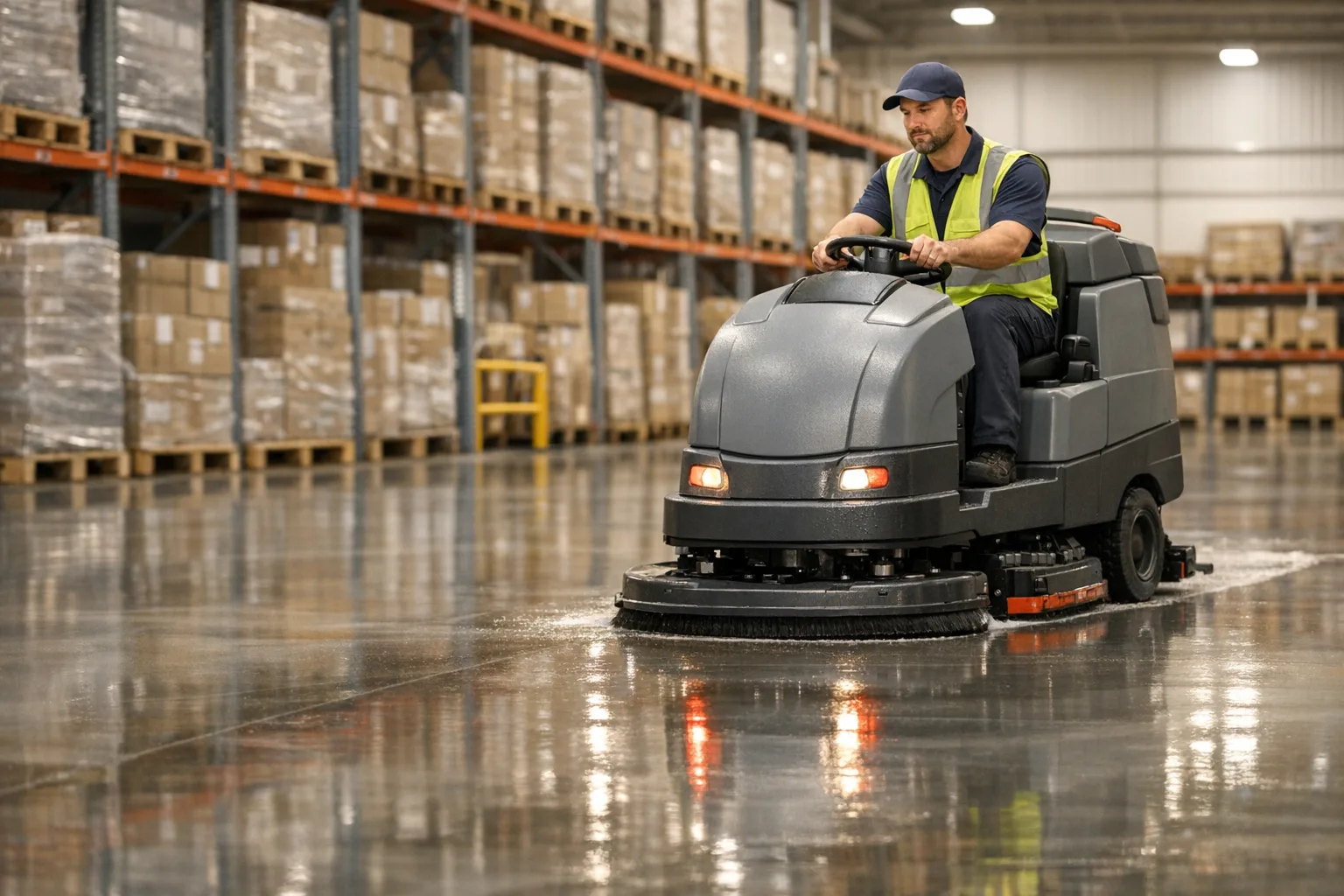
Once debris has been cleared, it’s time to shift your focus to deep cleaning. This is where floor scrubbers come into play, offering a far more effective solution than traditional mopping. While mopping often just spreads dirt around, scrubber-dryers go deeper, removing stubborn grime and leaving floors dry almost instantly. This quick drying not only minimises the risk of slips but also ensures that warehouse operations stay on track without unnecessary delays.
When choosing a floor scrubber, consider the specific needs of your space. For smaller debris, cylindrical scrubbers are ideal as they can sweep and scrub simultaneously without damaging the surface. For larger, high-traffic areas, ride-on scrubbers are a better choice, offering deep cleaning with significant pressure - up to 181 kg. Meanwhile, walk-behind units work well in tighter spaces, providing moderate pressure of around 49 kg.
The frequency of scrubbing should match the level of foot and equipment traffic in each area:
- Light traffic zones: Once or twice a week
- Moderate traffic areas: Two to three times weekly
- High-traffic spaces: Daily
To avoid disruptions, schedule scrubbing during mid-shift or quieter periods. As Erich Schroeder, Product Manager at Nilfisk-Advance, wisely points out:
By far the most expensive part of the cleaning process is the cost of labour, and yet companies will buy the cheapest piece of equipment that they can find... not even considering the 'forever cost' associated with the labour needed to run that machine.
Lastly, always use pH-neutral cleaning solutions, especially on polished concrete or epoxy floors. These solutions help maintain the surface finish and prevent fading over time. By using floor scrubbers correctly, you not only achieve a cleaner workspace but also extend the lifespan of your flooring.
3. Apply EPA-Approved Disinfectants with Correct Contact Time
!EPA
After completing deep cleaning, the next step is disinfection - and this requires careful attention to contact time. Contact time refers to how long a disinfectant must stay wet on a surface to effectively eliminate germs. A common mistake is wiping or drying the disinfectant too soon, which reduces its effectiveness. To ensure proper disinfection, follow CDC guidelines and keep surfaces wet for the full duration specified.
You’ll find the required contact time on the product label or its Safety Data Sheet (SDS). Most EPA-approved residual disinfectants work within 10 minutes and can remain effective for up to 24 hours. If you’re targeting viruses like SARS‑CoV‑2, make sure to use products listed on EPA’s List N. However, antimicrobial coatings, such as those in Appendix N.1, take longer - one to two hours - and should only be used as a supplement, not a replacement, for standard disinfectants.
It’s also important to choose disinfectants that are compatible with your flooring materials. For example, polished concrete surfaces require neutral pH cleaners, as acidic solutions can damage the finish. Epoxy floors, while highly chemical-resistant, need non-abrasive cleaning tools to maintain their appearance. Kevin Klotz, President of Coatings for Industry, highlights the risks of using the wrong products:
Some chemicals can do more harm than good on specific floors. Sure, they may clean the floor, but those chemicals - or the equipment you're using - may also damage it.
To ensure safety and efficiency, always match your disinfectant to the floor type. Workers should also wear proper PPE, including waterproof gloves, masks, and goggles. Ventilation is another key factor - open doors or adjust your HVAC system to minimise respiratory risks.
Avoid mixing different disinfectants, as this can produce dangerous fumes or reduce their effectiveness. If the disinfectant evaporates before meeting the required contact time, reapply it. For food preparation or storage areas, rinse surfaces with clean water after disinfection. Following these practices not only ensures thorough sanitisation but also helps protect both your flooring and your team.
sbb-itb-a884676
4. Conduct Regular Inspections and Preventative Repairs
Once you've tackled deep cleaning and disinfection, keeping up with regular inspections is the next step to maintaining your floors. Spotting damage early can save you from costly repairs down the line.
Don’t wait until damage is obvious - small cracks or chips can quickly become major problems. Setting up a routine inspection schedule helps you address issues before they escalate into safety risks or equipment damage.
Make daily visual checks part of your routine, and train your team to report any signs of trouble like hydraulic drips, oil spills, or dust buildup. For a more thorough approach, carry out detailed weekly inspections, especially in high-traffic areas like forklift lanes. Look for early warning signs like scuffs, dull patches, or surface pitting. Kevin Klotz, President of Coatings for Industry, puts it simply:
Even an isolated spot can worsen pretty quickly, so take care of any failures before they become expensive, monumental challenges.
When you spot damage, act fast. Use epoxy sealers to fill small cracks, patch potholes with concrete compounds, and smooth out uneven edges with polyurea or epoxy. To check if the protective seal is intact, try a water bead test - if water doesn’t bead on the surface, it’s time to reseal. After making repairs, keep the area damp for at least a week and restrict traffic until the surface has fully cured, which can take up to 28 days.
Take things a step further by reviewing your maintenance logs every month. This helps you spot wear patterns and plan repairs more effectively. Consider using CMMS software to automate inspections, manage work orders, and keep a detailed maintenance history.
For warehouse operators in Pakistan, Fazlerasheed And Company provides crack filler solutions tailored for high-traffic industrial floors - ideal for ensuring durability in demanding environments.
With timely repairs and a well-structured maintenance plan, you’ll keep operations running smoothly and extend the life of your warehouse floors.
5. Choose Durable Flooring for High-Traffic Areas
Selecting the right flooring for areas with heavy forklift and equipment use is crucial. A poor choice can lead to frequent repairs, safety risks, and higher costs. Here’s a breakdown of flooring options that can handle these challenges effectively.
Standard concrete is the go-to choice for most warehouses - nearly 80% of UK warehouse floors use power-floated or laser-graded concrete. It’s strong enough to handle heavy loads but has a downside: unsealed concrete is porous, allowing oil, chemicals, and moisture to seep in, which can cause permanent stains. For a 1,000-square-metre facility, standard concrete installation costs about Rs. 7,000,000, with annual maintenance ranging between Rs. 350,000 and Rs. 700,000. Polished or epoxy flooring options are pricier but offer better durability and resistance to wear.
Polished concrete is a step up, providing a non-porous surface that resists light damage and peeling. It’s particularly suited for high-traffic areas and narrow aisles. Installation costs for polished concrete hover around Rs. 17,500,000 for the same area, with yearly maintenance expenses between Rs. 700,000 and Rs. 1,050,000.
Epoxy resin flooring excels in environments exposed to chemicals like battery acid, hydraulic fluids, and cleaning agents. As Megan R. Nichols, a technical writer, explains:
Unlike concrete variants, epoxy flooring provides resistance to chemicals and even acids.
While epoxy flooring costs approximately Rs. 21,000,000 for a 1,000-square-metre facility, with annual upkeep between Rs. 1,050,000 and Rs. 1,750,000, its chemical resistance can reduce maintenance needs over time.
For even greater durability, polyaspartic coatings are a top choice. These coatings thrive in areas with frequent chemical washdowns and high-impact zones, standing up to the wear and tear from forklift traffic better than water-based sealers.
When choosing flooring, consider the type of equipment used. For instance, polyurethane wheels cause less chipping compared to harder pallet jack wheels. To ensure optimal results, test patches on different concrete blends before sealing, and apply sealers under controlled conditions with embedded moisture sensors to improve adhesion. The right flooring material, paired with consistent cleaning and repair practices, can significantly extend the lifespan of your warehouse floors.
6. Create Maintenance Schedules and Equipment Care Protocols
Once you’ve set up cleaning and repair routines, the next step is to establish a structured maintenance schedule. This helps keep warehouse floors in good condition and avoids costly repairs. Small issues, like cracks or spills, can quickly turn into bigger problems without regular upkeep. By breaking tasks into daily, weekly, monthly, and annual intervals, you can ensure that maintenance happens on time and keeps your floors in top shape.
Daily tasks should target high-traffic areas. Begin each shift by sweeping the floors and promptly cleaning up spills. Use absorbent pads for oil or the right cleaning agents for chemical spills. Weekly maintenance should include mopping the floors with pH-neutral cleaners to protect coatings and remove dirt that builds up over time \11, 19]. This deeper cleaning reaches spots that don’t need daily attention. Monthly inspections are key to spotting structural issues early - check for cracks, potholes, and uneven spots, especially in areas with heavy machinery or forklifts [7, 19]. Finally, an annual deep clean or resurfacing can restore protective layers and extend the life of your flooring [[13].
Taking care of your equipment is just as important as maintaining your floors. Regular inspections of cleaning machines, like sweepers and scrubbers, ensure they’re working efficiently. Worn-out parts, such as scrubber pads, should be replaced immediately \1, 2]. For warehouses using Fazlerasheed And Company's forklifts or reach trucks, switching to poly wheels in staging areas can help reduce floor damage. These softer wheels cause less chipping compared to harder alternatives [[2].
To make maintenance even more efficient, consider using a Computerised Maintenance Management System (CMMS). A CMMS automates scheduling, tracks repairs, and logs maintenance tasks. By integrating this system with your cleaning and inspection routines, you can streamline operations and stay on top of every maintenance need.
Conclusion
By following the six practices discussed earlier, proper floor maintenance can safeguard your investment. Combining daily cleaning with periodic deep scrubbing, regular inspections, and prompt repairs prevents minor issues from turning into expensive structural problems. Additionally, using appropriate sealants and pH-neutral cleaners shields concrete surfaces from moisture and corrosive spills.
"A floor that's not cared for will certainly have a much lower lifespan than one that is... you'll certainly extend the life of your asset by taking care of it."
- Kevin Klotz, President, Coatings for Industry
Taking a proactive approach to maintenance not only minimises your Total Cost of Ownership but also enhances safety and operational efficiency.
The difference between a floor lasting 10 years versus 25 years lies in consistent upkeep. Simple actions like sweeping before scrubbing, fixing cracks immediately, and adhering to a regular maintenance schedule may seem minor, but they lead to significant savings over time. For warehouse operators using Fazlerasheed And Company's material handling equipment, maintaining your floors also protects your forklifts and reach trucks from unnecessary wear and tear.
"When you have a clean, level surface to work from, everything in your operation performs better."
- Tatsuya Nakagawa, Co-founder, Castagra Products
FAQs
How frequently should warehouse floors be inspected for maintenance?
Regular inspections of warehouse floors are a must to maintain safety, longevity, and efficiency. While the timing can vary depending on factors like foot traffic, equipment activity, and the surrounding conditions, monthly checks are typically advised for most warehouses in Pakistan. For areas that experience heavy usage or constant activity, weekly inspections might be a better fit.
During these inspections, keep an eye out for cracks, uneven flooring, or any visible wear and tear. Tackling these problems early not only saves money on major repairs but also helps create a safer workspace for everyone.
Why should you use pH-neutral cleaners for maintaining warehouse floors?
Using pH-neutral cleaners is a smart choice for maintaining warehouse floors and keeping them in top condition for longer. These cleaners are balanced - neither too acidic nor too alkaline - so they won’t damage protective coatings or concrete surfaces. This means the floor’s glossy finish, slip resistance, and overall strength stay intact, cutting down on the need for constant repairs or re-coating.
What’s more, pH-neutral cleaners are gentle on surfaces and equipment. They don’t leave behind corrosive residues that could harm machinery like forklifts or pallet jacks. Their mild formula also makes them safer for cleaning staff to handle and requires less water for rinsing. This not only saves money but also supports eco-friendly cleaning practices.
Why should debris be removed before using a floor scrubber in a warehouse?
Before using a floor scrubber, it’s crucial to clear away any debris. Why? Because abrasive particles can wear down the floor coating and damage the scrubber pads. Taking this small step can help your equipment last longer and keep the floor in better shape.
Plus, a debris-free surface is safer and cleaner, especially in busy areas where slips or accidents are more likely. Making this a regular habit not only cuts down on repair expenses but also keeps your warehouse operations running without a hitch.
Looking for Forklifts or Parts?
Fazlerasheed & Co. supplies reconditioned forklifts, genuine spare parts, and traction batteries across Pakistan. Get a free quote today.